
How To
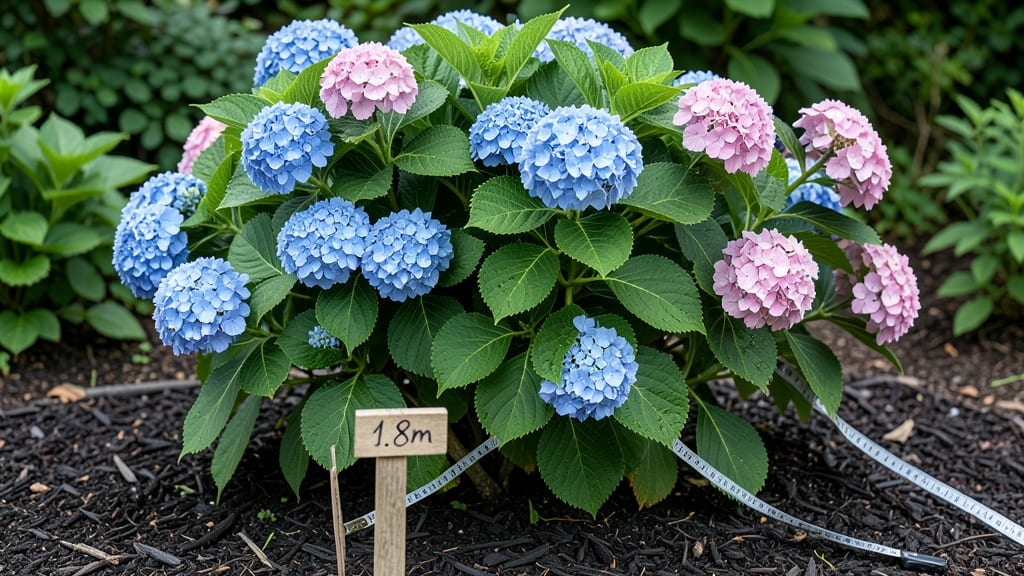
Hydrangeas grow anywhere from 2 feet to 8 feet tall, depending on the variety and growing conditions, so choosing the right type for your space is everything.
Picture this: a 6-foot-tall hydrangea 🌸 sprawling across your patio, its blooms spilling over the edge of a planter—only to realize it’s outgrown its home by summer. Or maybe you’re eyeing a dwarf variety for a small garden, only to watch it stretch toward the sky.
The truth? Hydrangeas aren’t one-size-fits-all, and their size depends on more than just luck.
Some varieties, like the Hydrangea macrophylla (the classic bigleaf type), top out at 3 to 5 feet, while others, such as Hydrangea paniculata, can reach 8 to 10 feet—think privacy screen material.
Then there are the compact types, like Hydrangea arborescens ‘Annabelle’, which stay neatly under 3 feet, perfect for containers or tight borders.
In this guide, I’ll break down the size expectations for the most popular hydrangeas, plus the pruning tricks and growing conditions that can keep them in check—or let them run wild. Ready to pick the perfect fit for your garden?


Hydrangea size guide: how tall and wide each popular variety grows
Hydrangeas are one of the most popular garden shrubs, but their mature sizes can vary dramatically depending on the variety and species. Some stay small enough for containers or window boxes, while others grow into privacy screens or small trees.
Knowing these dimensions helps you plan your garden layout and choose the right hydrangea for your space.
Most hydrangeas reach their full height within 3-5 years, though some slow growers take longer. The spread or width is often just as important as height—especially for mounding varieties.
Below, I’ve broken down the mature sizes of the most popular hydrangea types, including their growth habits and ideal planting spots.
| Variety | Height (ft) | Spread (ft) | Growth Habit | Best For |
|---|---|---|---|---|
| Hydrangea macrophylla (Bigleaf) | 3-5 ft | 3-5 ft | Mounding, bushy | Borders, containers, shade gardens |
| Hydrangea paniculata (Panicle) | 6-12 ft | 5-8 ft | Upright, pyramid-shaped | Privacy screens, focal points |
| Hydrangea arborescens (Smooth) | 3-5 ft | 3-6 ft | Rounded, dense | Foundation plantings, woodland gardens |
| Hydrangea quercifolia (Oakleaf) | 6-8 ft | 5-7 ft | Upright, tree-like | Specimen plant, shade trees |
| Hydrangea petiolaris (Climbing) | 20-30 ft (on trellis) | 3-5 ft (spread) | Climbing, vine-like | Trellises, arbors, fences |
| Mini Penny® (Dwarf macrophylla) | 1.5-2 ft | 1.5-2 ft | Compact, rounded | Containers, window boxes |
| Limelight® (Panicle) | 4-5 ft | 4-5 ft | Upright, vase-shaped | Small gardens, mixed borders |
| Annabelle® (Smooth) | 3-4 ft | 3-4 ft | Glob
How pruning affects hydrangea size: when and how to control growthPruning isn't just about shaping your hydrangeas—it’s the secret to controlling their size and growth. The wrong cuts can turn a compact shrub into an unruly giant or rob you of next year’s blooms. Understanding when and how to prune depends on your hydrangea type, as old wood bloomers (like Hydrangea macrophylla) and new wood bloomers (like H. paniculata) have completely different rules. For example, cutting back a mophead hydrangea too early can mean no flowers, while panicle hydrangeas thrive after aggressive pruning. The timing, tools, and technique all matter—get it wrong, and you might end up with a leggy, sparse plant that never reaches its full potential. Let’s break down the essentials so you can prune with confidence and keep your hydrangeas at your desired size. ⚠️ Pruning Mistake That Stunts GrowthCutting old wood bloomers (like H. macrophylla) in late winter or early spring removes next year’s flower buds, leaving you with bare stems and no blooms. Always wait until after flowering (late summer/early fall) for these varieties. For new wood bloomers, prune in late winter/early spring—but never overdo it, or you’ll encourage weak, floppy growth. First, gather your pruning tools: sharp bypass pruners for clean cuts, loppers for thicker stems, and gloves to protect your hands. Start by removing dead or diseased branches first—these can spread problems to healthy growth. Next, focus on shaping, but remember: old wood bloomers need minimal pruning, while new wood bloomers can handle a harder cut to encourage bushier growth. Timing is everything. For old wood bloomers, prune in late summer or early fall, after the flowers fade. This gives the plant time to set buds for next year. For new wood bloomers, prune in late winter or early spring, just as new growth begins. If you prune at the wrong time, you risk reduced flowering or even plant stress, which can stunt growth entirely. Aggressive pruning—cutting back 30-50% of the plant—works best for panicle hydrangeas like 'Limelight' or 'Little Lime'. This encourages thicker, fuller growth and more abundant blooms. However, over-pruning bigleaf hydrangeas (like 'Endless Summer') can weaken the plant and delay flowering. Aim for selective pruning: remove only the oldest stems (those over 3 years old) to maintain size and health. Watch out for these common pruning mistakes that can backfire:
With the right approach, pruning can keep your hydrangeas compact and manageable, even in small gardens. For example, a dwarf hydrangea like 'Little Quick Fire' stays under 3 feet tall with minimal pruning, while a standard variety like 'Annabelle' can reach 6 feet if left unchecked. The key is to prune annually, stay consistent, and adapt your technique to your hydrangea’s specific needs. |