
Light Requirements
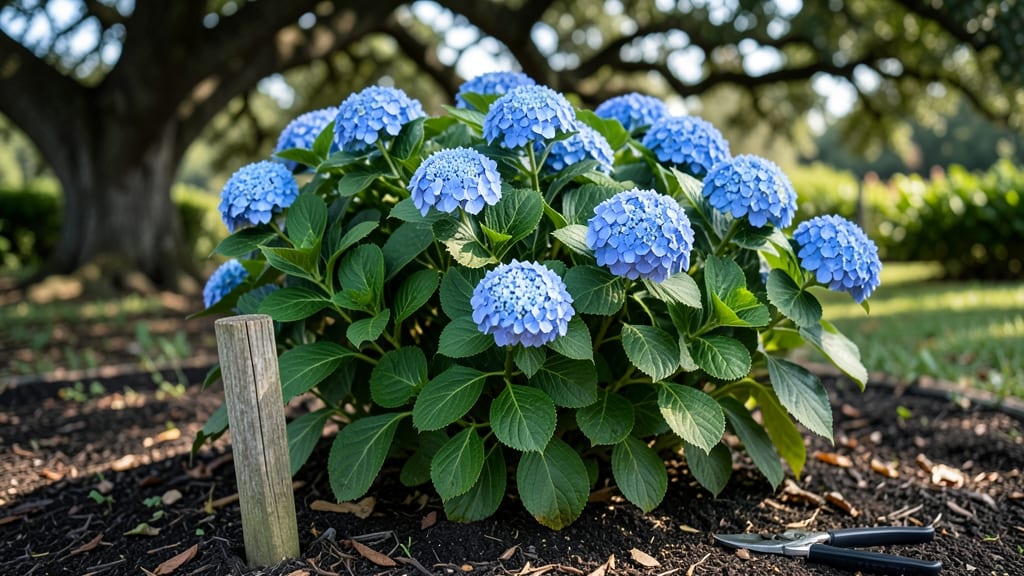
Hydrangeas in partial shade aren't just surviving—they're putting on the most vibrant color shows of my entire garden. 🌿 The trick isn't complicated: it's about matching their light needs to your yard's natural patterns.
Too much sun, and those lush blooms turn crispy; too little, and you get leggy stems with few flowers. I've learned exactly where to place them for maximum impact, and it's not what most gardeners assume.
Start with morning sun and afternoon shade—that's the sweet spot for most varieties. My Endless Summer hydrangeas get 3-4 hours of morning light and bloom like crazy all season.
The soil needs to stay moist but not soggy, so I top-dress with 2-3 inches of mulch every spring to keep roots cool. Spacing matters too—3-5 feet apart gives them room to grow without competing for light or water.
You'll notice the difference in just a few weeks: deep green leaves, sturdy stems, and blooms that last from summer into fall. The key is pruning at the right time—late winter or early spring—to encourage new growth that loves that partial shade.
Even my limelight hydrangeas (which handle more sun) stay healthier with this approach, producing bright chartreuse blooms that pop against dark foliage.
This works for containers too—just choose a spot that gets dappled light all day. And don't worry about your yard being "too shady"—hydrangeas like Annabelle and Oakleaf thrive where others fail.
The secret is patience: it might take a season or two to find the perfect spot, but once you do, you'll have blooms that turn heads every year.
📚 In This Guide
- What you need
- Instructions
- Tips and common mistakes
- Wrapping up and next steps
What you need
- ● Hydrangea plants: Choose varieties suited for partial shade (e.g., Hydrangea macrophylla, Hydrangea quercifolia, or Hydrangea paniculata). Purchase 1–3 plants, depending on your desired coverage.
- ● Well-draining potting mix: 5–10 gallons (for containers) or amend garden soil with 2–3 inches of compost or peat moss to improve moisture retention.
- ● Organic mulch: 2–3 inches of pine bark, shredded leaves, or wood chips to conserve moisture and regulate soil temperature.
- ● Watering can or hose with a gentle spray nozzle: Hydrangeas love consistent moisture—aim for 1–1.5 inches per week (more in hot climates).
- ● Balanced fertilizer (10-10-10 or 20-20-20): Use 1–2 tablespoons per plant in early spring and mid-summer, or opt for a slow-release granular fertilizer.
- ● Pruning shears: Sharp, bypass pruners (sterilized with rubbing alcohol) for shaping and deadheading.
- ● Gloves and knee pads: Protect your hands and knees—gardening is a labor of love! 😉
- ● Soil pH test kit: Hydrangeas thrive in acidic soil (pH 5.2–6.0) for blue blooms or neutral soil (pH 6.0–7.0) for pink. Adjust with sulfur (for acidity) or lime (for alkalinity) if needed.
- ● Aluminum sulfate or hydrangea bloom booster: Adds blue pigment to flowers (follow package instructions).
- ● Container with drainage holes: If planting in pots, choose a 15–20 gallon container for mature hydrangeas.
- ● Drip irrigation system: Automates watering for busy gardeners—hydrangeas hate drying out!
- ● Stakes or plant supports: Useful for Hydrangea paniculata varieties that grow tall (e.g., ‘Limelight’).
Step-by-Step guide to cultivating hydrangeas in partial shade
Here’s how I transform partial-shade spots into lush hydrangea displays—no guesswork, just science-backed techniques.
🌱 Step 1: Select the Right Variety for Your Light Conditions
Not all hydrangeas thrive equally in partial shade. Bigleaf hydrangeas (Hydrangea macrophylla) like ‘Endless Summer’ or ‘Nikko Blue’ handle shade best, while oakleaf (Hydrangea quercifolia) and panicle types (Hydrangea paniculata) tolerate it too. Avoid smooth hydrangeas (Hydrangea arborescens), which demand full sun for their signature blooms.
Check your space: 4-6 hours of dappled light (filtering through trees) is ideal. If your spot gets less than 3 hours, choose varieties like ‘Annabelle’ or ‘Limelight’—they’ll still produce, just with slightly smaller blooms. Plant in early spring or fall when roots establish before extreme temperatures.
🪴 Step 2: Prepare the Soil for Optimal Hydrangea Health
Hydrangeas crave moist, well-draining, acidic soil (pH 5.5–6.2 for blue blooms, 6.0–7.0 for pink). Before planting, amend your native soil with 3 inches of organic compost and 1 inch of peat moss to retain moisture without suffocating roots. I mix in a handful of sulfur granules if my soil tests alkaline—this acidifies it gradually.
Dig a hole twice as wide as the root ball but only as deep as the container’s base. Loosen the roots gently if they’re circling, then place the plant so the top of the root ball sits 1 inch below soil level. This prevents crown rot from sitting water. Backfill with amended soil, tamping lightly to eliminate air pockets.
☀️ Step 3: Position for Light and Airflow
Partial shade doesn’t mean deep shade—hydrangeas need bright, indirect light to fuel blooms. Plant them 6–8 feet apart to allow airflow, which prevents fungal diseases like powdery mildew. If your spot gets morning sun and afternoon shade, that’s perfect. Too much afternoon shade? Move plants 2–3 feet closer to the light source for better blooming.
Watch for yellowing leaves—this signals either too much shade (cut back on nearby trees) or overwatering (adjust your irrigation). Mulch with 3 inches of wood chips to shield roots from temperature swings and retain moisture. Keep mulch 6 inches away from the stem to avoid rot.
💧 Step 4: Water and Fertilize for Consistent Blooms
Hydrangeas in partial shade drink more than sun-lovers because their leaves transpire less. Water deeply 1–2 times per week, aiming for 1–1.5 inches of moisture per session. Let the top 2 inches of soil dry between waterings—soggy soil chokes roots. I use a soaker hose to deliver water slowly at the base, avoiding wetting foliage (which invites mildew).
Feed with a balanced, slow-release fertilizer (10-10-10) in early spring, then switch to acid-loving plant food (like 8-3-9 with iron) in mid-summer for vibrant blooms. Over-fertilizing leads to leafy growth at the expense of flowers—stick to half the recommended dose for partial-shade plants. Test soil pH annually and adjust with aluminum sulfate (for blue flowers) or lime (for pink).
✂️ Step 5: Prune Strategically for Season-Long Color
Timing is everything: Prune spent blooms in late summer (after flowers fade) to encourage next year’s buds. For bigleaf types, cut back 1–2 inches above the first set of leaves on each stem—never prune into old wood, or you’ll sacrifice next year’s blooms. Oakleaf and panicle hydrangeas can handle late winter pruning (February–March) to shape the plant.
Remove dead, crossing, or weak stems annually to improve airflow. If your hydrangea blooms poorly, check for over-pruning—some varieties need minimal cuts. Thin out crowded centers by one-third to redirect energy to outward growth. You’ll see fuller, more vibrant blooms within a season if you prune correctly.
Tips & tricks for perfect hydrangeas in partial shade
These science-backed strategies will help you maximize your hydrangeas' potential without the common pitfalls that sabotage growth.
Variety Selection: When choosing between bigleaf, oakleaf, and panicle types, consider your shade conditions more carefully than you might think. Bigleaf hydrangeas like 'Nikko Blue' actually thrive with 4-6 hours of dappled light—this is their sweet spot for vibrant blooms. If your space gets less than 3 hours, opt for 'Annabelle' or 'Limelight' varieties, which are more shade-tolerant but may produce slightly smaller blooms. The key is matching the plant's natural light requirements to your garden's microclimate.
Soil Amendments: The 3 inches of organic compost and 1 inch of peat moss in Step 2 aren't just numbers—they create the perfect moisture-retaining, well-draining environment hydrangeas crave. For alkaline soil, add sulfur granules gradually over time rather than all at once. I've found that testing your soil's pH before planting can save you from guessing games later—aim for 5.5-6.2 for blue blooms or 6.0-7.0 for pink. This small step makes all the difference in color intensity.
Light Positioning: The 6-8 feet spacing between plants in Step 3 isn't just about aesthetics—it's crucial for airflow that prevents fungal diseases. If your hydrangeas receive morning sun but afternoon shade, that's ideal. However, if they're getting too much afternoon shade, don't hesitate to move them 2-3 feet closer to the light source. Watch for yellowing leaves as your early warning system—this often indicates either too much shade or overwatering.
Pruning Precision: The timing for pruning in Step 5 can't be emphasized enough. For bigleaf varieties, always prune 1-2 inches above the first set of leaves—never cut into old wood. I've seen gardeners sacrifice next year's blooms by pruning too aggressively. Oakleaf and panicle types are more forgiving with late winter pruning, but even then, avoid removing more than one-third of the plant's center to maintain that lush, rounded shape.
Pro Tips for Hydrangea Partial Shade
- These science-backed strategies will help you maximize your hydrangeas' potential without the common pitfalls that sa...
- Variety Selection: When choosing between bigleaf, oakleaf, and panicle types, consider your shade conditions more car...
- Soil Amendments: The 3 inches of organic compost and 1 inch of peat moss in Step 2 aren't just numbers—they create th...
Frequently asked questions
Got questions about growing hydrangeas in partial shade?
You’re not alone! Here are answers to the most common queries to help you nurture lush, blooming bushes with ease.
What exactly does "partial shade" mean for hydrangeas?
Partial shade typically means 4–6 hours of direct sunlight per day, with the rest of the time in dappled light or shade. Hydrangeas like morning sun + afternoon shade (to prevent leaf scorch) or filtered light under trees. Avoid deep shade—it can lead to sparse blooms or leggy growth.
How long does it take for hydrangeas to bloom in partial shade?
Most hydrangeas (like Bigleaf or Panicle types) take 2–3 years to mature and bloom after planting. In partial shade, blooms may be slightly delayed but will still appear—just ensure consistent watering and well-draining soil. Patience pays off!
Do hydrangeas in partial shade need extra care during droughts?
Yes! Partial shade can reduce water evaporation, but roots still need moisture. Water deeply 1–2 times per week (more in extreme heat) and mulch around the base to retain humidity. Wilting leaves or crispy edges signal thirst—act fast to revive your plant!
Can I grow hydrangeas in partial shade if my yard has rocky or clay soil?
Hydrangeas adapt well to amended soil. Mix compost or peat moss into heavy clay to improve drainage, and add perlite/sand to rocky soil. For blue blooms, test soil pH (aim for 5.2–5.5) and amend with aluminum sulfate if needed.
Why are my hydrangeas’ leaves turning yellow in partial shade?
Yellow leaves often signal overwatering, nutrient deficiency, or fungal issues. Check for:
- Mushy stems → Root rot (reduce watering).
- Yellowing with brown spots → Fungus (prune affected areas, improve airflow).
- Uniform yellow → Nitrogen deficiency (add balanced fertilizer).
Wrapping up and next steps
Growing hydrangeas in partial shade isn’t just possible—it’s a recipe for stunning, vibrant blooms! 🌸 With the right soil, watering routine, and a touch of pruning know-how, you’ll transform your garden into a lush, colorful oasis.
Whether you’re a seasoned gardener or just starting, these secrets make hydrangeas low-maintenance and high-reward.
Ready to turn your partial shade spot into a showstopper? Grab your gardening gloves, pick your favorite variety, and get planting! Check out our guide on seasonal care to keep those flowers thriving year after year.