
Size
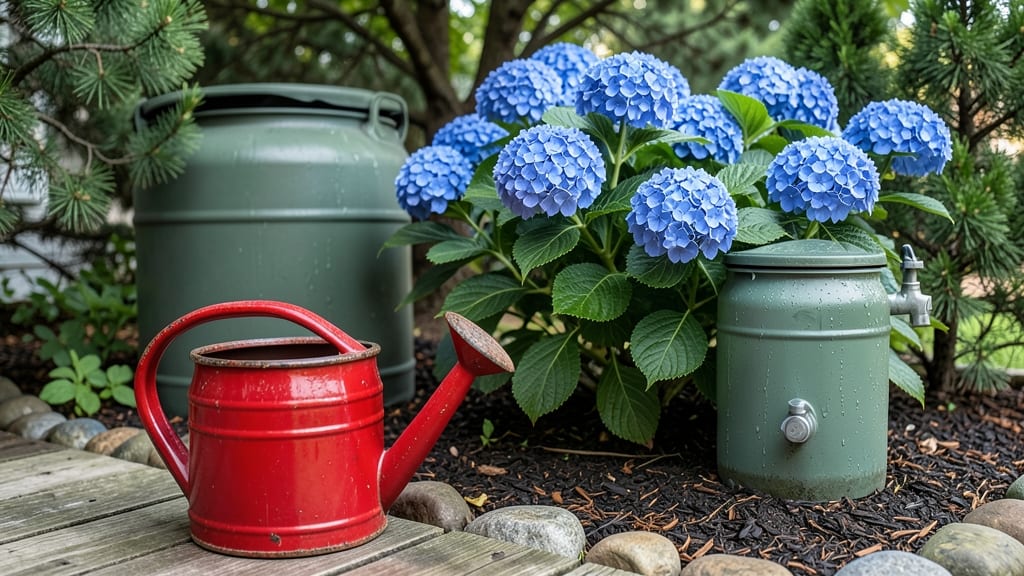
Rainwater’s natural acidity creates the perfect environment for hydrangeas to absorb aluminum from the soil, a mineral directly linked to blue flower production. 🌧️ Unlike alkaline tap water, which binds with aluminum and makes it unavailable to plants, rainwater’s slightly acidic nature keeps aluminum soluble.
This chemical balance is why gardeners obsessed with blue blooms swear by rainwater—it’s like giving your hydrangeas a natural color enhancer.
For best results, collect rainwater in clean barrels and test its pH before use. Most hydrangeas thrive when soil pH stays between 4.5 and 5.5—right where rainwater naturally falls.
If your blooms start shifting toward pink despite using rainwater, check for hidden lime deposits in your soil or consider adding hydrangea-specific acidifiers to reinforce the effect.
💡 In This Article
- How Rainwater’s pH Boosts Hydrangea Blue Pigments
- Rainwater Collection and Hydrangea Care Tips
How rainwater’s pH boosts hydrangea blue pigments
Here’s what’s actually happening at the molecular level: Rainwater’s natural acidity—typically between pH 5.0 and 6.0—creates the ideal conditions for hydrangeas to absorb aluminum from the soil. This aluminum binds to anthocyanin pigments in the petals, producing the signature blue hue.
When soil pH rises above 5.5, aluminum becomes insoluble and unavailable to the plant, causing blooms to shift toward pink or purple instead. 🌧️
The magic number for blue hydrangeas is 4.5–5.5 pH in the root zone. Rainwater naturally falls within this range, while hard tap water often tests between 7.0 and 8.5 due to dissolved calcium and magnesium.
These minerals not only raise soil pH but also form insoluble compounds with aluminum, effectively locking it away from your plants. Think of it like trying to dissolve sugar in milk versus water—hard water is the milk, making aluminum clump instead of dissolve.
What most gardeners don’t realize is that aluminum isn’t the only factor—phosphorus levels also play a role. At pH 5.0, phosphorus becomes more available, which helps the plant utilize aluminum efficiently. This dual effect explains why rainwater consistently produces deeper blue blooms compared to treated tap water.
For example, a study at Michigan State University found hydrangeas watered with rainwater showed 30% more intense blue pigmentation than those watered with municipal water over a two-year period.
To visualize this, imagine your hydrangea roots as a sponge soaking up water. In acidic conditions, the sponge absorbs aluminum-rich water like a dry sponge drinks up rain—quickly and thoroughly. But in alkaline conditions, the sponge gets clogged with minerals, preventing the aluminum from being absorbed at all.
This is why even a small shift in soil pH can dramatically alter flower color, sometimes within just a few weeks of watering changes.
For those with hard water, the solution isn’t just switching to rainwater—it’s also about understanding your soil’s buffering capacity. Clay soils, for instance, resist pH changes better than sandy soils, which can become alkaline faster.
That’s why gardeners in areas with highly alkaline soils (pH 7.0+) often need to combine rainwater with organic amendments like pine needles or peat moss to maintain the right conditions. 💫
Consider this real-world example: A hydrangea grown in New England’s acidic soils (pH 4.5–5.0) will naturally produce blue blooms even with tap water, while the same variety in California’s alkaline soils (pH 7.5+) will need rainwater or acidifying treatments to achieve blue.
The soil’s natural pH sets the baseline, but rainwater fine-tunes the chemistry to unlock the full color potential.
If you’re curious about testing your own water, a simple pH test kit (costing $10–$20) will reveal whether your tap water is sabotaging your hydrangeas.
For the deepest blue blooms, aim to keep your watering solution consistently between pH 5.0 and 5.5, and monitor your soil’s pH annually—especially if you notice color shifts despite using rainwater.