
Fertilization
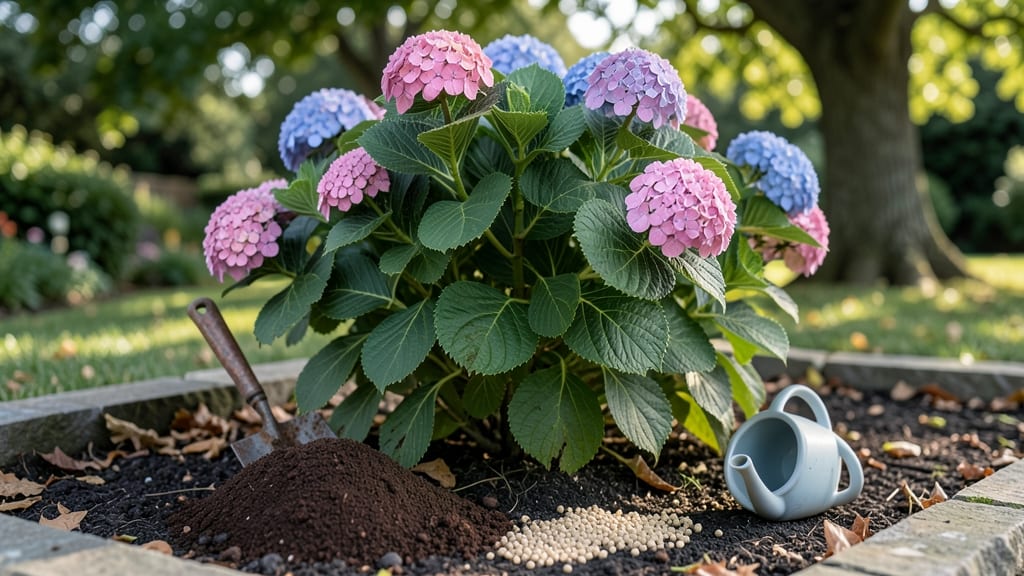
Coffee grounds help hydrangeas by lowering soil pH, creating acidic conditions ideal for blue flower production, while also providing organic matter to improve soil structure and nutrient retention—though overuse can risk nitrogen overload or mold growth.
Coffee grounds work wonders for hydrangeas because they naturally acidify soil, which is exactly what these plants crave for vibrant blue blooms. 🌸 The caffeine and organic acids in spent grounds break down slowly, gradually lowering pH levels to that sweet spot between 5.2 and 5.5—perfect for triggering anthocyanin production (the pigment responsible for blue flowers).
Beyond pH, the grounds act as a nutrient-rich mulch, adding carbon to feed beneficial soil microbes while improving moisture retention without compacting the soil.
That said, moderation is key—too much can create nitrogen imbalances or even mold. I've found the best approach is to sprinkle a thin layer around the base every 2-3 months during growing season, mixing lightly into the top inch of soil.
For those who want to avoid coffee entirely, pine needles or peat moss make excellent alternatives with similar acidifying effects.
💡 In This Article
- How Coffee Grounds Affect Hydrangea Soil pH and Flower Color
- Best Practices for Using Coffee Grounds on Hydrangeas
How coffee grounds affect hydrangea soil pH and flower color
Hydrangeas thrive in acidic soil because their flower color depends on pH levels—specifically, the availability of aluminum ions in the soil. When soil pH drops to 5.2-5.5, aluminum becomes more soluble, which hydrangeas absorb to produce blue flowers.
Coffee grounds contain organic acids like chlorogenic and caffeic acid that break down slowly, releasing hydrogen ions (H+) into the soil over 4-6 weeks—this gradual acidification is what shifts the pH downward without shocking plant roots. 🌿 The breakdown process also releases small amounts of nitrogen, phosphorus, and potassium, though these nutrients are secondary to the pH effect.
The color transformation happens because hydrangea flowers contain two pigments: delphinidin (blue) and cyanidin (pink). In acidic conditions, aluminum binds to delphinidin, stabilizing its blue form. Without enough aluminum (neutral or alkaline soil), the flowers revert to pink.
What's fascinating is that this isn't just about coffee—any organic material with similar acidity (like pine needles or oak leaves) can achieve the same effect, though coffee's nitrogen content gives it an extra boost for leaf health.
A single application can maintain optimal pH for 2-3 months, depending on your soil's starting pH.
Here's what happens chemically: The cellulose and lignin in coffee grounds decompose via microbial activity, producing organic acids that donate protons (H+) to the soil solution.
This proton exchange with soil minerals like calcium carbonate (CaCO₃) neutralizes them, effectively lowering pH. For example, if your soil starts at 6.5, a ½-inch layer of grounds applied monthly could drop it to 5.8-6.0 within a season—close enough to trigger blue blooms in most varieties like 'Nikko Blue' or 'Endless Summer'.
The key is patience: Rushing the process by using too much at once can create localized high-acidity pockets that damage roots.
Interestingly, the nitrogen in coffee grounds (about 2% by weight) isn't the primary benefit for hydrangeas, but it does support microbial life that further breaks down organic matter.
This microbial activity also improves soil structure by creating aggregates that hold moisture better—critical for hydrangeas, which prefer consistently damp (but not waterlogged) conditions. The trade-off? Overapplication can lead to nitrogen burn (yellowing leaves) or even mold growth if the grounds clump against the stem.
To avoid this, always mix grounds into the top 1-2 inches of soil rather than piling them directly around the base.
For visual learners, imagine this: Pink hydrangeas in alkaline soil look like they're wearing a soft pink dress, while blue ones in acidic soil appear as if draped in a rich velvet cloak. The color change isn't just aesthetic—it's a direct response to the chemical environment you create.
That's why gardeners obsessed with blue blooms often test their soil pH before applying coffee grounds, aiming for that 5.2-5.5 range. A simple home test kit can show you whether your soil needs more acidification or if you've already hit the sweet spot. 💙
What most people don't realize is that hydrangeas can actually change color throughout the season based on soil moisture and temperature fluctuations. During hot, dry periods, the pH can temporarily rise, causing flowers to shift toward pink.
This is why consistent coffee ground applications (or other acidifiers) are crucial—not just for color, but for maintaining the plant's overall health. The right balance keeps those blooms vibrant from summer through fall, proving that chemistry really does grow beautiful gardens. ✨