
Watering
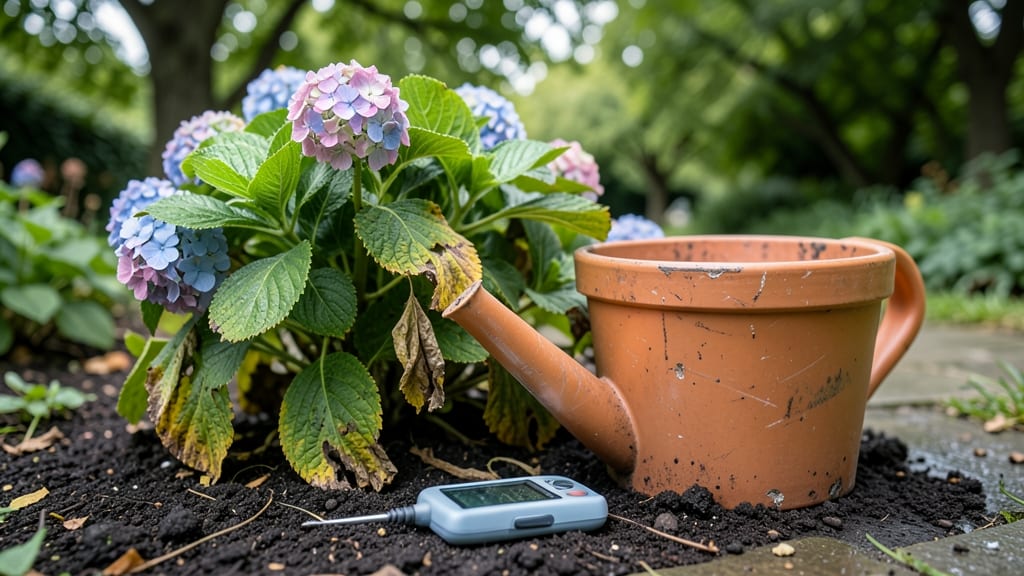
Your hydrangeas are drooping, but this isn’t a death sentence—it’s a call to action. 💦 Most of the time, floppy stems mean they’re either thirsty, drowning, or stressed from heat or pests. The good news? You can often revive them in 24 hours with the right fix.
I’ve nursed back more than my share of sad-looking hydrangeas, and I’ll show you exactly how to diagnose the problem and get them perky again.
Start by checking the soil: if it’s bone-dry 2 inches down, water deeply until it’s moist but not soggy. If it’s still damp, the issue might be overwatering or root rot—look for yellow leaves or a foul smell.
Pests like aphids or scale can also sap energy, leaving stems limp. Run your fingers along the stems: sticky residue or tiny bugs mean it’s time for a soapy water spray to knock them off.
Once you’ve fixed the immediate issue, keep them thriving with consistent moisture (they hate drought but despise soggy roots) and a light pruning of dead stems to encourage new growth.
Within a week, you’ll see those hydrangeas standing tall again—big, bold blooms just waiting to make a comeback. The key is acting fast and checking the basics first.
This works for macrophylla, panicle, or oakleaf hydrangeas—just adjust watering based on your climate. Hotter areas need more frequent watering, while cooler zones can go slightly longer between drinks. With these fixes, your hydrangeas will bounce back stronger than ever.
Root Causes Behind Wilting Blooms
When your hydrangeas start to droop, it’s often a cry for help from the plant itself—whether from thirst, stress, or hidden damage. Understanding the why behind the wilt is the first step to bringing them back to life.
Below, we break down the most common culprits, backed by science, so you can diagnose the issue and act fast.
Hydrangeas thrive in moist but well-drained soil. When roots sit in soggy conditions for too long, they suffocate from a lack of oxygen—a condition called anaerobic stress. This triggers ethylene production, a plant hormone that accelerates wilting.
Overwatering also invites root rot, caused by fungi like Phytophthora, which clogs root cells and blocks water/nutrient uptake.
Signs to watch for:
- Yellowing leaves (especially lower ones)
- Mushy, blackened stems at the base
- Soil that stays clumpier than a damp sponge
💡 Pro Tip: Stick your finger 2 inches into the soil—if it’s damp, wait. If it’s bone-dry, water deeply but only when the top 1–2 inches feel dry. Amend heavy clay soil with perlite or compost to improve aeration.
Hydrangeas are shade-loving plants, and direct afternoon sun (especially in hot climates) can cause transpirational stress. When temperatures exceed 90°F (32°C), leaves lose moisture faster than roots can replenish it, leading to wilting. Even sun scorch—brown, crispy edges on leaves—can weaken the plant’s structure.
Signs to watch for:
- Leaves curling or drooping only on the sun-exposed side
- White or grayish patches on foliage
- Wilting that worsens mid-afternoon
🌡️ Fix It: Move potted hydrangeas to partial shade (4–6 hours of morning sun max). For in-ground plants, add a light shade cloth (30–50% coverage) or mulch with straw or wood chips to retain moisture.
While hydrangeas love moisture, chronic underwatering forces them into survival mode. Roots shrink to conserve water, and cells lose turgor pressure—the internal "plumpness" that keeps stems rigid. Severe drought can also trigger abscission, where leaves drop to reduce water loss.
Signs to watch for:
- Leaves feel paper-dry or crunchy to the touch
- Soil pulls away from the pot edges (indicating extreme dryness)
- Wilting that starts at the tips of branches
💦 Quick Revival: Soak the root zone for 10–15 minutes until water runs out the drainage holes. For large plants, use a soaker hose to avoid runoff. Afterward, mulch with 2–3 inches of organic matter to lock in moisture.
Hydrangeas have soft, water-filled stems that are prone to flopping in breezy conditions. While not always fatal, chronic wind exposure causes hydraulic failure: stems lose water faster than roots can supply it, leading to droop. Physical damage—like hail or heavy rain—can also rupture cells, causing wilting.
Signs to watch for:
- Wilting that’s uniform across the plant (not just one side)
- Stems that snap easily when bent
- No other stress symptoms (like spots or discoloration)
🌿 Support Solutions:
- Stake tall varieties with soft plant ties before storms.
- Plant in sheltered spots (e.g., near fences or walls).
- For potted plants, move to a safer location during wind alerts.
Sap-sucking insects like aphids, spider mites, or scale pierce plant cells, disrupting water flow and causing wilting. Fungal diseases (e.g., powdery mildew or botrytis blight) clog stomata (leaf pores), preventing gas exchange and leading to physiological drought—even when soil is moist.
Signs to watch for:
- Sticky residue (honeydew) on leaves
- White webbing or tiny black specks
- Brown, mushy spots on stems
- Wilting that spreads unevenly over days
🛡️ Treatment:
- Blast pests off with a strong spray of water or use neem oil (1 tsp per quart of water).
- Prune infected stems 1 inch below damage and sterilize shears with rubbing alcohol.
- Improve airflow with spaced planting to prevent fungal spread.
🔍 Next Steps: Once you’ve identified the cause, skip to the fast revival section for targeted solutions. Most drooping hydrangeas recover within 24–48 hours of proper care—but chronic issues (like root rot) may need longer-term rehabilitation.
Revive Your Hydrangeas Fast
When your hydrangeas are drooping, the good news is they’re often just thirsty, stressed, or in need of a little TLC. Below are targeted fixes for the most common causes—plus simple steps to keep them perky long-term.
Signs: Yellowing leaves, soggy soil, or wilting despite water. Why it happens: Hydrangeas hate "wet feet." Overwatering suffocates roots, while poor drainage traps excess moisture.
How to Fix It: ✅ Check the soil – Stick your finger 2 inches deep. If it’s damp, hold off on watering. ✅ Improve drainage – Amend heavy clay soil with compost or perlite (1 part amendment to 3 parts soil). ✅ Repot if needed – If roots are sitting in water, transfer to a pot with drainage holes and fresh, well-draining potting mix. ✅ Adjust watering – Water deeply but less often (1–1.5 inches per week, more in heat). Let the top inch of soil dry out between waterings.
💡 Pro Tip: Mulch around the base (2–3 inches of shredded bark or pine needles) to regulate soil moisture and prevent evaporation.
Signs: Drooping in afternoon heat, crispy leaf edges, or leaves curling up.
How to Fix It: ✅ Provide afternoon shade – Move potted hydrangeas to a spot with morning sun + afternoon shade, or use a light shade cloth (30–50% coverage). ✅ Water at the roots – Avoid overhead watering (which evaporates fast). Use a soaker hose or drip irrigation to keep soil consistently moist. ✅ Mist leaves – On scorching days, lightly mist foliage in the early morning to cool them down. ✅ Prune damaged leaves – Snip off any crispy or browned leaves to redirect energy to healthy growth.
🔥 Quick Revival: Place a tray of water near the plant (not touching leaves) to boost humidity while roots recover.
Signs: Dry, brittle leaves, soil pulling away from pot edges, or roots circling the pot.
How to Fix It: ✅ Soak the roots – Place the pot in a tub of water for 15–30 minutes until the soil is evenly moist. ✅ Check root health – Gently remove the plant and inspect roots. If they’re matted or circling, it’s time to repot into a larger container (1–2 inches bigger in diameter). ✅ Water deeply afterward – After repotting, water thoroughly and mulch to retain moisture. ✅ Adjust frequency – Water when the top 1–2 inches of soil feel dry (stick your finger in to test).
🌡️ Hot Tip: Group hydrangeas with other plants to create a microclimate that retains moisture longer.
Signs: Yellow spots, powdery white residue, or tiny bugs on stems/leaves.
How to Fix It: ✅ Identify the problem –
- Powdery mildew? → Spray with neem oil or baking soda solution (1 tsp baking soda + 1 quart water + a drop of dish soap).
- Aphids/spider mites? → Blast off with water or use insecticidal soap.
- Root rot? → Trim black/mushy roots, repot with fresh, sterile soil, and reduce watering.
✅ Improve airflow – Prune crowded branches and space plants 2–3 feet apart to prevent humidity buildup. ✅ Clean up debris – Remove fallen leaves or spent blooms to reduce fungal spores.
✨ Prevention: Water in the early morning so foliage dries quickly, and avoid wetting leaves when possible.
Signs: Pale yellow leaves, slow growth, or weak stems.
How to Fix It: ✅ Test your soil – A simple DIY pH test kit (available at garden centers) helps determine if your hydrangeas need more acid (blueberries) or lime (for alkaline-loving varieties). ✅ Fertilize lightly –
- Balanced fertilizer (10-10-10) in early spring for new growth.
- Acid-loving feed (like cottonseed meal) if your soil is alkaline (to keep blooms blue).
- Avoid high-nitrogen fertilizers in summer—they promote leaves over flowers.
📊 Feeding Schedule:
| Season | Action |
|---|---|
| Spring | Fertilize with balanced feed |
| Summer | Side-dress with compost (no extra fertilizer) |
| Fall | Add organic matter (like worm castings) |
| Winter | No feeding—let them rest |
Once your hydrangeas perk up, prevent future drooping with these habits:
- Water consistently – Better deep and infrequent than light daily sprinkles.
- Mulch annually – Replenish mulch in early spring to protect roots.
- Prune strategically – Cut back old wood in late winter (for bigleaf hydrangeas) or new growth in early spring (for panicle types).
- Monitor soil moisture – Group plants together to create a self-regulating moisture zone.
Remember: Hydrangeas are dramatic but forgiving. With the right care, they’ll bounce back—and reward you with lush blooms for years! 🌸
Frequently asked questions
Why do my hydrangeas droop in the afternoon but look fine in the morning?
This classic pattern usually means heat stress or transpirational pull. When temperatures climb above 85°F (29°C), hydrangeas lose moisture faster than roots can absorb it. Check for crispy leaf edges or curling—signs of sunburn. Move potted plants to partial shade and water deeply at the base in the early morning to prevent this daily drama.
Can I save my hydrangeas if the stems feel mushy and black at the base?
That’s a red flag for root rot, but act fast! Trim away all blackened stems 1 inch below the damage with sterilized shears, then repot in fresh, well-draining soil with perlite or sand. Reduce watering for 2 weeks and place in bright, indirect light. If roots smell foul, the plant may be too far gone—but catch it early, and you’ve got a fighting chance!
How often should I water hydrangeas to prevent drooping?
Hydrangeas need consistent moisture but hate soggy roots. Water when the top 1–2 inches of soil feel dry—usually 2–3 times per week in hot weather, less in cooler months. For potted plants, soak until water runs out the drainage holes. Mulch with 2–3 inches of organic matter to lock in moisture and reduce evaporation.
Why do my hydrangeas droop after I just watered them?
This often means overwatering or poor drainage. If the soil stays clumpier than a damp sponge, roots suffocate. Let the soil dry slightly between waterings and check your pot—does it have drainage holes? If not, repot immediately. For in-ground plants, amend heavy clay soil with compost or perlite to improve airflow to roots.
Will pruning help my drooping hydrangeas?
Pruning alone won’t fix the root cause, but it can help! Remove dead, diseased, or crossing branches first. For bigleaf hydrangeas, prune in late winter to shape the plant. If stems are floppy from wind or weak growth, stake them with soft ties. Never prune in summer—it stresses the plant when it’s already struggling to recover.