
Pruning
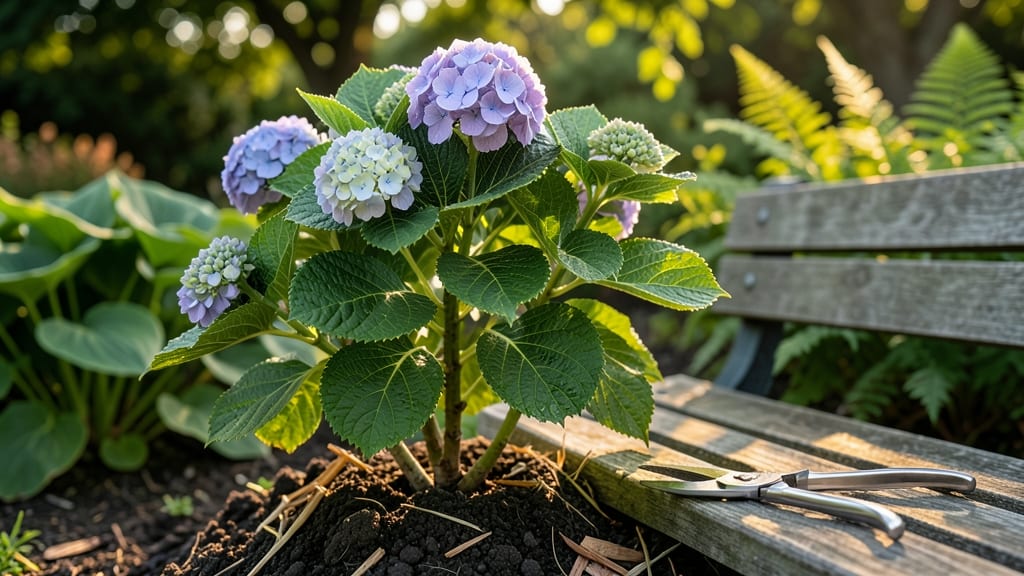
Trimming hydrangeas in summer can transform your blooms for next year—just avoid cutting too much, or you’ll risk stunting their growth. ✂️ I’ve spent years watching my hydrangeas struggle after aggressive cuts, so I’ve learned the exact timing and technique to keep them thriving.
The key? Knowing whether your plant blooms on old or new wood makes all the difference.
First, grab your pruners and gloves—you’ll only need a few clean cuts to encourage fuller growth. Deadhead spent blooms on new wood varieties (like Annabelle or Panicle) to redirect energy, but leave last year’s stems on old wood types (such as Bigleaf or Oakleaf) until after they bloom.
A quick 10-minute trim now can mean 20% more blooms next season.
What you’ll end up with is a bushier, healthier plant that puts all its energy into next year’s flowers instead of struggling to recover from harsh cuts.
The secret is patience: focus on removing only dead or crossing branches, and avoid heavy pruning after mid-summer if you want those stunning blooms.
Works for any hydrangea type, whether you’ve got a towering Oakleaf or a compact Endless Summer. Here’s how to do it right without sacrificing next year’s display.
📚 In This Guide
- What you need
- Instructions
- Tips and common mistakes
- Wrapping up and next steps
What you need
- ● Bypass pruners – Sharp, clean, and disinfected (1 pair). Avoid anvil pruners—they crush stems.
- ● Hand pruners or loppers – For thicker stems (¼”–¾” diameter). Opt for bypass-style to prevent damage.
- ● Garden gloves – Heavy-duty, cut-resistant (1 pair) to protect from thorns and sap.
- ● Disinfectant (70% isopropyl alcohol or bleach solution) – To sterilize tools between cuts and prevent disease.
- ○ Pruning shears (optional for large hydrangeas) – Extendable loppers (up to 8” blades) for hard-to-reach branches.
- ● Garden twine or zip ties – To secure heavy branches post-trimming (small roll).
- ● Sharpie or permanent marker – For labeling stems if you’re unsure which blooms to cut (1–2 markers).
- ● Hydrangea food or fertilizer – Balanced 10-10-10 or acid-loving plant fertilizer (small bag) to nourish post-prune.
- ● Mulch (pine bark or shredded leaves) – To retain moisture and protect roots (2–3 bags).
- ● Plant tie wraps – For supporting weak stems after trimming (pack of 10–20).
- ● Wheelbarrow or bucket – For collecting clippings (1–2 gallon size).
- ● Knee pads or stool – For comfort if your hydrangeas are taller than you!
Instructions for trimming hydrangeas in summer
Here's how to refresh your hydrangeas mid-season while setting up next year's stunning blooms.
✂️ Step 1: Identify Your Hydrangea Type First
The first move is critical—don't cut blindly. Bigleaf hydrangeas (Hydrangea macrophylla) produce blooms on old wood, meaning last year's growth holds next year's flowers. Smooth hydrangeas (Hydrangea arborescens) and panicle types (Hydrangea paniculata) bloom on new wood, so you can trim more aggressively. Look for the flower buds forming at the ends of stems last fall—those are your old-wood bloomers.
If you're unsure, check the leaf shape: bigleaf types have broader, flatter leaves with prominent veins. Smooth hydrangeas have rounder, smoother leaves. Once identified, grab your pruners and focus only on dead or spent blooms for old-wood types. For new-wood bloomers, you can cut back up to ⅓ of the plant's height right now.
✂️ Step 2: Remove Only Dead or Spent Blooms
For old-wood bloomers, wait until after they've finished flowering to trim—this summer's blooms are already set. But if you're dealing with leggy growth or dead stems now, cut those back to a healthy bud or leaf node. Look for stems that are brown, mushy, or completely devoid of leaves—these are gone and should be removed entirely at the base.
Make your cuts at a 45-degree angle, about ¼ inch above a leaf node or outward-facing bud. This angle helps water run off the cut and prevents rot. Never leave stubs—hydrangeas heal cleanly when cuts are precise. For panicle types, you can trim back to 6-8 inches from the ground if needed, but avoid heavy cuts on bigleaf varieties.
☀️ Step 3: Thin Out Crowded Stems for Better Airflow
Hydrangeas love airflow—too many stems rubbing together creates a humid microclimate that invites fungal diseases like powdery mildew. Look for stems growing toward the center of the plant where light and air can't reach. Selectively remove 1-2 stems per cluster, cutting them back to the base if they're not producing flowers or are too crowded.
This is where you'll see the biggest difference next year. Thinning now encourages stronger, more vibrant blooms by redirecting the plant's energy. Aim to leave 3-5 strong stems per plant—hydrangeas bloom best when they're not overcrowded. If you're working with a large shrub, prioritize removing stems that are crossing or growing inward.
💧 Step 4: Water Deeply and Fertilize Lightly After Pruning
Pruning stresses the plant, so give it a drink to recover. Water deeply until the soil is moist 6 inches down—hydrangeas have shallow roots and need consistent moisture, especially after cuts. Avoid overhead watering for a few days to let the cuts heal; instead, water at the base to prevent fungal spores from splashing onto fresh pruning wounds.
Apply a balanced, slow-release fertilizer (like 10-10-10) around the root zone, but hold off on heavy feeding until late summer. Too much nitrogen now will encourage leafy growth at the expense of next year's flower buds. A light application of compost or organic fertilizer is all you need—hydrangeas are heavy feeders, but they'll thank you for the gentle approach.
⏰ Step 5: Monitor for New Growth and Adjust as Needed
Within 2-3 weeks, you should see fresh new growth emerging from the pruned stems. This is a good sign—it means the plant is redirecting energy to stronger, healthier branches. Keep an eye out for any stems that look weak, yellow, or stunted; these may need further trimming to encourage better growth.
If your hydrangea is in a hot, dry spot, provide afternoon shade for a few weeks to reduce stress. Mulch around the base with 2-3 inches of organic mulch to retain moisture and regulate soil temperature. Avoid heavy pruning again until late winter—this summer's cuts are enough to shape the plant without overstressing it before next year's bloom cycle begins.
Tips & tricks for perfect summer Hydrangea trimming
These precision-focused tips will help you trim like a pro and set your hydrangeas up for spectacular blooms next season.
Type-Specific Trimming: For bigleaf hydrangeas, focus only on removing dead stems or spent blooms—never cut back into old wood where next year's buds are forming. I've seen gardeners accidentally trim away next year's flowers by cutting too aggressively on these types. For panicle and smooth hydrangeas, you can be more bold with your cuts since they bloom on new growth. Remember, those ⅓ height cuts for new-wood types are your safety net for shaping without sacrificing next year's blooms.
Cutting Technique Matters: The 45-degree angle and ¼-inch clearance above leaf nodes aren't just suggestions—they're critical for proper healing. I learned this the hard way when I left stubs that rotted during a rainy summer. Use sharp pruners to make clean cuts that heal faster. For larger stems, consider using loppers to avoid crushing the plant tissue. This precision prevents disease entry points and encourages stronger regrowth.
Airflow Strategy: When thinning crowded stems, prioritize removing those growing toward the center first. These are the ones creating that humid microclimate perfect for fungal diseases. I've noticed that after thinning, my hydrangeas develop fewer brown spots and more vibrant foliage. Aim for that 3-5 strong stems per plant guideline—it might feel drastic, but your plant will thank you with better airflow and sunlight penetration.
Post-Pruning Recovery: That 6-inch deep watering is essential because hydrangeas have shallow roots that dry out quickly. I've seen plants wilt dramatically after pruning when they weren't properly hydrated. Apply mulch immediately after watering to lock in moisture and regulate soil temperature. The 2-3 inch mulch layer also helps prevent weeds that compete for nutrients your plant needs to recover.
Pro Tips for Trimming Hydrangeas In Summer
- These precision-focused tips will help you trim like a pro and set your hydrangeas up for spectacular blooms next sea...
- Type-Specific Trimming: For bigleaf hydrangeas, focus only on removing dead stems or spent blooms—never cut back into...
- Cutting Technique Matters: The 45-degree angle and ¼-inch clearance above leaf nodes aren't just suggestions—they're ...
Frequently asked questions
Got questions about summer hydrangea trimming?
You’re not alone! Here are answers to the most common concerns—so you can prune with confidence and keep those blooms looking their best.
Can I trim hydrangeas in summer without hurting them?
Yes! Summer trimming is safe if done carefully. Focus on deadheading (removing spent blooms) or light shaping to encourage new growth. Avoid heavy pruning—stick to cutting back no more than 1/3 of the plant to prevent stress. Hydrangeas are resilient, but moderation is key!
What’s the best time of summer to trim hydrangeas?
The ideal window is early to mid-summer (June–July), after the first flush of blooms fades. This gives your plant time to recover before fall. Avoid trimming in late summer or early fall—new growth won’t harden off before winter, risking frost damage.
Do I need special tools to trim hydrangeas in summer?
Not necessarily! A pair of clean, sharp bypass pruners or small hand pruners work perfectly for deadheading. For larger branches, loppers are handy. Pro tip: Disinfect tools with rubbing alcohol between cuts to prevent disease spread.
What if my hydrangeas bloom on old wood—can I still trim in summer?
For old-wood bloomers (like Hydrangea macrophylla), summer trimming is all about removing spent blooms and leggy stems to redirect energy. Avoid cutting back to bare wood—save that for late winter/early spring. New growth will form on current-season stems!
My hydrangeas look sad after trimming—what went wrong?
Don’t panic! Over-pruning or cutting into woody stems can stress the plant. If leaves yellow or growth stalls, reduce watering slightly and fertilize with a balanced formula (like 10-10-10). Most hydrangeas bounce back in a few weeks—just give them time and TLC.
Still unsure? Snap a photo of your hydrangea and compare it to your pruning notes—you’re doing better than you think!
Wrapping up and next steps
Trimming your hydrangeas in summer isn’t just about keeping them tidy—it’s an investment in next year’s show-stopping blooms. With the right tools, timing, and technique, you’ll encourage healthier growth and vibrant flowers. Now’s the perfect time to roll up your sleeves and give your hydrangeas the care they deserve!
Ready to transform your garden? Grab your pruners, follow the steps you’ve learned, and watch your hydrangeas thrive. Check out our full guide for extra tips—or share your progress with fellow gardeners for inspiration! 🌸✂️