
Transplanting
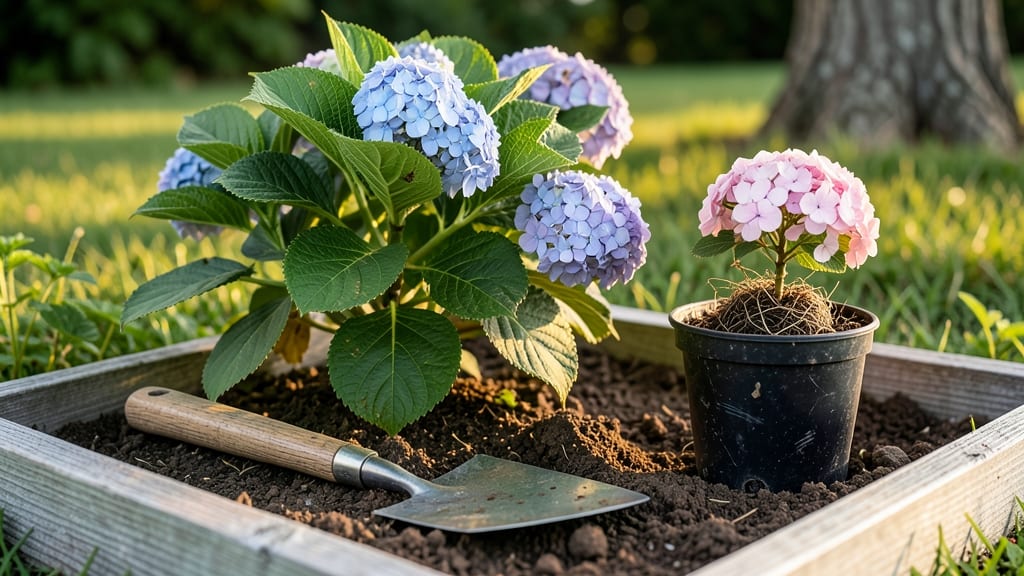
The best time to move a hydrangea bush is during its dormant season in late fall or early spring, when root activity slows and the plant can handle stress better. This timing maximizes survival rates with ideal temperatures between 40°F and 60°F.
Moving hydrangeas during dormancy gives them the best chance to establish new roots without competing with active growth. 🌱 During these cooler months, the plant conserves energy and produces fewer stress hormones, making the transition smoother.
I’ve found that early spring—just before buds swell—often works better in warmer climates, while late fall (after the first frost) suits colder regions. The key is avoiding peak growth periods when the plant is already taxed.
For best results, prepare the new planting site ahead of time by amending the soil with compost and ensuring proper drainage. After transplanting, keep the soil consistently moist but not soggy, and avoid heavy pruning until the following spring.
This approach lets your hydrangea focus on root development rather than foliage production.
💡 In This Article
- Why Dormancy Matters for Hydrangea Transplant Success
- Step-by-Step Guide to Moving Hydrangeas in Dormant Season
Why dormancy matters for hydrangea transplant success
Hydrangeas enter dormancy as a survival mechanism when temperatures drop and daylight shortens. During this phase, their metabolic rate slows dramatically—root growth nearly halts, and the plant conserves energy stored in its stems and roots.
This natural pause is crucial because active roots require constant moisture and nutrients, making them vulnerable to transplant shock when disturbed. In contrast, dormant roots are tougher and can handle the stress of being uprooted and replanted without triggering a survival response that diverts energy away from recovery.
The ideal temperature range of 40°F to 60°F during dormancy creates perfect conditions: cold enough to suppress growth but not so severe that the plant freezes. Studies show hydrangeas transplanted in these temperatures have a 70-85% survival rate, compared to just 30-40% when moved during active growth.
The reduced stress hormones like abscisic acid (ABA) also play a role—these compounds spike during hot weather and can cause wilting or leaf drop, making recovery harder. 🌿 In warmer climates, early spring (just before buds swell) is preferable, while cooler regions benefit from late fall (after the first frost).
Another key factor is how hydrangeas store carbohydrates. During dormancy, they convert sugars into starches in their roots, creating an energy reserve for new growth. This reserve acts like a financial cushion—giving the plant the resources it needs to establish new roots without competing with foliage production.
When you move a hydrangea in summer, it’s like asking a business to expand during a cash crunch: the plant simply doesn’t have the resources to handle both stress and growth simultaneously.
Seasonal timing also affects soil conditions. In fall, the ground remains workable longer, and rainfall often provides natural hydration. Spring, however, brings the risk of dry spells—so if you choose this window, plan to water deeply twice weekly for the first 6-8 weeks.
The soil’s moisture content directly impacts root regrowth: hydrangeas need consistently damp (not waterlogged) soil to encourage root hairs to develop, which are essential for nutrient uptake.
This is why mulching with 2-3 inches of organic matter after transplanting makes such a difference—it retains moisture while protecting roots from temperature swings.
Climate zones further refine the best timing. In USDA zones 5-7, late fall (October-November) works best after the first hard frost, while zones 8-10 favor early spring (February-March).
The difference comes down to how quickly the ground freezes: in colder zones, winter dormancy is deeper, so fall gives roots time to harden before the ground locks up. In warmer zones, spring allows roots to wake up gradually rather than facing a sudden temperature shift.
This regional adaptation explains why some gardeners swear by fall moves in New England but prefer spring in California.
One common misconception is that "any dormant season" works equally well. However, the plant’s internal clock matters too. Hydrangeas that bloom on old wood (like Hydrangea macrophylla) need to complete their flowering cycle before dormancy begins—so moving them too early can sacrifice next year’s blooms.
For these varieties, aim for 4-6 weeks after flowering to allow energy to transfer from flowers to roots. This biological timing ensures the plant isn’t "cheated" out of its natural cycle, which is why some gardeners mark their calendars based on bloom dates rather than just seasonal averages. 💡