
Advice
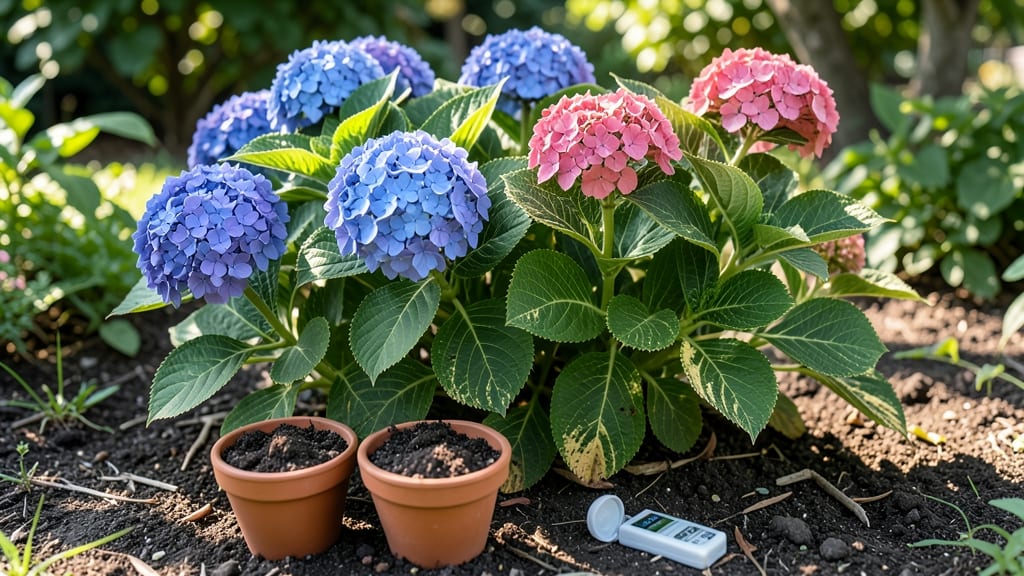
Yes, hydrangeas change color based on soil conditions, particularly pH levels, shifting from blue to pink as acidity decreases and alkalinity increases, with aluminum availability directly influencing pigment production.
This color transformation happens because hydrangea flowers produce different pigments depending on soil chemistry. 🌸 In acidic soil (pH 5.0-5.5), aluminum becomes soluble, enabling blue pigments like delphinidin to form. When soil becomes alkaline (pH 6.0-7.0), aluminum becomes unavailable, allowing pink pigments like cyanidin to dominate instead.
The transition often happens gradually, creating stunning multicolored blooms when pH varies across different parts of the plant.
What's fascinating is that some hydrangea varieties naturally produce both pigments, creating beautiful purple or lavender flowers regardless of soil conditions. This occurs when both aluminum and other factors like iron are present in balanced amounts.
For gardeners looking to control color, testing your soil's pH is the first step—simple test kits are available at garden centers and can help determine whether your soil needs sulfur (to acidify) or lime (to alkalize) for the perfect bloom color.
💡 In This Article
- How Soil pH Affects Hydrangea Flower Color Chemistry
- Testing and Adjusting Soil pH for Hydrangea Color Control
How soil pH affects hydrangea flower color chemistry
The magic behind hydrangea color shifts lies in the delicate chemistry of their flower pigments, specifically how soil pH controls aluminum availability. In acidic conditions (pH 5.5), aluminum ions dissolve in the soil solution, becoming accessible to the plant roots.
These aluminum ions then bind with anthocyanin pigments like delphinidin, producing the iconic blue hues we love. This process is why hydrangeas in acidic soil often bloom in vibrant blues or purples—think of the classic 'Nikko Blue' variety that thrives in these conditions. 🌿
The transformation to pink occurs when soil becomes neutral or alkaline (pH 6.5-7.0), where aluminum ions precipitate out of the soil solution and become unavailable to the plant. Without aluminum, the flower pigments shift to cyanidin, creating pink blooms.
This isn't just a simple color change—it's a biochemical switch where the plant's pigment production pathway alters entirely based on soil chemistry. For example, the 'Endless Summer' hydrangea can shift from blue to pink in the same season if soil pH changes, demonstrating this dramatic plasticity.
What makes this even more fascinating is the intermediate range (pH 5.5-6.5) where both pigments can coexist. In these conditions, you'll often see stunning multicolored blooms with shades of purple, lavender, or even white—this happens when some flowers receive more aluminum than others due to uneven root distribution.
The macrophylla species (large-leaf hydrangeas) are particularly responsive to these pH changes, making them popular for gardeners who want to experiment with color.
The aluminum connection is critical because without it, even in acidic soil, the blue pigments won't form properly. This is why some gardeners struggle to get true blue blooms—they might have acidic soil but insufficient aluminum in their particular soil type.
The ideal blue-producing soil should have both low pH (4.5-5.5) AND adequate aluminum content, which is why testing both pH and aluminum levels gives the most accurate predictions for flower color. 🔬
Interestingly, this color-changing mechanism is unique to certain hydrangea species. The mophead and lacecap varieties are the most responsive, while others like 'Limelight' or 'Annabelle' produce consistent colors regardless of soil conditions.
This biological variation means not all hydrangeas will play along with your soil pH experiments—knowing your specific variety is half the battle in achieving the perfect bloom color.
For gardeners who want to experiment, understanding this chemistry means you can literally paint with your soil. By carefully adjusting pH levels, you're not just changing the color of your flowers—you're participating in a natural biochemical process that's been happening in hydrangea gardens for centuries.
The key is patience: soil pH changes take time to fully permeate the root zone, and color shifts may not appear until the following growing season. 🌸