
Orchid Care
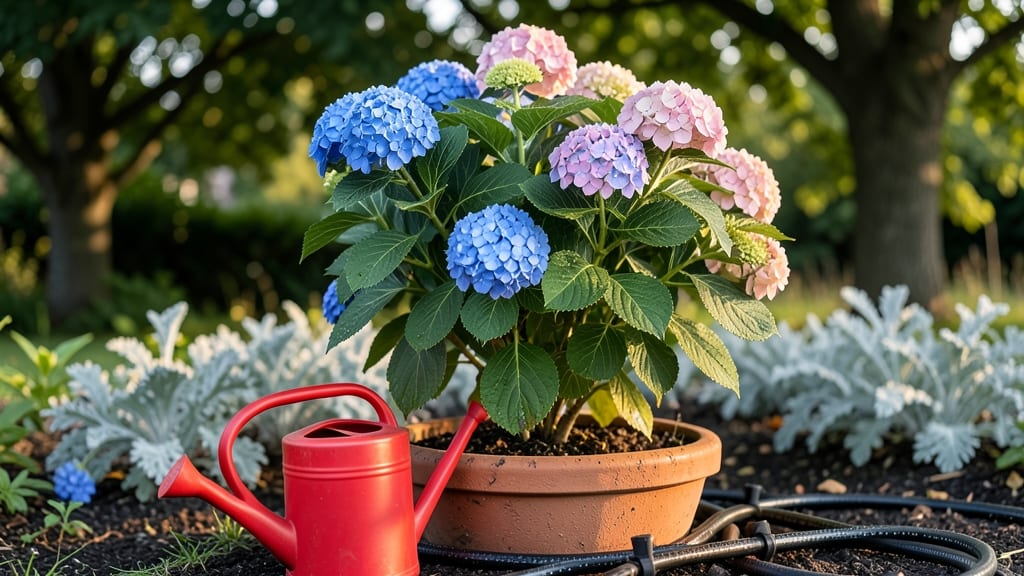
Hydrangeas aren't just drought-tolerant—they actually crave moisture to fuel their spectacular blooms. 💧 The key is keeping the soil evenly damp (think of a wrung-out sponge) without turning it into a swamp. I've seen hydrangeas wilt dramatically within days when soil dries out, only to revive dramatically after proper watering.
For container-grown plants, check soil moisture daily during summer heatwaves, as pots dry out much faster than garden beds.
What's fascinating is how different varieties respond: Bigleaf hydrangeas (like 'Endless Summer') need the most consistent moisture, while panicle types (such as 'Limelight') can handle slightly drier conditions. The secret lies in their native habitats—most hydrangeas evolved in humid forests where steady rainfall was the norm.
Even a single dry week can stress these plants enough to affect next year's blooms.
💡 In This Article
- Hydrangea Water Requirements by Variety and Climate
- Signs of Overwatering vs. Underwatering in Hydrangeas
Hydrangea water requirements by variety and climate
Hydrangeas thrive in moisture because their native habitats—humid forests of Asia and North America—provide steady rainfall. The macrophylla group (like 'Endless Summer') demands the most consistent dampness, with roots extending shallowly to access surface moisture. In contrast, paniculata types (such as 'Limelight') store water more efficiently, tolerating brief dry spells.
This difference stems from their evolutionary adaptations: macrophyllas evolved in dense forests where water was abundant year-round, while paniculatas thrived in slightly drier, open woodlands.
Climate plays a dramatic role in watering needs. In hot, dry regions (like the Southwest U.S.), hydrangeas may need daily watering during summer to maintain 1-2 inches of soil moisture in the top 6 inches.
Conversely, in cooler, rainy climates (Pacific Northwest), supplemental watering may only be needed every 10-14 days. The key is monitoring soil moisture: stick your finger 2-3 inches deep—if it feels dry, it's time to water.
Container-grown plants require even more attention, as their soil dries out 3-5 times faster than in-ground plants.
Seasonal adjustments are critical. During spring bloom development, hydrangeas need 1.5-2 inches of water weekly to support bud formation. In summer heat, increase to 2-3 inches weekly while mulching with 3-4 inches of organic mulch (like shredded bark) to retain moisture and regulate soil temperature.
What most gardeners overlook is the autumn recovery period—hydrangeas need consistent moisture through early fall to establish next year's buds, even as temperatures drop.
Rainfall patterns vary dramatically by region. In high-rainfall areas (like the Southeast), hydrangeas may only need supplemental watering during prolonged dry spells. In low-rainfall zones (like California), drip irrigation systems set to deliver 0.5-1 inch daily during summer are ideal.
The science behind this is simple: hydrangeas can't absorb water through their leaves, so they rely entirely on soil moisture. When soil dries out, their roots shrink and can't efficiently take up water, leading to wilting within 24-48 hours.
What's often misunderstood is how soil type affects water needs. Clay soils retain moisture longer but can become waterlogged, while sandy soils drain quickly. Amending heavy clay with 20-30% compost improves moisture retention without suffocating roots.
For sandy soils, mixing in peat moss or coconut coir helps hold water longer. The goal is to mimic their natural forest floor environment, where organic matter creates a sponge-like structure that holds moisture while allowing excess to drain.
Consider this real-world example: A Bigleaf hydrangea in Atlanta's humid summers (avg. 75°F) may need 2 inches of water weekly during droughts, while the same plant in Denver's dry climate (avg. 80°F) could require 3 inches weekly due to higher evaporation rates.
The lesson? Always adjust based on your specific microclimate and soil conditions.