
Aphids
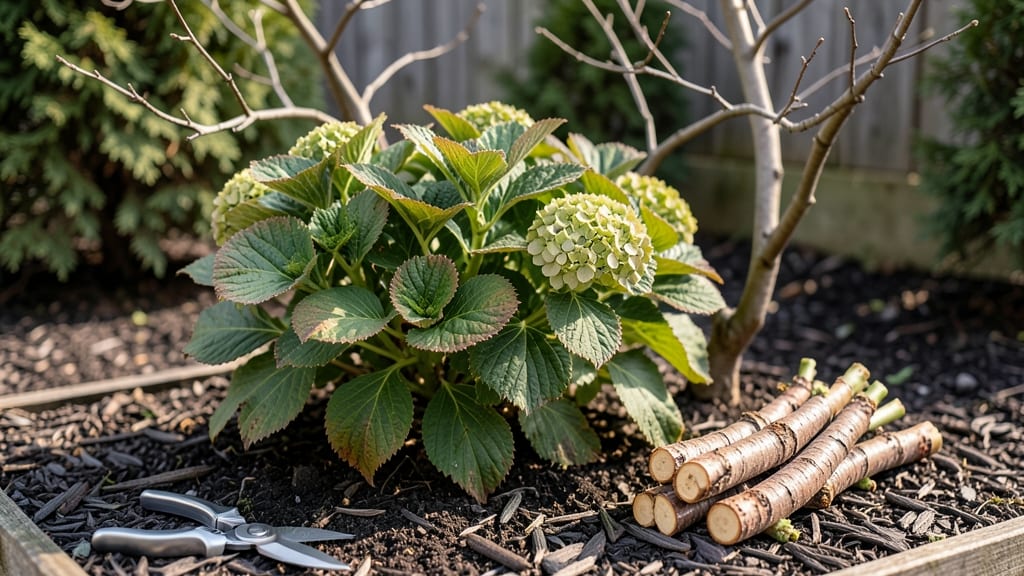
Hydrangea dead wood isn’t a death sentence—it’s a chance to reset your plant for bigger blooms next season. 🌿 I’ve nursed back more than my share of sad-looking hydrangeas, and the key is knowing when and how to prune without panicking.
What looks like a lost cause is often just last year’s growth that’s ready to be trimmed away. The culprits? Winter freeze, pests, or over-pruning. Dead wood feels dry and hollow when you snap it—no green inside means it’s gone.
Fungal infections can also turn branches black and mushy. But here’s the good news: late winter or early spring is the perfect time to prune, while the plant’s still dormant. You’ll end up with a bush that’s neater, healthier, and packed with new growth by summer.
The blooms will come back stronger, and you’ll skip the guesswork about what to cut. Let’s turn those bare branches into a comeback story.
Start by grabbing clean pruners and a bucket for clippings. Cut just above a leaf node (the bump where leaves grow) at a 45-degree angle to prevent water pooling. If you’re unsure whether a branch is dead, scratch the bark—if it’s green underneath, leave it.
Remove only the clearly dead or diseased wood to avoid shocking the plant. By mid-spring, you’ll see fresh green shoots pushing out where you pruned. Those are your plant’s way of saying “thank you” for giving it a fresh start.
The more you prune correctly now, the less you’ll have to do next year—and the more blooms you’ll reward yourself with.
Prevention is easier than cleanup. Mulch around the base in fall to protect roots from freeze-thaw cycles, and avoid overwatering, which invites fungal issues. If your hydrangeas are older varieties, they bloom on last year’s wood—so hold off on pruning until after they’ve finished flowering.
This method works for all hydrangea types, from mopheads to panicles. With a little patience, your plant will bounce back—and you’ll have the confidence to tackle next year’s pruning like a pro.
The Hidden Triggers Behind Dying Hydrangea Stems
When your hydrangea’s branches turn woody, brittle, or blackened, it’s often a cry for help from the plant itself. Understanding the root causes—whether biological, environmental, or human-induced—is the first step to revival.
Below, we break down the science behind why hydrangeas lose their vitality, so you can diagnose the issue and take targeted action.
Hydrangeas are hardy, but they have limits. Sudden freezes (<20°F) or prolonged heatwaves (>90°F) can cause cellular damage in stems, leading to dead wood. Here’s how it happens:
- Winter Dieback: Frost cracks stem tissues, disrupting water flow. If the plant isn’t winter-hardy (like Hydrangea macrophylla in Zone 5), stems can blacken and snap like dry kindling.
- Summer Scorch: Heat stress triggers oxidative damage in leaves, forcing the plant to prioritize survival over stem growth. Without moisture, stems dry out from the inside out.
- Transitional Shock: Early spring frosts after buds swell (called "frost ring") can kill new growth before it hardens.
💡 Pro Tip: Mulch 3–4 inches deep with wood chips or straw to insulate roots. In summer, provide afternoon shade and deep watering (1–2 inches per week) to combat heat stress.
Fungi like Botrytis (gray mold) or Phytophthora (root rot) thrive in hydrangeas when conditions are damp and stagnant. They invade through:
- Wet Foliage: Overhead watering or poor airflow creates a fungal buffet. Spores land on stems, forming black, sunken lesions that girdle (strangle) the plant.
- Poor Drainage: Soggy soil (from clay or compacted ground) encourages Phytophthora, which rots stems at the base, making them hollow and mushy.
- Wound Entry: Pruning cuts or insect damage provide gateways for fungi to colonize.
🔥 Warning Sign: If stems ooze a pinkish or brown sap when cut, fungal infection is likely. Remove affected stems immediately with sterilized shears (soak in 1:9 hydrogen peroxide/water for 10 mins).
Aphids, scale insects, and borers don’t just weaken leaves—they drill into stems, creating tunnels that block nutrients and water. Here’s their damage playbook:
| Pest | How They Attack | Stem Clues |
|---|---|---|
| Japanese Beetles or Aphids | Cluster on new growth, injecting toxins that cause wilting and blackening of stems. | Sticky honeydew residue, yellowing leaves, and sooty mold (black fungal growth). |
| Scale Insects | Attach to stems, sucking sap and secreting a protective wax shield. Infested stems harden prematurely. | Bumpy, crusty white/yellow spots on stems; wilting despite watering. |
| Borers (e.g., Hydrangea Stem Borer) | Larvae burrow into pithy stems, creating hollow tunnels that collapse under weight. | Frass (sawdust-like debris) at stem bases; sudden wilting of entire branches. |
🎯 Solution: Blast pests off with a strong stream of water, then apply neem oil or insecticidal soap (repeat every 5–7 days). For borers, prune and burn infested stems in early spring.
Hydrangeas are thirsty but not swampy. Watering mistakes lead to dead wood through two extreme paths:
- Underwatering: Stems lose turgor pressure (internal water tension), causing them to plaster against the ground and dry out. Chronic drought triggers abscission layers (natural "scars" that seal off dying tissue).
- Overwatering: Waterlogged soil deprives roots of oxygen, leading to anaerobic conditions that produce toxic ethylene gas. Stems turn black and mushy at the base.
- Inconsistent Moisture: "Boom or bust" watering causes cracked stem tissue from rapid expansion/contraction.
🌡️ Ideal Fix: Water deeply 2–3 times per week (1–1.5 inches total) and never let soil dry out completely. Test drainage: If water pools after 30 mins, amend soil with perlite or sand.
Timing and technique matter. Hydrangeas have dormant buds that store next year’s growth. If you prune:
- Too Early (Late Winter/Early Spring): You risk cutting off flower buds before they harden. H. macrophylla buds form in previous year’s wood—snip them, and you get no blooms.
- Too Late (Summer/Fall): New growth has no time to harden before winter, making it frost-prone.
- With Dirty Tools: Bacteria (e.g., Pseudomonas) enter cuts, causing bacterial wilt (yellowing, wilting, and stem collapse).
✨ Correct Method: Prune dead wood first (any black/brown stems) in late winter/early spring. For rejuvenation, cut 1/3 of oldest stems to the ground in June (after flowering). Always sterilize shears with rubbing alcohol.
Reviving Your Hydrangea’s Life
When your hydrangea’s branches turn crispy or woody, it’s a sign the plant is struggling—but don’t toss it yet! With the right approach, you can coax it back to health and even encourage lush new growth.
Below, we’ll walk you through practical, step-by-step fixes based on the most common causes of dead wood in hydrangeas, plus tips to keep your plant thriving long-term.
Cause: Cold snaps or harsh winters can kill tender stems, leaving them brown and brittle.
How to Revive: 🍳 Prune the Damage
- Use clean, sharp pruners (sterilized with rubbing alcohol) to cut back dead branches at a 45-degree angle, about ¼ inch above a leaf bud or healthy growth node.
- Avoid cutting into green tissue—this can introduce disease.
👨🍳 Encourage New Growth
- After pruning, fertilize lightly with a balanced, water-soluble fertilizer (10-10-10) to support recovery.
- If your hydrangea is mature, it may still produce blooms from old wood—don’t prune too aggressively unless the stems are completely hollow.
🌱 Protect Next Winter
- Mulch heavily (3–4 inches) around the base with straw or shredded leaves to insulate roots.
- Wrap young plants in burlap or frost cloth if your region gets below 10°F.
- Water deeply before the first freeze to help roots withstand cold.
Cause: Fungal infections (like powdery mildew) or pests (aphids, scale) can weaken stems, leading to dead wood.
How to Revive: 🔪 Remove Infested Wood
- Snip off and dispose of any branches with black spots, mold, or sticky residue (a sign of pests).
- Burn or trash affected branches—do not compost to prevent spreading.
🌡️ Treat Fungal Issues
- Spray with a copper fungicide or neem oil solution (1 tbsp neem oil + 1 tsp mild soap per quart of water).
- Improve airflow by thinning dense foliage and spacing plants 3–4 feet apart.
🎯 Combat Pests Naturally
- Blast off aphids with a strong stream of water or use insecticidal soap.
- Introduce beneficial insects like ladybugs or lacewings to control pests long-term.
- Avoid over-fertilizing with nitrogen, which attracts soft-bodied pests.
Cause: Poor pruning habits, nutrient deficiencies, or stress can lead to weak, dying branches.
How to Keep Your Hydrangea Healthy: ✨ Prune at the Right Time
- Bigleaf & Oakleaf hydrangeas: Prune right after flowering (late summer) to avoid cutting off next year’s blooms.
- Panicle & Smooth hydrangeas: Prune in late winter/early spring to shape and encourage new growth.
📊 Fertilize Smartly
- Use a slow-release, acid-loving plant fertilizer (like one for azaleas) in early spring.
- Test soil pH—hydrangeas thrive in acidic soil (5.2–6.0). Add sulfur or peat moss if needed.
🥗 Water Wisely
- Deep water 1–2 times per week (1 inch total) to encourage strong root growth.
- Avoid overhead watering to prevent fungal diseases—water at the base instead.
If more than 50% of the plant’s stems are completely dead (hollow, no green tissue, no buds), it may be beyond revival. In this case:
- Dig up and compost the remaining roots.
- Start fresh with a new hydrangea in a sunny, well-draining spot.
With these fixes, your hydrangea should bounce back stronger—and you’ll be rewarded with vibrant blooms all season! 🌸
Frequently asked questions
How can I tell if a hydrangea branch is truly dead?
Snap a small section of the branch—if it breaks cleanly and reveals no green inside, it's dead. Another test: Scratch the bark. If it's green underneath, the branch is still alive. For hollow stems or those that crumble easily, prune them out completely.
Is it safe to prune hydrangeas in summer?
Only if you're dealing with dead wood or diseased branches—never prune for shaping during summer. For Hydrangea macrophylla (like mopheads), summer pruning risks removing next year's flower buds. Wait until after blooming (late summer) for these types.
What should I do if my hydrangea has black, mushy stems?
That's likely fungal rot from overwatering or poor drainage. Cut out affected stems immediately with sterilized shears, then improve airflow by thinning foliage. Apply copper fungicide and amend soil with perlite to prevent recurrence.
Can I save a hydrangea with completely hollow stems?
Only if there are still healthy buds or green growth at the base. Prune back to live tissue and fertilize lightly. If the entire plant is hollow with no signs of life, it's unfortunately beyond saving—start fresh with a new plant.
How often should I prune dead wood from my hydrangeas?
Check for dead branches in late winter/early spring (before new growth starts) and again after summer blooming. Remove any dead wood you find—this keeps the plant healthy and encourages new growth. Just avoid heavy pruning of live stems during these times.