
Pests and Diseases
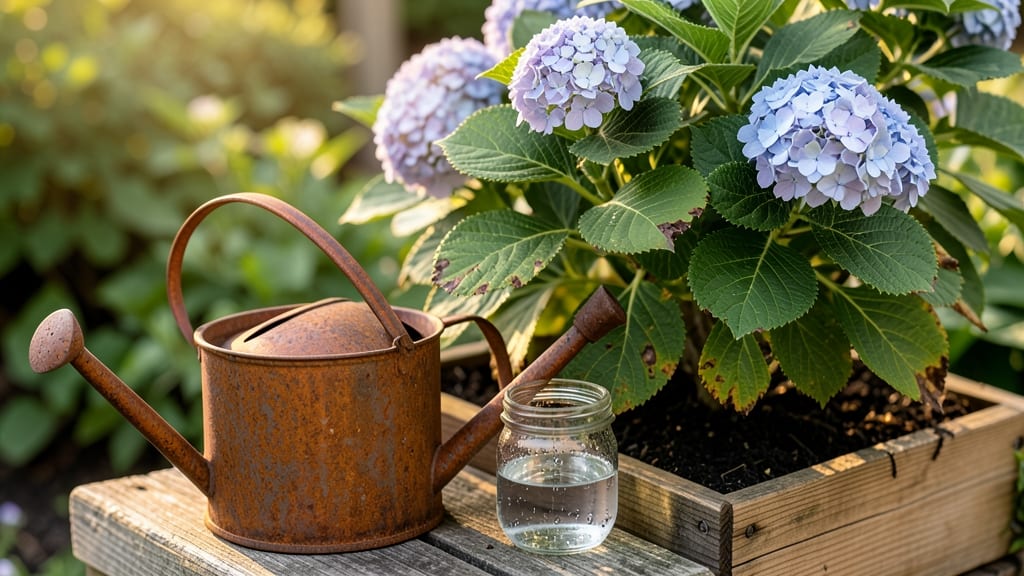
That crispy-edged hydrangea leaf burn isn’t just unsightly—it’s a cry for help. 🌿 Over-fertilizing, too much sun, or fungal infections turn those lush leaves into brittle paper, and I’ve seen it ruin even the hardiest shrubs.
The good news? Most cases are fixable with a few simple tweaks to water, soil, and care.
First, check your fertilizer—too much nitrogen or alkaline soil burns leaves from the edges inward. If the damage looks like brown, crispy patches (not spots), it’s likely environmental stress.
But if you see blackened, mushy spots? That’s a fungal infection needing pruning and fungicide. The key is acting fast before the whole plant wilts.
You’ll see new growth within weeks if you adjust watering (deep but infrequent), add acid-loving soil amendments, and prune affected stems. My hydrangeas now stay vibrant all summer—no more sad, crunchy edges. The secret? Balancing care with what these acid-loving plants truly need.
Works for all hydrangea types, from bigleaf to panicle. Here’s how to diagnose and treat it before it spreads—your plants will thank you with full, glossy foliage by midsummer.
Understanding the Root Causes
Hydrangeas are prized for their lush foliage and stunning blooms, but when their leaves develop crispy, brown edges—often called leaf burn—it’s a clear sign something’s gone awry. While the term might sound alarming, this issue is usually a response to environmental or cultural stress.
Let’s break down the science behind why hydrangea leaves develop these unsightly (but often fixable) symptoms.
Hydrangeas thrive in consistently moist—but not soggy—soil. When roots sit in waterlogged conditions, oxygen deprivation forces them to struggle for survival. This stress triggers a defense mechanism: the plant transpires less water, causing leaf edges to dry out and crisp. Overwatering is especially problematic in:
- Clay-heavy soils: These compact easily, trapping excess moisture near roots.
- Containers without drainage holes: Pots act as water traps, accelerating root rot.
- Frequent heavy rains: If your garden doesn’t drain well, hydrangeas can drown.
Science note: Excess water disrupts the plant’s stomatal regulation (the tiny pores on leaves that control water loss). When stomata close to conserve moisture, the leaf edges—furthest from the vascular system—suffer first.
Hydrangeas are partial-shade lovers, and when exposed to intense afternoon sun (especially in hot climates), their leaves can’t dissipate heat efficiently. This causes:
- Transpiration overload: Leaves lose moisture faster than roots can absorb it, leading to edge scorch.
- UV damage: Direct sunlight breaks down chlorophyll, turning leaf edges brittle and brown.
Key trigger: Temperatures above 90°F (32°C) combined with low humidity worsen the effect. Leaf burn in this case often starts on exposed, upper leaves first.
Hydrangeas are acid-loving plants, and when soil pH strays too far from their ideal range (typically 5.2–6.2), they show distress. While pH imbalances don’t directly cause leaf burn, they weaken the plant’s resilience to other stresses like drought or disease.
- Alkaline soil (pH > 7.0): Locks out essential nutrients like iron and manganese, leading to chlorosis (yellowing) and eventual crispy edges.
- Extremely acidic soil (pH < 4.5): Can damage root cells, reducing water uptake efficiency.
Pro tip: Test your soil with a simple pH kit. If levels are off, amend with peat moss (to lower pH) or lime (to raise pH) gradually.
Hydrangeas need a balanced diet, but too much (or too little) of certain nutrients can trigger leaf burn:
- Salt buildup from fertilizers: Excessive sodium or chloride in soil can osmotically stress roots, preventing water absorption.
- Magnesium deficiency: Causes interveinal chlorosis (yellowing between veins), which progresses to crispy edges if untreated.
- Potassium deficiency: Weakens the plant’s ability to regulate water, making leaves prone to drying out.
Science deep dive: Nutrient imbalances disrupt the plant’s osmotic potential, forcing cells to lose water more easily. This is why burned edges often appear along leaf margins—the areas with the highest concentration of osmotically active compounds.
While hydrangeas are hardy, sudden temperature drops or drying winds can cause physical damage to leaves:
- Cold snaps: Freezing temperatures (<32°F/0°C) can crystallize water in leaf cells, rupturing them and leading to brown, papery edges.
- Desiccating winds: High winds increase evaporative demand, drying out leaves faster than roots can compensate.
Watch for: Burn patterns that start on windward sides of the plant or after a hard frost.
While not always the primary cause, pathogens can exacerbate leaf burn symptoms:
- Powdery mildew: Fungal infections create a white, powdery coating that blocks sunlight, stressing leaves and leading to crispy edges.
- Leaf spot diseases: Bacteria or fungi (like Phytophthora) create lesions that disrupt water transport, causing surrounding tissue to dry out.
Tell-tale sign: Look for dark spots with yellow halos before the edges turn brown. Prune affected leaves immediately to prevent spread.
Revive Your Hydrangeas Naturally
Seeing crispy, brown edges on your hydrangea leaves can be frustrating, but the good news is that most causes have simple fixes. The key is identifying the root issue—whether it’s overwatering, underwatering, nutrient imbalance, or environmental stress—and addressing it with targeted care.
Below, we’ll break down the most common causes and provide step-by-step solutions to bring your hydrangeas back to health. Plus, we’ll share prevention tips to keep those leaves lush and green all season long!
If your hydrangeas are sitting in soggy soil, their roots suffocate, leading to leaf burn and yellowing. Overwatering is a common culprit, especially in containers or heavy clay soil.
#### How to Fix It: 🔥 Stop Watering Immediately – Let the top 1–2 inches of soil dry out completely before watering again. 🍳 Improve Drainage – Mix in perlite, sand, or compost to aerate the soil. If potted, ensure drainage holes are clear. 👨🍳 Repot if Needed – If roots are rotting, transfer the plant to a fresh pot with well-draining soil. 🥘 Adjust Watering Schedule – Water deeply but only when the soil is dry to the touch (about 1–2 times per week, depending on climate). ⏰ Mulch Properly – Apply 2–3 inches of organic mulch (like shredded bark) to retain moisture without smothering roots.💡 Pro Tip: Stick your finger in the soil—if it’s damp past your first knuckle, wait before watering again!
While overwatering is risky, underwatering can also cause leaf edges to crisp and curl. Hydrangeas need consistent moisture, especially in hot weather.
#### How to Fix It: 💦 Water Deeply and Regularly – Soak the root zone until water drains out the bottom (for potted plants) or seeps 6–8 inches into the ground. 🌡️ Check Soil Moisture Daily – In extreme heat, hydrangeas may need water every 2–3 days. 🎯 Use Drip Irrigation – Slow, consistent watering at the base reduces stress and prevents leaf burn. ✨ Mulch Heavily – A thick layer of mulch (like pine straw) locks in moisture and protects roots from heat.💡 Pro Tip: Water in the early morning to give leaves time to dry before evening, reducing fungal risks.
Leaf burn can also stem from too much fertilizer or an incorrect pH level. Hydrangeas thrive in acidic soil (pH 5.2–6.0), and over-fertilizing—especially with high salt content—can scorch leaves.
#### How to Fix It: 🔄 Flush the Soil – Water heavily to leach out excess salts, then let the soil dry slightly before rewatering. 🥗 Test Soil pH – Use a soil kit or send a sample to a local extension office. If pH is too high (alkaline), amend with sulfur or peat moss. 🍎 Fertilize Lightly – Switch to a balanced, slow-release fertilizer (like 10-10-10) or an organic option (fish emulsion, compost tea). Avoid high-nitrogen fertilizers in summer. 📊 Feed at the Right Time – Apply fertilizer in early spring and again after blooming (late summer). Never fertilize in extreme heat.💡 Pro Tip: For blue hydrangeas, aim for pH 5.2–5.5. For pink/red, keep it slightly higher at 6.0–6.2.
Direct sunlight, wind, or temperature swings can cause leaf edges to dry out. If your hydrangeas are in a hot, sunny spot or exposed to dry winds, they may develop crispy edges.
#### How to Fix It: 🌿 Provide Afternoon Shade – Move potted hydrangeas to a spot with morning sun and afternoon shade, or use a light shade cloth (30–50% coverage). 🌬️ Windbreaks – Plant near a fence, wall, or group with other shrubs to reduce wind damage. 🌡️ Acclimate Gradually – If moving plants outdoors, harden them off over 1–2 weeks to avoid shock. 🚿 Mist Leaves (Temporarily) – On very hot days, lightly mist leaves in the morning to boost humidity (avoid evening misting to prevent fungus).💡 Pro Tip: Variegated or lighter-colored hydrangeas need more shade than deep green varieties.
Once your hydrangeas recover, keep them thriving with these habits:
- ✅ Water consistently – Aim for 1–1.5 inches per week, including rain.
- ✅ Monitor soil moisture – Use a moisture meter or the finger test.
- ✅ Mulch annually – Refresh mulch in spring to maintain moisture and cool roots.
- ✅ Prune wisely – Trim dead or damaged leaves in early spring to improve airflow.
- ✅ Choose the right location – Most hydrangeas prefer partial shade (4–6 hours of sun).
With these fixes, your hydrangeas should bounce back with vibrant, healthy foliage in no time. Happy gardening! 🌸
Frequently asked questions
Why do my hydrangea leaves turn brown only at the edges?
This classic leaf burn usually signals overwatering or underwatering stress. When roots can't absorb enough moisture (or get too much), leaves lose water faster than they can replenish it—starting at the edges where water transport is weakest. Check soil moisture and adjust your watering schedule to 1-2 times per week with 1-1.5 inches of water per week.
Can hydrangea leaf burn be caused by too much sun?
While hydrangeas love light, intense afternoon sun (especially in hot climates) causes transpiration overload. Leaves lose moisture faster than roots can supply it, leading to crispy edges. Move your plant to partial shade (morning sun + afternoon shade) or use a 30-50% shade cloth during peak heat. Variegated varieties need even more protection.
How do I tell if my hydrangea has leaf burn from fertilizer vs. disease?
Fertilizer burn shows as uniform brown edges with no spots, often paired with yellowing between veins. Disease (like powdery mildew) creates white powdery patches or dark spots with yellow halos. For fertilizer issues, flush soil with water; for disease, prune affected leaves and apply neem oil or fungicide. Test soil pH too—hydrangeas thrive at 5.2-6.2.
Will pruning help hydrangeas with leaf burn?
Yes! Prune only damaged leaves in early spring to improve airflow and reduce fungal risks. Avoid heavy pruning—it stresses the plant. For severe cases, cut back 1/3 of the oldest stems to encourage new growth. Never prune after July as it removes next year's flower buds. Always sterilize shears with rubbing alcohol between cuts.
Can I save my hydrangea if most leaves are already brown and crispy?
Don't panic! If only leaves are affected (not stems), your plant may still recover. Focus on correcting watering habits, improving soil drainage, and providing shade. New growth should emerge within 4-6 weeks. If stems are also brown or mushy, the plant may be beyond saving—start fresh with a healthy cutting or new plant. Prevention is key for next season!