
Advice
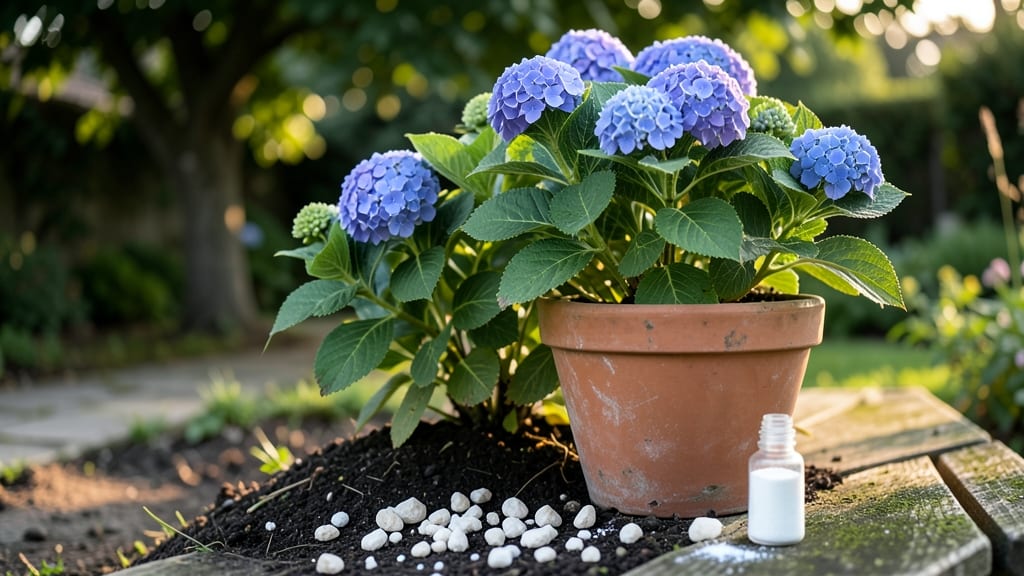
Lime for hydrangeas transforms blue flowers to pink or purple by increasing soil pH, while preserving vibrant colors in pink/red varieties. Use 1-2 pounds of garden lime per 100 square feet in early spring or fall, then monitor soil pH annually for optimal results.
This soil amendment works by shifting the pH balance, which directly affects the flower pigments. 🌸 Hydrangeas produce blue hues in acidic soil (pH 5.2-5.5) due to delphinidin pigments, while pink and purple colors appear in neutral to alkaline conditions (pH 6.0+).
The key is precise application—too much lime can damage roots, so always test your soil first. I recommend starting with a small test area to observe color changes before treating your entire garden.
For best results, apply lime when the soil is moist but not soggy, and water thoroughly afterward. This helps distribute the lime evenly and prevents clumping.
Many gardeners make the mistake of applying lime in summer when plants are actively growing, but early spring or fall timing gives roots time to adjust without stress. Remember, hydrangeas are sensitive to sudden pH changes, so gradual adjustments yield the most dramatic—and safest—color transformations.
💡 In This Article
- How Lime Affects Hydrangea Bloom Color Chemistry
- Step-by-Step Lime Application Guide for Hydrangeas
How lime affects hydrangea bloom color chemistry
Hydrangea flower color changes happen because of complex chemical reactions in the petals triggered by soil pH levels. The blue hues we see in acidic soil (pH 5.2-5.5) come from delphinidin pigments, which thrive when aluminum is available in the soil.
When you add lime, it raises the pH above 6.0, making aluminum less soluble and preventing these blue pigments from forming. Instead, the plant produces cyanidin pigments that create pink or purple flowers. This isn't just about color—it's a biological response to the plant's environment.
The magic happens at the cellular level in the petals. In acidic conditions, aluminum ions bind with delphinidin to create that signature blue color.
When lime raises the pH, these aluminum ions become less available, and the plant switches to producing cyanidin-based pigments. 🌸 What's fascinating is that this color shift is reversible—if you lower the pH again, the flowers can return to blue.
The key measurement point is pH 5.5, where you'll see the most dramatic color transitions occurring. This is why precise application matters so much.
Aluminum availability is the critical factor here. Most garden soils contain aluminum, but its solubility depends entirely on pH. At pH 5.0, up to 90% of soil aluminum is available to plants, while at pH 6.0, that drops to nearly 0%.
This dramatic shift explains why even small pH changes can produce noticeable color differences in hydrangeas. The plant doesn't produce these pigments randomly—it's a direct response to the chemical environment created by your soil amendments.
What most gardeners don't realize is that hydrangea color changes happen gradually. It typically takes 6-8 weeks after lime application for new growth to emerge with the altered pigmentation. This is why timing matters—you won't see instant results.
The color transformation occurs in the new blooms that form after treatment, not the existing flowers. For consistent color results, you'll need to maintain the desired pH level throughout the growing season.
There's also a regional consideration to keep in mind. In areas with naturally alkaline soils (common in the western U.S.), hydrangeas often produce pink flowers naturally. Conversely, in acidic regions (like parts of the Southeast), blue flowers dominate without any intervention.
This geographic variation shows how soil chemistry fundamentally shapes plant characteristics. When you add lime, you're essentially mimicking the natural soil conditions of those alkaline regions.
For those looking to create specific color effects, remember that pH 5.2-5.5 produces blue, pH 5.6-5.9 yields purple, and pH 6.0+ results in pink. The transition zones between these pH levels often produce the most interesting color variations.
This is why many gardeners aim for pH 5.8 to achieve that sought-after lavender or mauve hue that's harder to find naturally.
The science behind this color transformation is what makes hydrangeas so special in the gardening world. It's one of the few plants where you can visibly see the effects of soil chemistry on flower color.
This knowledge lets you create a living color palette simply by adjusting your soil's pH levels. 🌿 The possibilities for garden design become truly endless when you understand this fundamental relationship between chemistry and horticulture.