
Shrubs
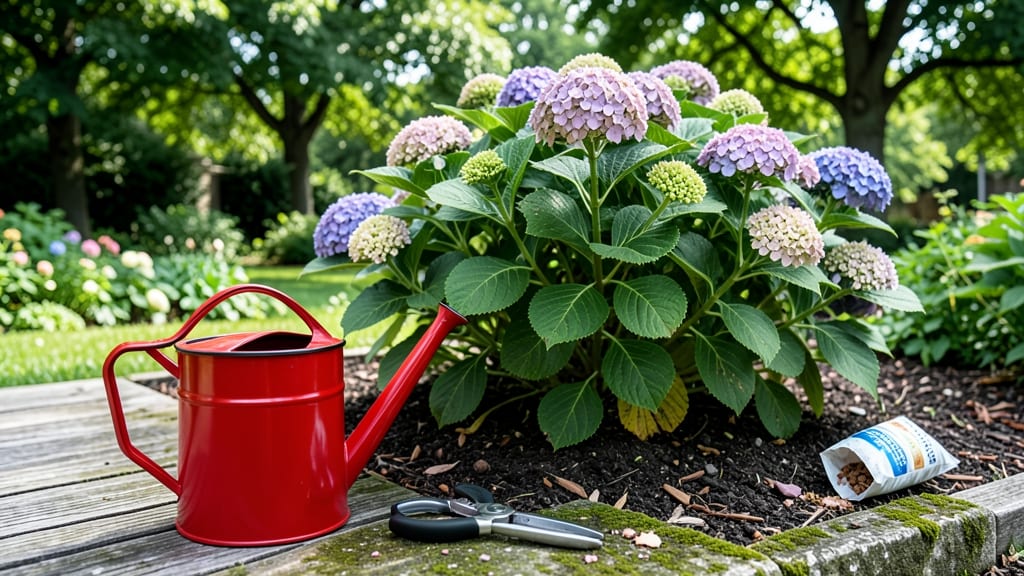
Understanding the maintenance needs of hydrangeas is key to turning their dramatic blooms from flops to showstoppers—moisture, light, and pruning all make or break those lush clusters. 🌸 I’ve learned the hard way that skipping one step can turn vibrant clusters into sad, sparse stems by summer.
The secret isn’t complicated: consistent watering, the right pruning timing, and soil that stays just damp enough (but not soggy). Most gardeners overlook seasonal shifts—hydrangeas need morning sun and afternoon shade in hot climates, while cooler zones can handle full sun.
Mulch keeps roots cool in summer and insulated in winter, and feeding them balanced fertilizer twice a year (spring and early summer) prevents weak stems. Even the soil pH matters: blue blooms love acidic soil (pH 5.5), while pink thrives in neutral (pH 6.5).
You’ll end up with blooms so lush they’ll make neighbors ask for cuttings. The payoff comes in late summer when your bushes burst with color, and the fragrance lingers on warm evenings.
Prune at the right time (right after blooming for most varieties), and you’ll avoid the heartbreak of cutting off next year’s flowers by accident. Works for both container-grown hydrangeas and in-ground plants—just adjust watering frequency. Here’s how to keep them happy year-round without the guesswork.
📚 In This Guide
- What you need
- Instructions
- Tips and common mistakes
- Wrapping up and next steps
What you need
- ● Pruning shears: Sharp, bypass-style shears (4–6 inches long) for clean cuts. Disinfect with rubbing alcohol between cuts to prevent disease.
- ● Garden gloves: Heavy-duty, nitrile-coated gloves (size medium/large) to protect from thorns and soil.
- ● Mulch: 2–3 inches of organic mulch (e.g., shredded bark, pine straw, or compost). Avoid dyed mulch—it can harm roots!
- ○ Watering can or hose: A soaker hose or drip irrigation (optional but ideal) for deep, consistent watering.
- ● Fertilizer: Balanced granular fertilizer: 10-10-10 or 20-20-20 (apply spring and summer, following package rates).
- ● Acid-loving plant fertilizer: For blue/pink blooms, use an acidifying fertilizer (e.g., Miracid or Azalea food).
- ● pH test kit: Digital or liquid test kit to monitor soil pH (aim for 5.2–5.5 for blue blooms, 6.0+ for pink).
- ● Aluminum sulfate or sulfur: For lowering pH (follow package instructions carefully!).
- ● Stakes or plant supports: 3–4 wooden or bamboo stakes (6–12 inches tall) + soft ties for young or top-heavy plants.
- ● Slow-release fertilizer spikes: Convenient for season-long nutrition without manual application.
- ● Rain gauge: To track watering needs accurately (hydrangeas need 1–1.5 inches/week).
- ● Pruning sealant: For large cuts (though not always necessary—clean cuts heal well!).
- ● Compost or worm castings: Boost soil health with organic matter (1–2 cups per plant annually).
- ● Plant food spray: Foliar feed (e.g., fish emulsion) for a quick nutrient boost during blooming season.
Step-by-step year-round care for hydrangeas
Here's how to keep your hydrangeas thriving through every season with minimal fuss.
☀️ Step 1: Provide Consistent Light and Water
Hydrangeas need morning sun and afternoon shade—at least 4-6 hours of direct sunlight daily—to prevent leaf scorch while maintaining vibrant blooms. I position mine where they get gentle morning rays and afternoon shade from nearby trees. If your garden has intense afternoon sun, a lightweight shade cloth (30-50%) stretched overhead during peak hours works wonders.
Watering is where most people go wrong. These plants demand 1-1.5 inches of water weekly, but they hate soggy roots. I check soil moisture by sticking my finger 2 inches deep—if it feels dry, it's time to water. Mulch with 2-3 inches of organic mulch around the base (but not touching the trunk) to retain moisture and regulate soil temperature. Overwatering leads to yellowing leaves, while underwatering causes buds to drop before blooming.
✂️ Step 2: Prune for Seasonal Health and Bloom Timing
Timing matters more than technique when pruning hydrangeas. For mophead and lacecap varieties, wait until late winter or early spring (just as new growth begins) to trim. Cut back old wood (last year's stems) by one-third to encourage fresh growth. I look for dormant buds near the base—these are your signal to prune. Never cut into old wood, or you'll sacrifice next year's blooms.
For panicle and smooth hydrangeas, prune in late winter or early spring too, but focus on removing dead or weak stems and shaping the plant. These varieties bloom on new wood, so aggressive pruning won't hurt their flowering. Always use clean, sharp pruners to avoid tearing stems and introducing disease. After pruning, give the plant a light fertilizer to support new growth.
🌿 Step 3: Feed and Adjust Soil for Optimal Blooms
Hydrangeas are heavy feeders, especially during spring and summer. I apply a balanced, slow-release fertilizer (10-10-10) in early spring, followed by a high-phosphorus fertilizer (5-10-10) when buds form to encourage blooming. Organic options like compost or worm castings work too—just work them into the top 4-6 inches of soil around the base. Avoid high-nitrogen fertilizers; they promote leafy growth at the expense of flowers.
Soil pH dramatically affects bloom color. For blue flowers, aim for pH 5.0-5.5 (add sulfur or aluminum sulfate). For pink blooms, keep pH 6.0-7.0 (add lime). Test soil every 2-3 years with a home pH kit and adjust gradually. Overcorrecting pH can shock roots and stunt growth. I also top-dress with 1-2 inches of compost annually to replenish nutrients and improve soil structure.
⏰ Step 4: Winterize for Cold Climates
In USDA Zones 5-7, hydrangeas need protection from winter winds and frost. I wrap the canes of mophead and lacecap varieties with burlap or frost cloth after the first hard freeze, securing it loosely with twine. For panicle and smooth hydrangeas, which are more cold-hardy, a thick layer of mulch (4-6 inches) around the base suffices. Never use plastic wrap—it traps moisture and causes rot.
Prune dead or damaged stems in early spring (after the last frost) to reveal any hidden buds. If your hydrangea looks leggy or sparse, it might need a rejuvenation prune—cut all stems back to 4-6 inches from the ground in late winter. This drastic step encourages a fuller plant but delays blooming by a season. I only do this every 3-5 years to avoid overstressing the plant.
🌱 Step 5: Monitor for Pests and Diseases
Hydrangeas attract aphids, spider mites, and scale insects, especially in hot, dry weather. I inspect leaves weekly for sticky residue (aphids) or fine webbing (spider mites). A strong spray of water often dislodges aphids, while neem oil tackles mites and scale. For severe infestations, I apply insecticidal soap at dusk when bees aren't active. Preventative care—like removing spent blooms and pruning for airflow—reduces pest risks significantly.
Watch for leaf spot, powdery mildew, or wilt—signs of fungal issues. These thrive in humid, stagnant conditions, so improve airflow by thinning dense growth and watering at the base (not overhead). If you spot mildew, treat with baking soda spray (1 tsp baking soda + 1 quart water + a drop of dish soap). Always clean pruners with rubbing alcohol between cuts to prevent spreading disease.
Tips & tricks for year-round hydrangea care
These practical insights will help you avoid common pitfalls and keep your hydrangeas looking their absolute best through every season.
Lighting Strategy: The 4-6 hours of morning sun is non-negotiable for vibrant blooms, but afternoon shade isn't just about preventing leaf scorch—it's about preserving that rich color intensity. I've noticed my hydrangeas develop deeper hues when they get filtered light in the afternoon, almost like they're protecting their pigments from fading. For containers, rotate them weekly to ensure even light exposure all around the plant.
Watering Wisdom: That 2-inch soil moisture check might seem basic, but it's the difference between thriving plants and bud drop. I've learned to water deeply rather than frequently—aim for that 1-1.5 inches weekly, but deliver it all at once rather than little sips. This encourages deeper root growth that can better access moisture during dry spells. And remember: the mulch should be organic (like shredded bark or leaves) to improve soil structure over time.
Pruning Precision: Those dormant buds near the base are your pruning cues for mophead and lacecap varieties—don't guess! I mark the buds with a pencil before cutting to ensure I'm not removing next year's blooms. For panicle types, I make my cuts at a 45-degree angle just above a bud or side shoot to promote better regrowth. And here's a secret: after pruning, I give the fresh cuts a light spray of water to help them heal faster.
Soil Science: The pH adjustments for blue vs. pink blooms are fascinating, but timing matters just as much. I test my soil in early spring before applying amendments, and I never adjust by more than 0.5 pH points at a time. For example, if my soil is at 5.8 and I want blue flowers (pH 5.0-5.5), I'll apply sulfur in small increments over several months rather than all at once. Patience pays off with more vibrant colors.
Pro Tips for Maintenance Needs Of Hydrangeas
- These practical insights will help you avoid common pitfalls and keep your hydrangeas looking their absolute best through every season.
- Lighting Strategy: The 4-6 hours of morning sun is non-negotiable for vibrant blooms, but afternoon shade isn't just about preventing leaf scorch—it's about preserving that rich color intensity.
- Watering Wisdom: That 2-inch soil moisture check might seem basic, but it's the difference between thriving plants and bud drop.
Frequently asked questions
Got questions about keeping your hydrangeas thriving? Here are some common ones—and their answers—to help you care for these stunning shrubs like a pro!
How often should I water my hydrangeas?
Hydrangeas need consistent moisture, especially during their first year. Water deeply 1-2 times per week (more in extreme heat or sandy soil). Aim for 1-1.5 inches of water per week, and always water at the base to avoid fungal diseases. Mulch helps retain moisture!
When is the best time to prune hydrangeas?
Timing depends on the type! For bigleaf and oakleaf hydrangeas, prune right after flowering (late summer/early fall). For panicle and smooth hydrangeas, prune in late winter or early spring before new growth starts. Avoid pruning in fall for late bloomers!
Can I grow hydrangeas in containers?
Choose a large container (at least 15 gallons) with drainage holes and use well-draining potting mix. Opt for compact varieties like ‘Little Lime’ or ‘Endless Summer.’ Water more frequently than in-ground plants and fertilize monthly during growing season. Pro tip: Move containers to partial shade in hot afternoons!
Why are my hydrangea leaves turning yellow?
Yellow leaves often signal overwatering, nutrient deficiency, or root issues. Check for soggy soil (hydrangeas hate “wet feet”) or pests like aphids. If leaves are yellow with brown edges, it may be chlorosis—amend soil with iron or adjust pH (hydrangeas prefer 5.2–6.0). Prune affected branches to encourage new growth.
How do I change my hydrangea flower colors?
Bigleaf hydrangeas (H. macrophylla) change color based on soil pH! For blue flowers, add aluminum sulfate (lowers pH). For pink/purple, add lime or wood ash (raises pH). Test soil pH annually and amend gradually—color changes take 4–6 weeks to show!
Wrapping up and next steps
Caring for hydrangeas is all about consistency and attention to their unique needs—whether it’s adjusting soil pH, pruning at the right time, or protecting them from pests. With the right year-round maintenance, your hydrangeas will reward you with stunning, long-lasting blooms that brighten up any garden. 🌸
Now that you’re armed with these tips, roll up your sleeves and get gardening! Start by assessing your hydrangeas’ current state—do they need a prune, a soil test, or some winter prep?
Pick one actionable step to tackle this weekend, and soon, your garden will be bursting with color and life.