
Shrubs
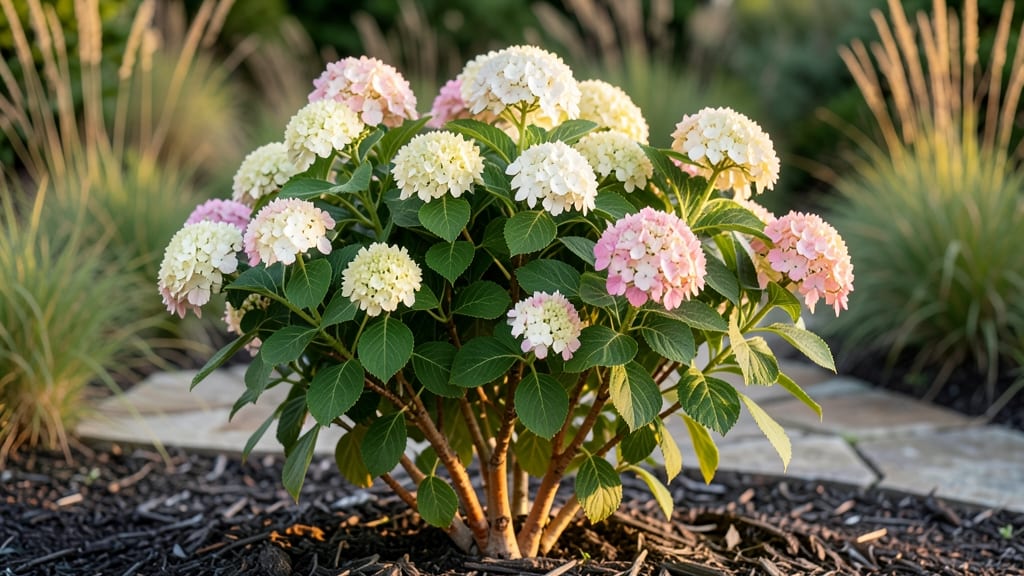
Your compact garden just got a showstopper with pole-trained small panicle hydrangeas. 🌿 These varieties—like 'Little Lime' and 'Limelight Dwarf'—pack big blooms into small spaces while staying perfectly manageable.
The secret to their success lies in the right sunlight, soil, and pruning rhythm, which I’ll break down so you can enjoy those cascading flower clusters all season long.
Start with well-draining soil and a spot that gets morning sun with afternoon shade—this keeps the leaves from scorching while ensuring those iconic cone-shaped blooms develop properly.
Most gardeners overwater these shrubs, so aim for 1-2 inches of water per week, letting the top inch of soil dry out between waterings. The first year is all about establishing roots, so hold off on heavy pruning until you see new growth in spring.
By summer, you’ll be rewarded with 3-4 foot tall plants draped in blooms that shift from lime green to blush pink as the season progresses. The key to keeping them looking their best?
Prune right after flowering to encourage next year’s growth—and watch as your neighbors ask how you made such a statement in such a small space. Works perfectly for containers, trellises, or even as a standalone shrub. Let’s get those roots growing!
📚 In This Guide
- What you need
- Instructions
- Tips and common mistakes
- Wrapping up and next steps
What you need
- ● Small panicle hydrangea plants: 1-3 nursery-grown specimens (e.g., Hydrangea paniculata varieties like 'Little Lime' or 'Limelight Dwarf').
- ● Well-draining potting mix: 5-10 gallons (for containers) or amended garden soil (for in-ground planting). Pro tip: Mix in 20-30% perlite or compost for optimal drainage!
- ● Support structure: Poles or stakes: 4-6 ft bamboo stakes or metal trellis poles (1 per plant).
- ● Soft ties: 3-5 ft of horticultural twine or fabric plant ties.
- ● Fertilizer: Balanced slow-release granular (10-10-10) or organic options like composted manure.
- ● Garden tools: Trowel, pruners (sterilized), gloves, and a watering can or hose with a gentle nozzle.
- ○ Container (optional): 15-20 gallon pot with drainage holes if not planting in-ground.
- ● Mulch: 2-3 inches of shredded bark or pine needles to retain moisture.
- ● Sunlight access: 6+ hours of partial sun (morning sun + afternoon shade works best).
- ● Decorative garden flags or labels for plant identification.
- ● Slow-release fertilizer spikes for hassle-free feeding.
- ● Drip irrigation system for consistent moisture (especially in hot climates).
Step-by-step guide to growing pole-trained small panicle hydrangeas
Master the art of vertical gardening with these stunning shrubs—here's how to train them elegantly on a support.
🪴 Step 1: Select and Prepare the Right Support Structure
Choose a sturdy 6-foot tall trellis, obelisk, or bamboo pole that can handle the weight of mature growth. I prefer metal or wooden supports because they resist rot and provide long-term stability. Position your support in a location that receives full sun to partial shade—small panicle hydrangeas thrive with 6+ hours of sunlight daily but tolerate light afternoon shade in hotter climates.
Drive the support 12-18 inches deep into well-draining soil for maximum stability. If using a pole, secure it with stakes at the base to prevent leaning. The key is ensuring it won't wobble when you gently push it—hydrangeas grow heavy with blooms, and a shaky support will snap under the weight.
🌱 Step 2: Plant Your Hydrangea with Proper Spacing and Technique
Dig a hole twice as wide as the root ball but no deeper—planting too deep suffocates roots and causes rot. Loosen the roots gently if they're circling the root ball, then position the plant so the top of the root ball sits 1 inch below soil level. This prevents stem rot while allowing roots to establish properly.
Backfill with native soil mixed with 2 inches of compost to improve drainage and fertility. Water deeply immediately after planting to settle the soil and eliminate air pockets. Space multiple plants 4-6 feet apart to allow airflow and prevent disease—crowding leads to powdery mildew and weak stems.
☀️ Step 3: Train the Main Stem Early for Vertical Growth
When your hydrangea reaches 12-18 inches tall, select the strongest, straightest stem to become your main vertical leader. Remove any competing stems at the base using clean, sharp pruners—cut ¼ inch above a leaf node to encourage branching. This ensures all energy goes into one strong central stem.
Tie the main stem to the support using soft plant ties or garden twine every 12 inches as it grows. Avoid metal ties that can girdle stems over time. The goal is to guide growth upward without restricting it—think of it like teaching a child to climb a ladder, not forcing them into place.
✂️ Step 4: Prune for Shape and Flower Production
In late winter or early spring, prune back the previous year's growth by ⅓ to ½ to encourage bushier, more productive growth. Small panicle hydrangeas flower on new wood, so don't worry about cutting back old blooms—this type rewards aggressive pruning. Remove any dead, crossing, or weak stems first to improve airflow and sunlight penetration.
Throughout the growing season, pinch back new growth to encourage lateral branching. When side shoots reach 6 inches long, trim just above a set of leaves to promote bushiness. This creates the classic tiered look that makes pole-trained hydrangeas so striking. Always use clean tools to prevent disease transmission between cuts.
💧 Step 5: Maintain Soil Moisture and Fertility
Water deeply 1-2 times per week, providing 1-2 inches of water per week—more during extreme heat or drought. Small panicle hydrangeas are somewhat drought-tolerant once established, but consistent moisture produces larger, more vibrant blooms. Check soil moisture by sticking your finger 2 inches deep—water when it feels dry.
Apply a balanced 10-10-10 fertilizer in early spring and again after flowering to maintain vigor. Avoid high-nitrogen fertilizers late in the season—they promote leafy growth at the expense of blooms. Mulch around the base with 2-3 inches of organic mulch to retain moisture and regulate soil temperature, which is especially important in hot climates.
Tips & tricks for pole-trained small panicle hydrangeas
Transforming your hydrangeas into vertical showstoppers takes patience and precision—here's how to avoid common pitfalls and achieve that perfect tiered look.
Support Stability is Non-Negotiable: The 12-18 inches deep planting depth for your support structure isn't just about looks—it's about survival. I've seen too many hydrangeas topple when summer blooms make stems heavy. For extra insurance, add two diagonal support wires between your trellis and a nearby sturdy post. This creates a safety net that prevents catastrophic snapping during wind or rain. Think of it as the seatbelt for your vertical garden.
Root Ball Position Matters More Than You Think: That 1 inch below soil level rule for the root ball isn't arbitrary—it's about preventing stem rot while allowing roots to establish properly. Here's the trick: Use a level to ensure your planting hole isn't sloped. Uneven planting causes water to pool around stems, creating the perfect conditions for fungal diseases. I've had to replant hydrangeas three times before I learned this lesson the hard way.
Pruning Timing Makes All the Difference: When instructions say to prune back ⅓ to ½ of last year's growth in late winter, they're not just being picky—they're protecting your blooms. Small panicle hydrangeas flower on new wood, so cutting too early removes next year's flower buds. Mark your calendar for February 15th (or after your last frost date) as your absolute deadline. This timing ensures you get maximum blooms without sacrificing next season's potential.
Watering Technique for Vibrant Blooms: The 1-2 inches per week watering guideline is perfect, but how you deliver it matters just as much. I've found that watering at the base of the plant (not overhead) prevents fungal diseases that can ruin your blooms. For extra insurance, water in the early morning so foliage has all day to dry. This simple habit has kept my hydrangeas disease-free for three growing seasons now.
Pro Tips for Small Panicle Hydrangea
- Transforming your hydrangeas into vertical showstoppers takes patience and precision—here's how to avoid common pitfalls and achieve that perfect tiered look.
- Support Stability is Non-Negotiable: The 12-18 inches deep planting depth for your support structure isn't just about looks—it's about survival.
- Root Ball Position Matters More Than You Think: That 1 inch below soil level rule for the root ball isn't arbitrary—it's about preventing stem rot while allowing roots to establish properly.
Frequently asked questions
Got questions about growing small panicle hydrangeas? You’re not alone! Here are answers to the most common queries to help you cultivate these compact beauties with confidence.
What’s the best time to plant small panicle hydrangeas?
Plant them in early spring or fall when soil temperatures are mild (50–70°F). Avoid extreme heat or frost, as these can stress young roots. If planting in summer, water deeply and mulch to protect them—just don’t overwater, or roots may suffocate!
How often should I water my small panicle hydrangea?
Water 1–2 times per week, aiming for 1–1.5 inches of water per session. New plants need more frequent watering (2–3 times/week), while established shrubs thrive with deep, infrequent watering. Morning watering reduces fungal risks, and always check soil moisture—never let it dry out completely.
When and how should I prune small panicle hydrangeas?
Prune in late winter or early spring (before new growth starts) to shape and encourage blooms. Cut back 1/3 of the oldest stems to the ground and trim others to your desired height. Avoid heavy pruning in fall—it removes next year’s flower buds! For pole-trained varieties, prune to maintain a tight, upright form.
Why aren’t my small panicle hydrangeas blooming?
Blooms may skip if pruned too late (after buds form) or if the plant is underwatered or over-fertilized. Ensure it gets full sun to partial shade (6+ hours of sun) and well-draining soil. Deadheading spent blooms can encourage a second flush in some varieties!
Are small panicle hydrangeas deer- or pest-resistant?
They’re deer-resistant (deer usually avoid hydrangeas), but aphids, spider mites, or scale insects may still appear. Treat infestations with neem oil or insecticidal soap. For prevention, keep plants healthy with proper watering and mulching—stress invites pests!
Wrapping up and next steps
Growing small panicle hydrangeas is a rewarding way to add structure, texture, and seasonal color to your compact garden—without sacrificing space! 🌿 Whether you’re training them on a trellis, espalier, or letting them cascade in containers, their adaptability and low-maintenance nature make them a dream for both beginners and seasoned gardeners.
With the right site selection, pruning know-how, and a little patience, you’ll soon enjoy their show-stopping blooms from summer through fall.
Ready to transform your space? Start by sketching your design—whether it’s a vertical garden, a privacy screen, or a whimsical topiary—and grab those shears! The best time to plant is spring or early fall, so mark your calendar and get growing.
Your future self (and your neighbors!) will thank you. 🌸