
Plants
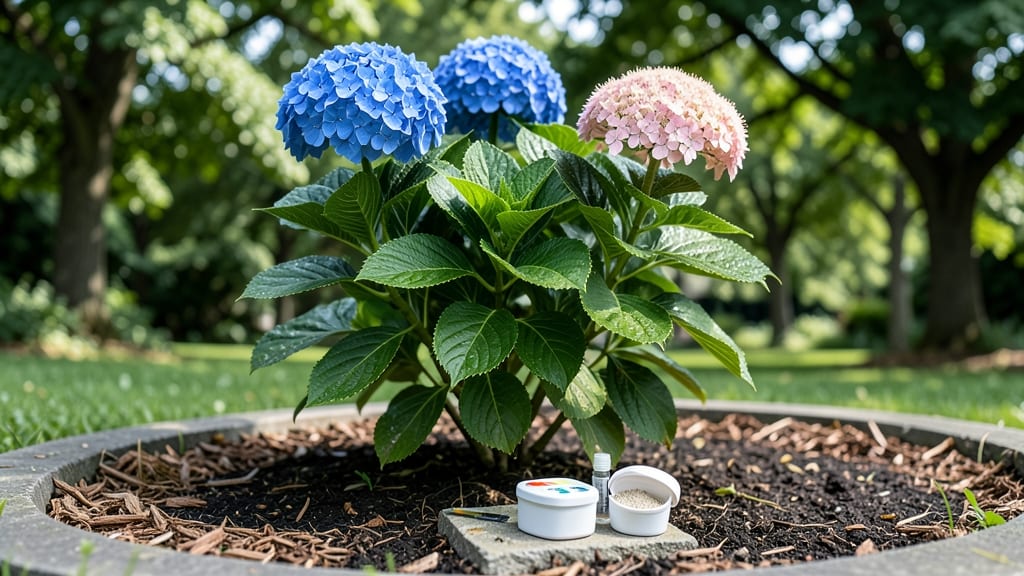
Soil pH isn't just about numbers—it's about unlocking the right chemistry for your hydrangeas. 🌸 The acidity level determines how much aluminum your plants can absorb, which in turn affects the anthocyanin pigments responsible for those stunning blue, pink, or purple hues.
For example, blue hydrangeas need more acidic soil because they rely heavily on aluminum to develop their signature color.
I've found that testing your soil's pH with a simple DIY kit (available for under $10) is the easiest way to start, then adjusting with organic amendments like sulfur (to lower pH) or crushed limestone (to raise it) gives you precise control without harsh chemicals.
Timing matters too—never adjust pH during active blooming season, as sudden changes can stress the plant. Instead, make adjustments in early spring or fall when roots are actively growing.
Pro tip: If you're growing multiple hydrangea varieties, consider planting them in separate containers where you can control the soil pH for each plant individually. This way, you can achieve that perfect color palette without compromising any plant's health.
💡 In This Article
- How Soil pH Affects Hydrangea Flower Colors
- Testing and Adjusting Soil pH for Hydrangeas
How soil pH affects hydrangea flower colors
The vibrant hues of hydrangea blooms aren't just a matter of genetics—they're a direct result of soil chemistry. Hydrangeas produce pigments called anthocyanins, which react with aluminum ions in the soil. When the soil is more acidic (pH 5.2-6.0), aluminum becomes more soluble, allowing roots to absorb it.
This chemical reaction triggers the production of delphinidin, the pigment responsible for blue flowers. 🌿 In contrast, less acidic soil (pH 6.0-7.0) reduces aluminum availability, shifting the pigment production toward cyanidin, which creates pink blooms.
Here's where it gets fascinating: the exact shade of blue or pink depends on the balance between aluminum and other minerals like iron and manganese.
For example, a pH of 5.5 might produce a soft lavender if there's moderate aluminum, while pH 5.0 with high aluminum yields that classic deep blue. Purple hydrangeas fall in between, typically thriving at pH 5.5-6.5, where both pigment pathways are active.
This is why some hydrangea varieties can change color dramatically based solely on soil conditions—a phenomenon gardeners call "pH-induced color shifting."
What most people don't realize is that this chemical process happens at the cellular level. Aluminum ions bind to specific enzymes in the flower petals, altering the production of anthocyanins.
The more acidic the soil, the stronger this binding becomes, which is why blue hydrangeas often appear more vibrant in early spring when soil is naturally more acidic from winter rains. 💧 This is also why hydrangeas grown in containers can change color so dramatically—the pH of potting mix can be easily adjusted with amendments like pine needles (to lower pH) or wood ash (to raise it).
There's a catch, though: while aluminum is crucial for blue flowers, too much can be toxic to hydrangea roots. This is why the optimal range for blue blooms is 5.2-6.0—acidic enough for pigment production but not so acidic that it damages the plant.
Gardeners often use aluminum sulfate to boost blue pigmentation, but it must be applied carefully, following package instructions to avoid over-acidification. The key is finding that sweet spot where the chemistry works in your favor without harming the plant.
Consider this real-world example: In my own garden, I planted two 'Endless Summer' hydrangeas side by side—one in native soil with a pH of 6.8 (producing pink blooms) and the other in a raised bed with sulfur-amended soil at pH 5.5 (yielding blue flowers).
The visual difference was stunning, proving that soil pH isn't just about plant health—it's about creating the exact color palette you envision. The blue hydrangea also had slightly larger blooms, suggesting that the optimal pH for pigmentation might also enhance overall plant vigor.