
Plants
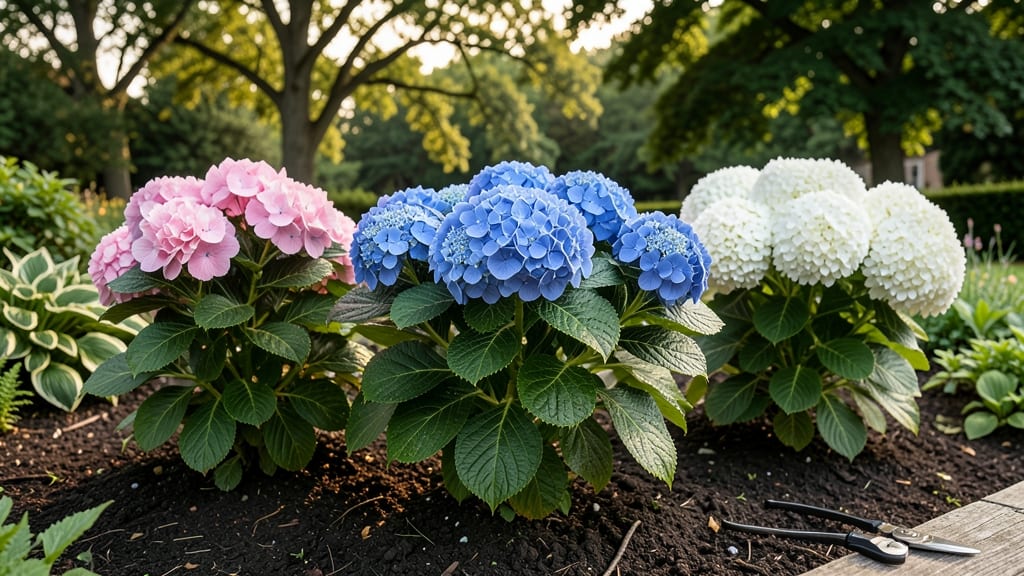
The magic of different color hydrangeas—those that blush pink in spring and deepen to blue by summer—is all thanks to your soil’s hidden secrets. 🌸 The secret isn’t just the color change, though; it’s how they turn your garden into a living paint palette.
Pair white blooms with lavender for a dreamy cottage look, or let emerald green varieties steal the show in shady spots. My favorite trick? Planting a mix of colors in a single border—by midsummer, it’s like a watercolor painting that keeps evolving.
The best part? You don’t need a green thumb; just adjust the pH and let nature do the rest.
Imagine a purple-hued focal point near your patio or a blush-pink archway framing your front door. These aren’t just plants; they’re seasonal mood rings for your outdoor space. And when fall arrives, the dried blooms add texture and drama that lasts through winter.
Whether you’re going for a bold statement or soft contrast, hydrangeas let you play with color like a pro. The key is mixing varieties—try a blue ‘Nikko Blue,’ a pink ‘Endless Summer,’ and a white ‘Annabelle’ for instant impact. Your garden will thank you.
📚 In This Guide
- What you need
- Instructions
- Tips and common mistakes
- Wrapping up and next steps
What you need
- ● Hydrangea plants: Choose from varieties like Hydrangea macrophylla (mophead/lacecap), Hydrangea paniculata (panicle), or Hydrangea arborescens (smooth). Buy 3–5 plants for a balanced mix of colors.
- ● Well-draining potting soil: 5–10 gallons (depending on pot size). Opt for a mix with peat moss or compost for moisture retention.
- ● Containers or garden bed: For pots: 14–18-inch diameter containers (1 per plant) with drainage holes.
- ● For in-ground planting: A sunny to partially shaded spot with 6+ hours of light and 6–8 feet of spacing between plants.
- ● Fertilizer: A balanced granular fertilizer (10-10-10) or acid-loving plant food (e.g., Miracle-Gro Azalea, Camellia & Rhododendron). Use 2–3 tablespoons per plant every 4–6 weeks during growing season.
- ● Watering can or hose: With a gentle spray nozzle to avoid damaging blooms.
- ● Pruning shears: Bypass pruners (sharp and clean) for trimming deadheads or shaping.
- ● pH soil test kit: To monitor acidity (hydrangeas thrive in pH 5.2–6.0 for blue/purple blooms or pH 6.0–7.0 for pink/red).
- ● Aluminum sulfate or lime: Adjust soil pH for color-changing magic! Use 1–2 tablespoons per gallon of soil as needed.
- ● Mulch (pine bark or straw): 2–3 inches to retain moisture and regulate temperature.
- ● Slow-release fertilizer spikes: For 3–4 months of nourishment with minimal effort.
- ● Garden gloves: To protect hands while handling thorny stems or soil.
- ● Decorative stakes or trellis: For supporting H. paniculata varieties that grow tall.
How to create a hydrangea color spectrum display
Here's how to transform your garden into a living rainbow using just four hydrangea varieties.
🌿 Step 1: Select Varieties for the Full Color Range
Choose four hydrangea types to create your spectrum: 'Endless Summer' (blue/pink), 'Nikko Blue' (deep blue), 'Limelight' (greenish-white), and 'Blushing Bride' (pink). Each responds differently to soil pH, which controls their final color. I always pick one early bloomer, one mid-season, and two late-season varieties to extend the display from June through September.
Plant them in a 4-foot square area where they'll mature into a cohesive display. Space each plant 4-5 feet apart—hydrangeas need room for their canes to spread without crowding. The key to vibrant colors is consistent moisture, so group them where you can water evenly without missing spots.
☀️ Step 2: Adjust Soil pH for Color Control
Test your soil pH first—hydrangeas change color based on acidity. For blue blooms, aim for pH 5.5-6.0 (add sulfur or pine needles). For pink blooms, keep it neutral to slightly alkaline (pH 6.5-7.5) (add lime). 'Limelight' stays greenish-white regardless of pH, making it your neutral anchor.
I like to plant 'Nikko Blue' and 'Endless Summer' together in one 6-inch deep trench of amended soil. Mix in 1 cup of aluminum sulfate per plant for blue hues, or ½ cup of garden lime for pink. Water deeply after amending to help the pH adjust.
💧 Step 3: Water and Mulch for Consistent Moisture
Hydrangeas drink 1-2 gallons of water weekly during bloom season. I install drip irrigation on a timer for 30 minutes every morning—this prevents stress that dulls colors. Check soil moisture by sticking your finger 2 inches deep; if it feels dry, water immediately.
Cover the base with 3 inches of mulch (pine bark or shredded leaves) to lock in moisture and regulate temperature. Mulch also prevents pH fluctuations that can cause color shifts mid-season. Replenish mulch annually in early spring before new growth appears.
✂️ Step 4: Prune for Season-Long Blooms
'Endless Summer' and 'Limelight' bloom on old and new wood, so prune in late winter (February-March) to remove dead stems and shape the plant. Cut back one-third of the oldest canes to encourage fresh growth. For 'Nikko Blue' and 'Blushing Bride', prune in early spring after blooms fade—these bloom only on old wood.
Deadhead spent blooms in late summer to redirect energy into next year's flowers. I always leave a few old blooms on 'Nikko Blue' until spring—they provide winter interest and protect the buds forming beneath them.
🌱 Step 5: Maintain Color Through the Seasons
Monitor soil pH every 4-6 weeks during the growing season. A simple $10 test kit from the garden center lets you adjust as needed. If blooms start fading to purple (a sign of stress), check for underwatering or nutrient deficiency—feed with a balanced fertilizer (10-10-10) in early spring and mid-summer.
In fall, apply a 2-inch layer of compost around the base to replenish nutrients. Hydrangeas are heavy feeders, and this boost ensures vibrant blooms the following year. Cover the base with hollyhocks or astilbes in front—they thrive in similar conditions and extend your color display.
Tips & tricks for perfect hydrangea color spectrum displays
Creating a stunning hydrangea rainbow isn't just about planting—it's about understanding the science behind those vibrant hues.
Soil pH Precision: The pH range of 5.5-6.0 for blue blooms and 6.5-7.5 for pinks is non-negotiable, but here's the secret: test your soil in multiple spots across your planting area. I've seen gardens where one side tested 6.0 and the other 7.0—this can create color inconsistencies. Mix your amendments thoroughly in the 6-inch deep trench to ensure uniform results throughout the planting area.
Timing is Everything: That 30-minute daily irrigation is your color-preserving secret weapon. I've found hydrangeas wilted by midday when watered only once daily, leading to dull, stressed blooms. Split the watering into two 15-minute sessions—morning and late afternoon—to maintain consistent moisture without over-saturating the roots. This mimics natural rainfall patterns and keeps flowers vibrant.
Pruning Strategy: When you're cutting back one-third of the oldest canes in late winter, focus on the largest, most woody stems. These are the ones that produce the most flowers. I like to make my cuts just above a set of buds or a leaf node—this encourages new growth in exactly the right spots. For 'Nikko Blue' and 'Blushing Bride', resist the urge to prune too aggressively; their blooms form on last year's wood.
Color Maintenance Hack: The 4-6 week pH monitoring schedule is crucial, but here's what I do differently: I mark my calendar with bloom color targets. For example, I aim for 'Nikko Blue' to be a deep, rich blue by July 4th. If I notice any purple tinges appearing (a sign of stress), I immediately check both moisture levels and nutrient status. This proactive approach prevents color drift before it becomes noticeable.
Pro Tips for Different Color Hydrangeas
- Creating a stunning hydrangea rainbow isn't just about planting—it's about understanding the science behind those vibrant hues.
- Soil pH Precision: The pH range of 5.5-6.0 for blue blooms and 6.5-7.5 for pinks is non-negotiable, but here's the secret: test your soil in multiple spots across your planting area.
- Timing is Everything: That 30-minute daily irrigation is your color-preserving secret weapon.
Frequently asked questions
Got questions about turning your garden into a hydrangea rainbow? We’ve got answers! Here are some of the most common queries about growing and enjoying different color hydrangeas—plus a few pro tips to keep your blooms vibrant all season.
Why do my hydrangeas change color?
Hydrangea color shifts depend on soil pH and variety! Macrophylla (bigleaf) hydrangeas, for example, turn blue in acidic soil (pH < 6.0) and pink in alkaline soil (pH > 7.0). Oakleaf and panicle types (like PeeGee) are less pH-sensitive but may still vary slightly. Test your soil and amend with lime (to raise pH) or sulfur (to lower it) for dramatic color control!
When is the best time to plant hydrangeas for vibrant blooms?
Plant in early spring or fall (4–6 weeks before the first frost) for the best root establishment. Avoid summer heatwaves, which can stress young plants. If transplanting mature hydrangeas, do it in spring—they’ll reward you with bigger, brighter blooms the following year. Pro tip: Water deeply after planting and mulch to retain moisture!
Can I make my hydrangeas bloom in multiple colors at once?
Yes! Try planting two varieties with different pH preferences in the same bed. For example, pair a blue Nikko Blue (pH < 6.0) with a pink Endless Summer (pH > 7.0). Use separate containers if your soil pH is uniform—just adjust the soil mix in each pot (e.g., peat moss for acidity, crushed limestone for alkalinity).
My hydrangeas are brown and crispy—what’s wrong?
Brown, dry edges usually mean underwatering or heat stress. Hydrangeas love consistent moisture—aim for 1–2 inches of water weekly (more in summer). Check soil depth (2–3 inches down should feel damp). Overwatering can also cause issues, so ensure pots/containers have drainage holes. If temps soar above 90°F, provide afternoon shade to protect delicate blooms.
Are there hydrangea alternatives for small spaces or containers?
Try miniature varieties like ‘Little Lime’ (panicle, lime-green blooms) or ‘Bobo’ (mophead, compact size). Dwarf oakleaf hydrangeas (like ‘Dolce’) thrive in pots and offer seasonal color shifts from green to burgundy. For year-round interest, pair with heuchera (coral bells) or ajuga—both love similar shade and moisture conditions!
Still stumped? Drop your hydrangea woes in the comments—we’re happy to help you troubleshoot!
Wrapping up and next steps
Transforming your garden with different color hydrangeas is easier—and more rewarding—than you think! From vibrant blues to deep purples and even blush pinks, these blooms bring year-round drama with minimal effort.
Whether you’re a seasoned gardener or just starting, the key is choosing the right variety, soil pH, and care routine to unlock their full potential.
Ready to dive in? Start small—pick one hydrangea type to test your soil and experiment with color-changing tricks. Before you know it, your garden will be the envy of the neighborhood! 🌸✨