
Aphids
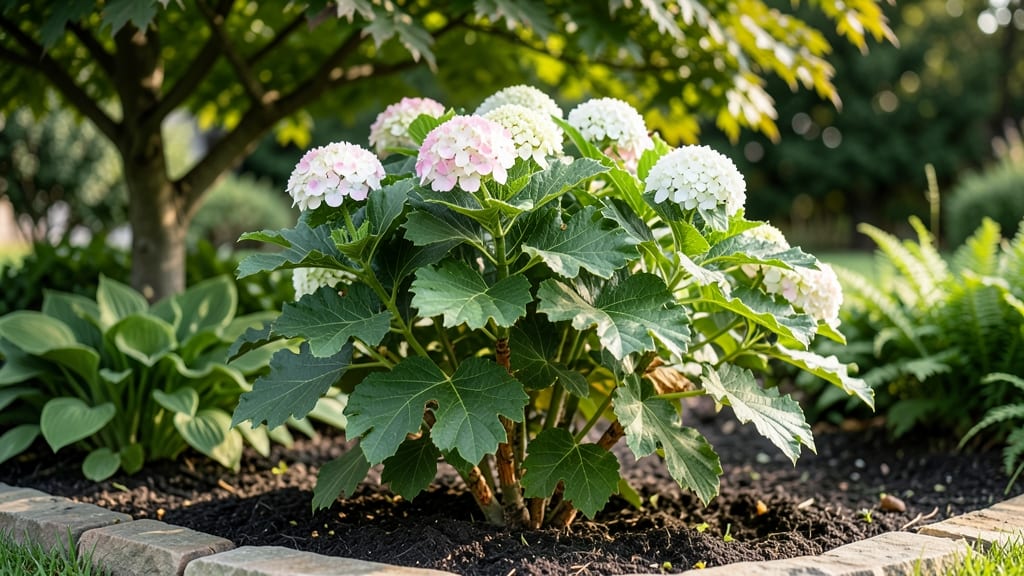
Growing Hydrangea quercifolia 'Alice' transforms your garden into a four-season showpiece with bold foliage and delicate blooms. 🌿 I fell for this oakleaf hydrangea after seeing its crimson fall leaves and lavender summer flowers—it’s the kind of plant that makes neighbors stop and ask questions.
Unlike fussy hydrangeas, 'Alice' thrives in partial shade and tolerates a range of soils, making it perfect for gardeners who want drama without the fuss.
The secret to its success lies in three simple steps: planting in well-draining soil with a pole for support (those stems grow 6-8 feet tall), watering deeply once a week during dry spells, and pruning in late winter to shape it.
Unlike mophead hydrangeas, 'Alice' blooms on old wood, so avoid heavy pruning—just tidy up dead stems and watch it reward you with longer blooming seasons than most varieties.
By summer, you’ll have a vibrant vertical garden that draws hummingbirds and adds texture to any space. The foliage turns deep burgundy in fall, and even the winter stems add interest with their peeling bark.
It’s the kind of plant that grows more beautiful each year with minimal effort—once established, it’s nearly indestructible.
Whether you’re training it up a fence, along a trellis, or as a standalone specimen, 'Alice' delivers year-round color with almost no maintenance. The key is patience—it takes 2-3 years to reach its full potential, but every season of growth makes it worth the wait.
Ready to grow one that steals the show?
📚 In This Guide
- What you need
- Instructions
- Tips and common mistakes
- Wrapping up and next steps
What you need
- ● Hydrangea Alice Oakleaf Plant: 1 healthy, established plant (bare-root or container-grown, 1–3 gallons in size).
- ● Well-draining potting soil: 5–10 gallons (mix with compost or peat moss for moisture retention).
- ● Pole or trellis: 6–8 ft tall, sturdy (bamboo, metal, or wooden). Diameter: 2–3 inches for stability.
- ● Garden twine or soft plant ties: 10–15 ft (biodegradable preferred).
- ● Pruning shears: Sharp, sterilized (for shaping and training).
- ● Mulch: 2–3 inches of wood chips or pine straw (to retain moisture).
- ● Fertilizer: Balanced 10-10-10 or acid-loving plant fertilizer (apply sparingly, 2–3 times per season).
- ● Watering can or hose: With a gentle spray nozzle (avoid over-saturation).
- ● Slow-release fertilizer spikes: For convenience (1–2 per plant).
- ● Epsom salt: 1 tbsp/month (boosts magnesium for vibrant foliage).
- ● Pest control: Neem oil or insecticidal soap (for aphids or spider mites).
- ● Garden gloves: To protect hands while pruning or mulching.
- ● Decorative stakes or clips: For a polished, hidden look (e.g., coppper wire or fabric ties).
Step-by-step guide to growing hydrangea 'Alice Oakleaf' on a pole
Here's how I transform this stunning variety into a vertical masterpiece—no climbing skills required.
🌱 Step 1: Choose the Perfect Location and Install Your Support Structure
Select a site with partial shade to full sun—'Alice Oakleaf' thrives in morning sun with afternoon shade, especially in hotter climates. The soil should drain well but retain moisture; amend heavy clay with 2-3 inches of compost mixed into the top 12 inches of soil. I always test pH first—this variety loves 5.5-6.5 for those signature blue blooms.
Install your trellis or pole system before planting. For a single stem, use a 6-foot wooden post with horizontal branches spaced 12 inches apart. Secure with soft garden twine (not wire—it can cut tender stems). Position the pole where the plant will receive at least 4 hours of direct sun daily for best flowering.
🌿 Step 2: Plant Your Bare-Root or Container-Grown Hydrangea
Dig a hole twice as wide as the root ball but no deeper. Gently loosen roots if container-grown, then place the plant so the top of the root ball sits 1 inch below soil level—this prevents stem rot while encouraging strong root growth. Backfill with native soil mixed with 1 cup of bone meal for phosphorus (essential for blooms).
Water deeply immediately after planting to eliminate air pockets. Mulch with 2-3 inches of shredded bark around the base, keeping it 6 inches away from the stem to prevent rot. I always stake young plants with a 3-foot support stake tied loosely to the pole—this gives stems stability while they establish.
✂️ Step 3: Train the Main Stem and Prune for Vertical Growth
Wait until spring after flowering to prune. Remove any dead or crossing stems at the base, then select one strong, central leader to grow upward. Tie this main stem to the lowest horizontal branch on your pole using soft twine. As it grows, gently weave new lateral branches through the pole's supports—never force them.
In late winter (before buds swell), prune back the previous year's stems to 6-8 inches above the ground. This encourages vigorous new growth from the base while maintaining the vertical form. I always sanitize pruners with rubbing alcohol between cuts to prevent disease spread.
💧 Step 4: Maintain Soil Moisture and Adjust pH for Color Control
Keep soil consistently moist but never soggy—'Alice Oakleaf' has shallow roots that dry out quickly. Water deeply 2-3 times per week during dry spells, aiming for 1-2 gallons per plant. For blue blooms, maintain pH 5.5-6.0 by amending soil with elemental sulfur if needed. For pink flowers, raise pH to 6.5-7.0 with garden lime.
Fertilize annually in early spring with 5-10-10 granular fertilizer applied 6 inches from the stem. Avoid high-nitrogen fertilizers—they promote leafy growth at the expense of flowers. I always water thoroughly after fertilizing to prevent root burn.
☀️ Step 5: Winter Care for Year-Round Color and Structure
In fall, cut back stems to 12-18 inches tall—this prevents damage from heavy snow and encourages new growth from the base. Wrap the main stem in burlap or frost cloth if your zone drops below -10°F. The large leaves provide some natural protection, but young plants need extra insulation.
Remove winter wrap in early spring before new growth appears. Prune out any dead wood immediately. The oakleaf variety's foliage turns stunning shades of burgundy and orange in fall—leave some stems unpruned to showcase this seasonal display while maintaining your vertical structure.
Tips & tricks for pole-trained hydrangea 'Alice Oakleaf' success
Transforming this elegant variety into a vertical showstopper takes patience and precision—here's how to avoid the common pitfalls that trip up even experienced gardeners.
Soil Preparation Matters: The 2-3 inches of compost mixed into the top 12 inches of soil isn't just about drainage—it creates the perfect moisture-retaining environment 'Alice Oakleaf' craves. I've learned the hard way that sandy soil without amendment leads to wilting even with regular watering. For heavy clay, mix in 1 part perlite to every 3 parts compost to improve aeration while maintaining moisture. The key is achieving that perfect balance between drainage and water retention that hydrangeas demand.
Support System Stability: That 6-foot wooden post might look sturdy, but I've seen too many gardeners underestimate wind forces. Bury the post 12-18 inches deep and use 4 diagonal support wires from the top to the ground for extra stability. The horizontal branches should be spaced 12 inches apart but also angled slightly outward to create a natural growth pattern. I always test the structure's stability by gently pushing it before planting—if it wobbles, reinforce it immediately.
Pruning Precision: The late winter pruning to 6-8 inches above ground is where many gardeners go wrong. Use sharp pruners and make clean cuts at a 45-degree angle just above a bud. I've found that leaving stubs or cutting too close to the bud reduces flowering potential. For the vertical training, use soft garden twine to gently guide stems—never force branches through the supports. The goal is to encourage natural growth patterns while maintaining that elegant vertical form.
Color Control Secrets: Want those signature blue blooms? Test your soil pH annually—hydrangeas are finicky about this. For blue flowers, maintain pH 5.5-6.0 using elemental sulfur (apply in early spring). For pink blooms, raise pH to 6.5-7.0 with garden lime. I've seen dramatic color changes within just a few weeks after adjusting pH—it's like watching a living painting transform before your eyes. Remember, the pH affects not just color but also nutrient availability, so don't overdo it.
Pro Tips for Hydrangea Alice Oakleaf
- Transforming this elegant variety into a vertical showstopper takes patience and precision—here's how to avoid the common pitfalls that trip up even experienced gardeners.
- Soil Preparation Matters: The 2-3 inches of compost mixed into the top 12 inches of soil isn't just about drainage—it creates the perfect moisture-retaining environment 'Alice Oakleaf' craves.
- Support System Stability: That 6-foot wooden post might look sturdy, but I've seen too many gardeners underestimate wind forces.
Frequently asked questions
about Hydrangea Alice Oakleaf—your go-to spot for quick answers! Whether you're a newbie or a seasoned gardener, these tips will help you grow this stunning shrub with confidence.How fast does Hydrangea Alice Oakleaf grow, and how big will it get?
Hydrangea Alice Oakleaf grows at a moderate pace, adding about 12–24 inches per year. With proper care, it typically matures to 6–8 feet tall and wide, making it perfect for hedges, privacy screens, or pole-trained specimens. Prune in late winter to control its size and shape!
When and how should I prune my Alice Oakleaf hydrangea?
Prune late winter or early spring (before new growth starts) to shape the shrub and encourage blooms. Remove dead or weak wood first, then trim back 1/3 of the oldest stems to the ground. Avoid heavy pruning in fall—it can reduce next year’s flowers!
Are Alice Oakleaf hydrangeas prone to pests or diseases?
These hydrangeas are disease-resistant but can attract aphids or scale insects. If you spot pests, spray with neem oil or insecticidal soap. Overwatering may cause leaf spot, so ensure well-draining soil and avoid wetting foliage.
Can I grow Hydrangea Alice Oakleaf in containers, and what’s the best soil mix?
Yes! Use a large container (at least 15-gallon) with well-draining soil (mix potting mix with perlite or sand). These hydrangeas thrive in acidic soil (pH 5.0–6.0), so add peat moss or sulfur if needed. Repot every 2–3 years for best growth.
Why aren’t my Alice Oakleaf hydrangea leaves turning the expected colors?
Color changes (from green to purple, red, or orange) depend on sunlight and temperature. Morning sun + afternoon shade enhances fall colors. If leaves stay green, they may need more sunlight or cooler temps. Avoid over-fertilizing—Alice Oakleaf prefers low-nitrogen food!
Wrapping up and next steps
The Hydrangea Alice Oakleaf is a stunning choice for gardeners seeking year-round beauty with minimal fuss! 🌿 Its adaptability, vibrant foliage, and easy care make it perfect for both beginners and seasoned plant lovers.
Whether you're training it on a pole for a dramatic vertical display or letting it cascade naturally, this hydrangea delivers wow with every season.
Ready to transform your space? Grab your gloves, pick a sunny spot, and start growing—your garden’s next masterpiece is just a few steps away! 🌸