
Flowers
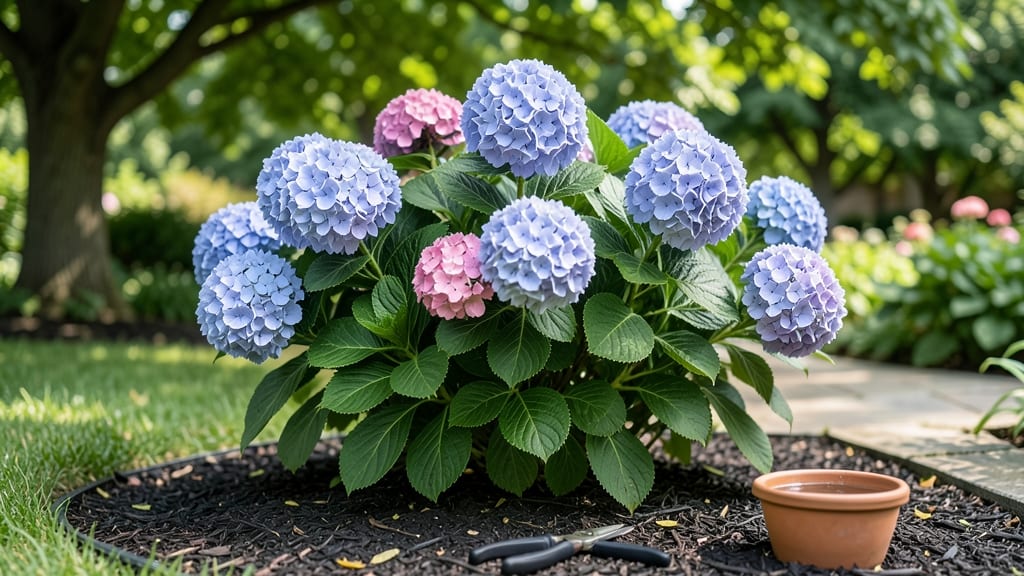
Double flower hydrangeas turn your garden into a lush, romantic display—but only if you train them right. 🌸 These showstopping blooms need a little guidance to avoid sprawling into chaos, especially in tight spaces. I’ve trained mine up a simple wooden stake, and the results are dramatic without the mess.
Start with the right spot: morning sun and afternoon shade keeps the blooms vibrant, while well-draining soil prevents those dreaded floppy stems. Double-flowered varieties like 'Endless Summer' or 'Nikko Blue' bloom on old and new wood, so pruning is less stressful than with other types.
Just snip back leggy stems in late winter to encourage bigger, fuller blooms next season. The payoff? Towering cascades of blooms that last from summer through fall, with minimal crowding.
You’ll even spot the subtle color shifts—pinks turning blue with soil pH changes—that make these plants endlessly fascinating. No more hiding them in the back of the border—they’ll be the star. Works for small yards, balconies, or even containers. Here’s how to keep them thriving without the guesswork.
📚 In This Guide
- What you need
- Instructions
- Tips and common mistakes
- Wrapping up and next steps
What you need
- ● Double flower hydrangea plants: Choose varieties like Hydrangea macrophylla 'Endless Summer' or 'Nikko Blue' (1-2 plants per pole, depending on desired density).
- ● Pole system: 1-2 bamboo or metal trellis poles (6-8 ft tall, 1-2 inches in diameter).
- ○ Trellis netting or wire mesh (optional, for extra support).
- ● Balanced pH soil: Test your soil’s pH (aim for 5.2-6.0 for blue blooms, 6.0-7.0 for pink). Amend with sulfur or lime if needed.
- ● Slow-release fertilizer: 10-10-10 or hydrangea-specific granules (follow package rates).
- ● Mulch: 2-3 inches of organic mulch (e.g., shredded bark or pine straw) to retain moisture.
- ● Garden gloves (to protect hands from thorns or rough stems).
- ● Pruning shears (clean, sharp pair for shaping and deadheading).
- ● Soft plant ties or Velcro straps (to secure vines to the pole gently).
- ● Watering can or drip irrigation (hydrangeas love consistent moisture!).
- ○ Spray bottle (for misting leaves on hot days, optional but helpful).
- ● Garden stakes or clips (for extra support during storms).
- ● Epsom salt (occasional foliar spray for greener leaves and bigger blooms).
- ● Decorative lights (to highlight your pole-trained hydrangeas at night!).
Step-by-Step guide to pole-training double flower hydrangeas
Here's how to coax lush, double-blooming hydrangeas up a trellis while keeping your garden tidy and space-efficient.
🪴 Step 1: Select and Prepare Your Trellis System
Choose a sturdy 6-foot tall trellis or obelisk with 1-inch diameter support poles spaced 12 inches apart. I prefer metal or pressure-treated wood because they resist rot and provide long-term stability. Install the trellis in full sun to partial shade—double flower hydrangeas need at least 4-6 hours of direct sun daily for optimal blooms, though they tolerate morning shade in hotter climates.
Drive the support poles 18-24 inches deep into the soil for maximum stability, especially if you live in a windy area. Use a level to ensure the trellis stands perfectly vertical—any tilt will cause the vines to grow unevenly. I like to bury the bottom 6 inches of the pole and fill the hole with gravel before backfilling with soil to prevent waterlogging at the base.
🌱 Step 2: Choose and Plant the Right Hydrangea Variety
Select a double-flowering hydrangea variety like 'Endless Summer' or 'Annabelle'—these produce abundant blooms on both old and new wood. Plant 4-6 bare-root plants (or container-grown) in early spring or fall when temperatures are mild. Dig a hole twice as wide as the root ball but only as deep—hydrangeas hate being buried too deeply, which can suffocate the crown.
Mix the excavated soil with 2 inches of compost and a handful of slow-release fertilizer (look for one with balanced 10-10-10 NPK). Place the plant so the top of the root ball sits 1 inch above soil level—this prevents rot during heavy rains. Water deeply to settle the soil, then mulch with 3 inches of shredded bark to retain moisture and regulate temperature.
☀️ Step 3: Train Young Vines to the Trellis
Wait until new growth appears in spring—you'll see 4-6 inch long shoots emerging from the base. Gently tie the strongest, straightest stem to the trellis using soft plant ties (never wire, which can girdle the stem). Space ties every 12 inches up the trellis to guide the vine upward. I like to use jute twine because it's biodegradable and won't damage the bark as the plant thickens.
Let the vine grow 6-8 inches before tying again—this prevents over-manipulation, which can stress young plants. Prune any weak or crossing branches at the base to encourage stronger upward growth. Double flower hydrangeas bloom on new wood, so avoid heavy pruning until after flowering. Watch for buds forming at the stem tips—these will develop into your showstopping blooms.
✂️ Step 4: Maintain and Prune for Maximum Blooms
Water deeply once a week (or more in extreme heat) to keep the soil consistently moist but not soggy. Double flower hydrangeas are thirsty plants—wilting stems mean lost blooms. I check soil moisture by pushing a finger 2 inches deep—if it feels dry, it's time to water. Feed with balanced liquid fertilizer every 4-6 weeks during the growing season to support vigorous growth.
After flowering, prune back any dead or weak stems to the nearest healthy bud. Never cut into old wood—double flower hydrangeas produce blooms on current year's growth. In late winter, trim any leggy growth that overreached the trellis, but leave 3-4 strong stems to ensure next season's flowers. This keeps the plant compact and manageable while maximizing bloom potential.
🌿 Step 5: Overwinter and Prepare for Next Season
In late fall, reduce watering as temperatures drop but keep the soil slightly moist—hydrangeas need hydration even in cooler months. Apply a 3-inch layer of mulch around the base to insulate roots from freezing temperatures. If you're in Zone 5 or colder, wrap the trellis (and attached vines) with burlap to protect against winter winds and frost.
Prune lightly in early spring (before buds swell) to remove any frozen or damaged growth. Double flower hydrangeas are hardy to Zone 3, but young plants may need extra protection. Watch for new shoots emerging in March—this is your cue to resume regular care. The first flush of blooms will appear 6-8 weeks after pruning, so plan accordingly for your garden's peak display.
Tips & tricks for pole-trained double flower hydrangeas
These simple yet game-changing strategies will help you transform your vertical garden into a stunning floral display without the usual mess.
Trellis Stability is Non-Negotiable: In Step 1, when installing your 6-foot trellis, I can't stress enough how critical that 18-24 inch depth is for wind resistance. I've seen trellises lean dangerously after just one storm—bury those poles properly. For extra security in windy areas, add a 3-foot long wooden stake at a 45-degree angle from the trellis base and tie it to the main pole with jute twine. This creates a triangle support system that's nearly unbreakable.
The Right Planting Depth Makes All the Difference: In Step 2, when you're planting your double-flowering hydrangeas, resist the urge to bury them deeper than the root ball's top sitting 1 inch above soil. I learned this the hard way when my first attempt produced crown rot after heavy rains. The key is that 1-inch elevation—it prevents waterlogging while keeping roots properly anchored. Pro tip: Use a small wooden stake marked with the 1-inch measurement to ensure perfect placement every time.
Vine Training Timing is Everything: In Step 3, when you're training those 4-6 inch shoots, patience pays off. I used to tie vines too frequently, which restricted growth. Now I follow the 6-8 inch rule—let the vine grow that much before adding another tie. This creates stronger stems that can support more blooms. Also, always tie to the strongest upward-growing stem, not just any vine. Weak stems will snap under the weight of flowers, and you'll be back to square one.
Winter Protection Goes Beyond Mulch: In Step 5, when preparing for winter, that 3-inch mulch layer is just the beginning. For Zone 5 gardeners, I recommend adding a second layer of straw mulch (4-6 inches total) after the first freeze. This creates an insulating blanket that protects roots from temperature swings. And for trellis protection, wrap the entire structure—not just the vines—with burlap. Cold winds can desiccate stems even when roots are protected, leading to winter dieback.
Pro Tips for Double Flower Hydrangea
- These simple yet game-changing strategies will help you transform your vertical garden into a stunning floral display without the usual mess.
- Trellis Stability is Non-Negotiable: In Step 1, when installing your 6-foot trellis, I can't stress enough how critical that 18-24 inch depth is for wind resistance.
- The Right Planting Depth Makes All the Difference: In Step 2, when you're planting your double-flowering hydrangeas, resist the urge to bury them deeper than the root ball's top sitting 1 inch above soil.
Frequently asked questions
about double flower hydrangeas—especially when training them in compact spaces—can help you avoid common pitfalls. Here are answers to the most pressing questions to ensure your pole-trained blooms thrive!Can double flower hydrangeas grow on a pole without overcrowding my garden?
Pole training (also called espalier) is perfect for double flower hydrangeas like Hydrangea macrophylla or Hydrangea paniculata. By pruning strategically and spacing plants 3–4 feet apart, you free up ground space while maximizing vertical beauty. Just ensure the pole is sturdy—hydrangeas can get heavy when laden with blooms!
When is the best time to plant double flower hydrangeas for pole training?
Plant in early spring or fall when temperatures are mild (50–70°F). This gives roots time to establish before extreme heat or cold. Avoid summer planting—hydrangeas hate transplant shock in hot weather. If using bare-root plants, soak roots overnight before installing to reduce stress.
How do I keep double flower hydrangeas blooming every year on a pole?
Prune macrophylla types (like Endless Summer) in late winter/early spring to encourage new growth. For paniculata types (e.g., Limelight), prune in late winter or early spring to shape the plant. Avoid heavy summer pruning—it can reduce next year’s flowers. Feed with acidic fertilizer (pH 5.5–6.2) for vibrant blooms.
Why aren’t my pole-trained double flower hydrangeas blooming?
Common culprits include:
- Over-pruning: Cutting back too late in the season removes next year’s flower buds.
- Wrong pH: Macrophylla types need acidic soil (add sulfur or pine needles if needed).
- Underwatering: Hydrangeas love moisture—keep soil consistently damp (but not soggy).
- Improper sunlight: Most need partial shade (4–6 hours of sun). Too much sun can scorch leaves.
What’s a good alternative if I don’t want double flower hydrangeas?
Try these pole-friendly, compact bloomers:
- Clematis: Thrives vertically with minimal ground space.
- Climbing roses: Classic pollinator magnet (choose dwarf varieties).
- Wisteria: Dramatic but needs strong support (and patience—it’s slow-growing).
- Campsis (Trumpet Vine): Bold orange-red flowers, fast-growing.
Wrapping up and next steps
Double flower hydrangeas are a game-changer for compact gardens—offering lush, voluminous blooms without the space demands of traditional shrubs. By mastering pole training, you unlock a world of vertical gardening possibilities, turning small yards into vibrant displays of color and texture.
Whether you’re a seasoned gardener or just starting, these tips and techniques make it easier than ever to transform your space with stunning, crowd-free beauty. 🌸
Ready to get growing? Start small—pick a single hydrangea, gather your supplies, and let your creativity bloom! Plant your first pole-trained hydrangea this season and watch your garden elevate in style. Happy gardening! 🌱