
Size
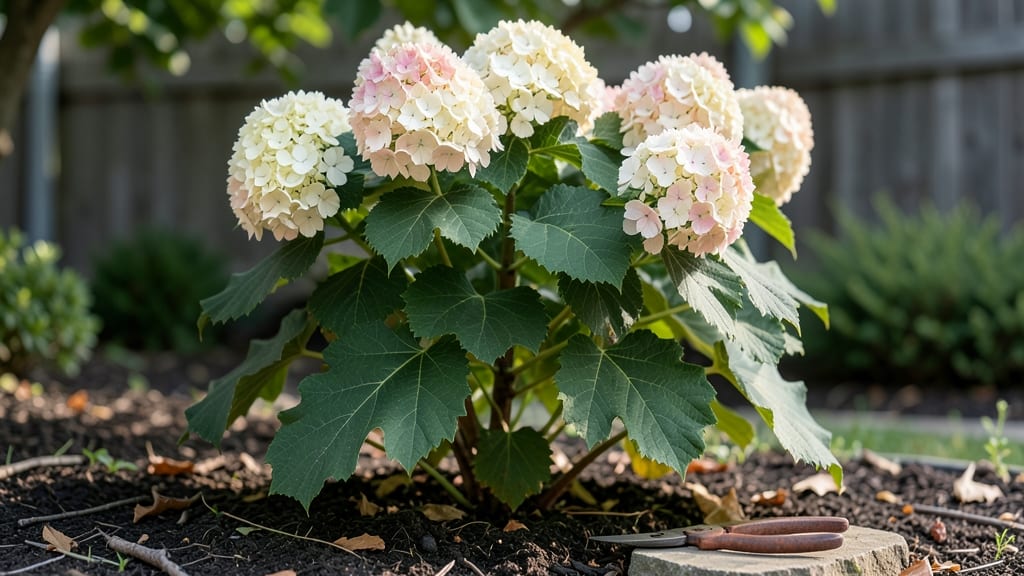
Oakleaf hydrangeas grow to 6 to 8 feet tall at maturity, but their spread and growth habits depend on the variety and how you care for them.
If you’re dreaming of adding dramatic, low-maintenance shrubs to your garden but aren’t sure about their long-term size, oakleaf hydrangeas could be your perfect match—yet their mature dimensions vary wildly by variety. Some stay compact enough for small yards, while others reach heights that rival small trees.
Understanding their growth patterns is key to choosing the right plant for your space. Whether you want a bushy, mounding look or a more upright form, knowing how big they’ll get helps with spacing and design.
Below, I’ll break down the height and spread of popular varieties, how to control their size through pruning and planting tips, and which types stay small for tight spaces.
Oakleaf hydrangea size by popular varieties: height and spread guide
Oakleaf hydrangeas (Hydrangea quercifolia) are prized for their stunning fall foliage and large, showy blooms, but their mature size can vary dramatically depending on the cultivar. Some stay compact enough for foundation plantings, while others grow tall enough to anchor a woodland garden.
Knowing these dimensions helps you plan spacing and design your landscape effectively.
Most oakleaf hydrangeas reach their mature height between 5 and 10 years, though growth rates differ by variety. For example, 'Pee Wee' stays under 3 feet tall, while 'Snow Queen' can top 8 feet.
Their spread often equals or exceeds their height, creating a lush, rounded canopy that’s perfect for privacy screens or focal points.
Below is a detailed comparison of 10 popular oakleaf hydrangea varieties, including their mature height, spread, and growth habits. Use this as your guide to selecting the perfect size for your garden space.
🌿
| Variety | Mature Height | Mature Spread | Growth Habit | Best For |
|---|---|---|---|---|
| 'Pee Wee' | 2–3 ft | 3–4 ft | Compact, mounding | Containers, small gardens, foundation plantings |
| 'Little Quickfire' | 3–4 ft | 3–4 ft | Dwarf, rounded | Patio pots, urban gardens, borders |
| 'Snow Queen' | 6–8 ft | 6–8 ft | Upright, pyramidal | Privacy screens, woodland gardens, focal points |
| 'Annabelle' | 4–6 ft | 4–6 ft | Bushy, rounded | Mixed borders, cottage gardens, mass plantings |
| 'Alice' | 5–7 ft | 5–7 ft | Upright, vase-shaped | Specimen plant, small trees, shade gardens |
| 'Amethyst Falls' | 4–6 ft | 4–6 ft | Weeping, arching branches | Container gardens, trellises, cascading displays |
| 'Pincushion' | 5–7 ft | 5–7 ft | Bushy, multi-stemmed | Wildlife gardens, pollinator-friendly spaces |
| 'Southern Belle' | 6–8 ft | 6–8 ft | Upright, vigorous | Large landscapes, hedges, woodland edges |
| 'Dangling Delight' | 6–8 ft | 5–7 ft | Weeping, graceful | Shade gardens, near patios, focal points |
| 'Tiften' | 4–6 ft | 4–6 ft | Bushy, rounded | Small yards, mixed borders, pollinator gardens |
When planning your garden, consider not just the mature height but also the spread of each variety.
For example, 'Snow Queen' and 'Southern Belle' can grow wide enough to create a natural privacy screen in just a few years, while 'Pee Wee' is ideal for container gardening on patios or balconies.
If you’re working with limited space, dwarf varieties like 'Little Quickfire' or 'Pee Wee' are excellent choices. They thrive in 5-gallon containers and can be moved seasonally to follow the sun. For larger gardens, varieties like 'Alice' or 'Amethyst Falls' add dramatic height and texture without overwhelming smaller spaces.
🌳
Another key factor in oakleaf hydrangea size is their growth habit. Some, like 'Snow Queen', grow in a more upright, tree-like form, while others, such as 'Amethyst Falls', have weeping branches that cascade beautifully over walls or trellises.
Understanding these habits helps you visualize how the plant will fill out over time and where to place it in your landscape.
For instance, if you’re planting near a walkway or driveway, a variety with a narrower spread, like 'Alice', will avoid encroaching on paths. Meanwhile, a weeping variety like 'Dangling Delight' can soften the lines of a modern home’s exterior with its graceful, arching branches.
Pro tip: Always check the USDA Hardiness Zones for your region before selecting a variety. Most oakleaf hydrangeas thrive in Zones 5–9, but some, like 'Southern Belle', are bred for heat tolerance and perform exceptionally well in Zone 8 and above.
✂️
How to control oakleaf hydrangea size: pruning and planting tips
Oakleaf hydrangeas are stunning shrubs that can transform your garden, but their growth habits can vary dramatically based on care. If you're planting one in a small yard, you'll want to know how to manage its size—whether that means encouraging compact growth or controlling aggressive spread.
The good news? With the right pruning techniques and planting strategies, you can shape your oakleaf hydrangea to fit your space perfectly.
First, let’s talk about planting location. Oakleaf hydrangeas thrive in partial shade, which naturally slows their growth compared to full sun. If you plant yours in a spot with morning sun and afternoon shade, you’ll likely see a more controlled height and a bushier shape.
Avoid deep shade, though—this can lead to leggy growth and fewer blooms. The right balance of light is key to keeping your plant compact and healthy.
- Prune in late winter or early spring to remove dead or crossing branches—this encourages new, bushier growth.
- Cut back 1/3 of the oldest stems each year to promote compact growth and prevent overgrowth.
- Use sharp, clean pruners to make clean cuts at a 45-degree angle just above a leaf node.
- Plant in well-draining soil with organic matter to support healthier, slower growth.
- Avoid over-fertilizing—too much nitrogen can stimulate rapid, leggy growth.
- Space plants 3-6 feet apart depending on the variety and desired size.
- Mulch around the base to retain moisture and regulate root growth.
When it comes to pruning for size control, timing is everything. The best time to prune oakleaf hydrangeas is in late winter or early spring, before new growth begins. This ensures you’re not cutting off next year’s blooms, which form on old wood.
If you prune too late, you might accidentally remove flower buds. For a neater, more controlled shape, focus on removing dead wood and inward-growing branches first, then lightly trim the outer edges to encourage fullness.
If your oakleaf hydrangea is already too large, don’t worry—you can still reshape it over time. Start by removing 1/3 of the oldest stems at the base. This might seem drastic, but it forces the plant to redirect energy to newer, more vigorous growth.
Over time, this will result in a fuller, more compact shrub. Just be patient—it can take a few seasons to see dramatic changes.
Another key factor in controlling size is soil quality. Oakleaf hydrangeas prefer moist, well-draining soil with a slightly acidic pH (around 5.0-6.0). If your soil is too alkaline, the plant may grow more slowly or produce fewer blooms.
Amending your soil with compost or peat moss can help create the ideal environment for controlled, healthy growth. Avoid heavy clay soils, which can suffocate roots and lead to stunted or uneven growth.
Finally, remember that patience is key when managing oakleaf hydrangea size. These shrubs grow at a moderate pace, typically adding 1-2 feet per year under ideal conditions. With consistent pruning, proper planting, and good soil care, you’ll have a well-managed, beautiful shrub that fits your garden perfectly.
Whether you’re aiming for a compact accent plant or a statement shrub, these tips will help you achieve the look you want.