
How To
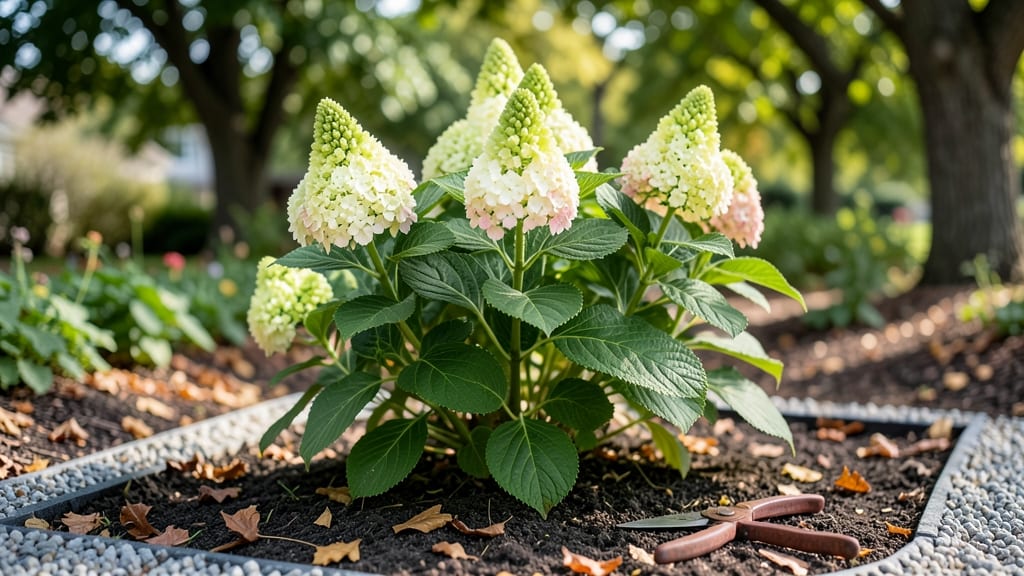
The Quick Fire Hydrangea 🌸 grows to a compact 3–4 feet tall, making it perfect for small gardens, containers, or tight spaces where bigger shrubs won’t fit.
If you love hydrangeas but have limited garden space, this variety is a game-changer—its upright, bushy form delivers bold red blooms without taking over. But how tall does it really get, and how can you keep it in check?
This shrub typically matures between 3 and 4 feet, with a spread of 3–4 feet wide, giving it a balanced, waist-high silhouette. Pruning in late winter or early spring helps control its height, while proper sunlight and soil keep it thriving.
Below, I’ll cover spacing tips for garden beds, container-growing advice, and how to maintain its compact size—so you can enjoy its vibrant blooms without the bulk.


Quick Fire hydrangea height and spread: exact growth measurements for small gardens
If you're dreaming of a vibrant garden but working with limited space, the Quick Fire hydrangea is your perfect match. This stunning variety matures to a compact 2–3 feet tall with a 3–4 feet spread, making it ideal for small gardens, containers, or even as a striking border plant.
Unlike its larger cousins, this hydrangea won’t overwhelm your space but still delivers those show-stopping red blooms that fade to pink.
What sets Quick Fire apart is its predictable growth habit. Unlike some hydrangeas that can balloon into unruly shrubs, this variety stays neatly contained. It grows at a steady pace, reaching about 1–2 feet in its first year and gradually filling out to its mature size by year three.
This makes it perfect for gardeners who want instant impact without long waits.
| Growth Stage | Height | Spread | Seasonal Notes |
|---|---|---|---|
| Year 1 | 1–2 ft | 1–2 ft | Focus on root establishment |
| Year 2 | 2–3 ft | 2–3 ft | First blooms appear |
| Mature (Year 3+) | 2–3 ft | 3–4 ft | Full color display, prune after blooming |
| Container Growth | 1–2 ft | 2–3 ft | Use large pots (18"+ diameter) |
| Comparison to Other Hydrangeas | Half height of 'Endless Summer' | Similar spread to 'Limelight' | More compact than 'Annabelle' |
When comparing Quick Fire to other popular hydrangeas, it’s clear why it’s a favorite for small spaces. While varieties like 'Endless Summer' can reach 4–5 feet tall and 'Limelight' spreads up to 5 feet wide, Quick Fire stays neatly within a 3-foot radius.
This makes it ideal for urban gardens, patios, or even as a container specimen on a balcony.
Seasonal growth patterns also play a key role in managing its size. In spring and summer, Quick Fire grows most actively, with new shoots emerging rapidly. However, if you notice it stretching too tall, it’s often a sign of insufficient light—move it to a slightly sunnier spot.
In fall and winter, growth slows dramatically, and the plant enters dormancy, making it the perfect time for light pruning to shape it for next year.
One of the biggest misconceptions about hydrangeas is that they all grow large. Quick Fire proves that’s not the case! Its upright, mounded shape means it won’t sprawl like some varieties, but it still delivers those vibrant blooms that hydrangea lovers adore.
For reference, its height is roughly equivalent to a small shrub or waist-high when fully mature—perfect for creating a focal point without dominating your garden layout.
If you're wondering whether Quick Fire can thrive in containers, the answer is a resounding yes! In pots, it typically stays slightly shorter—around 1–2 feet tall—but still maintains its 3-foot spread.
Just ensure your container is at least 18 inches in diameter and has good drainage. This makes it a fantastic option for balconies, decks, or small courtyards where space is at a premium.
Pruning plays a crucial role in maintaining its compact size. Unlike some hydrangeas that bloom on old wood, Quick Fire blooms on new growth, so you can prune it more aggressively in late winter or early spring without fear of losing next year’s flowers.
Simply trim back any overly long stems to encourage a bushier, more balanced shape. Avoid heavy pruning in fall, as this can stimulate new growth that won’t have time to harden off before winter.
For the best results, plant Quick Fire in well-draining soil with partial shade—think 4–6 hours of morning sun with afternoon shade to protect the foliage. Overly hot, direct sunlight can stress the plant, leading to leggy growth, while too much shade may reduce flowering.
Amend your soil with compost at planting time to give it a nutrient boost, and mulch around the base to retain moisture and regulate soil temperature.
In summary, Quick Fire hydrangea is a small-space superstar that delivers big impact with minimal footprint. Its 2–3 feet height and 3–4 feet spread make it perfect for gardens where space is limited, and its predictable growth habit means you won’t be surprised by unexpected sprawl.
With the right care—pruning, sunlight, and soil—you’ll enjoy years of stunning blooms without sacrificing your garden’s layout.
How to control Quick Fire hydrangea height: pruning tips for compact growth
If your Quick Fire hydrangea is reaching for the sky faster than you’d like, don’t worry—this compact variety thrives with the right pruning techniques. With a mature height of 3–4 feet, it’s perfect for small gardens, but even these shrubs can outgrow their space if left unchecked.
The key is timing and precision. Prune at the right time, and you’ll keep your hydrangea lush, colorful, and perfectly proportioned.
Most gardeners make the mistake of pruning at the wrong time, which can stunt blooms or encourage leggy growth. Quick Fire hydrangeas bloom on old and new wood, so late winter or early spring is the ideal window.
This ensures you’re cutting back just as new growth begins, without sacrificing next year’s flowers. Grab your sharp pruners and let’s get started—your compact hydrangea will thank you!
Prune in late winter (February–March) or early spring (April) before new growth appears. Avoid pruning in fall or during dormancy.
Use clean, sharp pruners or bypass shears. Disinfect tools with rubbing alcohol to prevent disease spread.
Remove any dead, diseased, or crossing branches first. Cut back to the main stem or nearest healthy bud.
Trim back 1/3 of the plant’s height to encourage bushier growth. Focus on outer branches to maintain an open center.
Never cut more than 30% of the plant at once. Over-pruning can stress the hydrangea and reduce blooms.
Remove all clippings and apply 2–3 inches of mulch around the base to retain moisture and protect roots.
One of the biggest mistakes gardeners make is pruning Quick Fire hydrangeas too late in the season. If you wait until summer, you risk cutting off next year’s flower buds, which form on old wood. Always prune before growth resumes—this ensures your plant stays vibrant and full.
Another common error is using dull tools, which can tear branches and invite pests. Invest in a good pair of pruners for clean cuts every time.
For even more compact growth, consider a light summer trim after flowering. This encourages a denser shape without sacrificing blooms. Just remove a few spent flower heads and any leggy stems that detract from the plant’s neat form.
With consistent care, your Quick Fire hydrangea will stay at the perfect height for your garden—no overgrowth in sight!
Pro tip: If you’re growing your hydrangea in a container, prune slightly more aggressively to control its size. Containers limit root growth, so regular trimming helps maintain that waist-high, bushy look you love. Just remember—patience is key. Hydrangeas respond best to gradual shaping over time.