
Shrubs
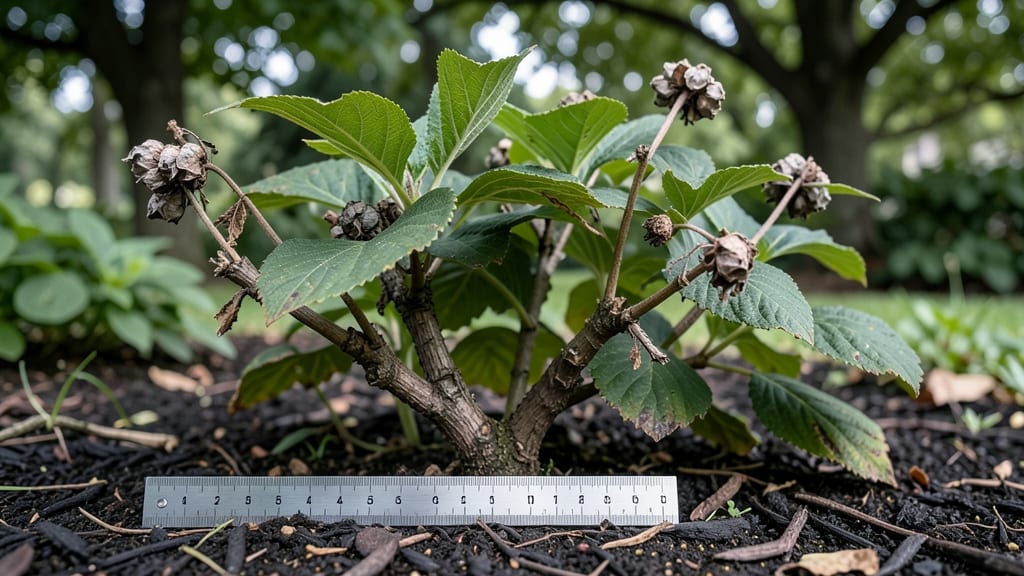
Identifying old wood hydrangeas saves you from pruning disasters. 🌿 The key is looking at where the buds form—on thick, woody stems from last year's growth, not on fresh green shoots.
These buds appear as small, plump nubs along mature branches, often covered in fine hairs or a slightly fuzzy texture.
Leaf size and shape also give it away. Old wood varieties like Hydrangea macrophylla (mophead or lacecap) have larger, glossier leaves that develop in early summer. The stems feel firm and ridged, unlike the smooth, flexible new growth you see on reblooming types.
Prune at the wrong time, and you'll snip off next year's flowers before they even form.
Once you spot these clues, you'll recognize the difference instantly. The buds on old wood hydrangeas swell in late winter, ready to burst into blooms by spring.
Compare them to new wood types like 'Limelight' or 'Little Lime,' where buds form on current season's growth—softer stems, smaller leaves, and buds that appear later in summer.
Correct identification means pruning at the right time—just after flowering, never in fall or early spring. This simple check prevents turning your hydrangea into a bare stick. Now grab your pruners and let's get growing!
📚 In This Guide
- What you need
- Instructions
- Tips and common mistakes
- Wrapping up and next steps
What you need
- ● Hand lens or magnifying glass – A 10x magnification lens helps inspect fine details like leaf texture and stem hairs.
- ● Pruning shears or sharp scissors – For safely snipping small stem or leaf samples (sterilize with rubbing alcohol if reusing).
- ● Notebook or smartphone – To jot down observations like leaf size, color, and stem characteristics.
- ● Ruler or measuring tape – For accurately recording leaf width (old wood hydrangeas often have 3–6 inch leaves).
- ○ Camera (optional but helpful) – Capture close-ups of stems, buds, and leaves for later reference.
- ● Gloves (nitrile or gardening gloves) – Protects hands from thorns or rough stems.
- ● Field guide or hydrangea ID app (e.g., iNaturalist or PlantNet) – Cross-check your findings with expert databases.
- ● Small plastic bags – Store leaf/stem samples in a cool, dry place for further study.
- ● Garden twine or labels – Mark plants you’re testing to avoid confusion later.
- ● Reference photos of known old wood hydrangeas (e.g., Hydrangea macrophylla) for comparison.
How to identify old wood hydrangeas: leaf size and stem texture clues
Here's how I spot old wood hydrangeas every spring—no guesswork, just simple visual checks.
🌿 Step 1: Examine Leaf Size and Shape
Old wood hydrangeas have larger, broader leaves compared to new wood varieties. Look for leaves that are 3-5 inches long with a rounded, slightly lobed shape. The edges often have a subtle serration, and the leaf surface feels slightly leathery to the touch. New wood types tend to have smaller, more oval leaves that feel thinner.
Run your fingers along the leaf edges—old wood varieties often have a slightly wavy or crinkled texture along the margins. If the leaves feel smooth and paper-thin, you're likely dealing with a new wood hydrangea. I always check this first because leaf size is the most obvious difference.
✂️ Step 2: Inspect Stem Texture and Bark
The stems of old wood hydrangeas develop a thicker, rougher bark over time, often with a slightly ridged or peeling texture. New wood stems stay smoother and more uniform in color. Look for stems that are ½ inch or thicker—this maturity is a dead giveaway for old wood varieties.
Gently scrape a small section of the stem with your fingernail. Old wood hydrangeas often reveal lighter-colored, almost woody layers beneath the outer bark, while new wood stems will show a uniform greenish color. This test works best on stems from the previous year's growth.
🌱 Step 3: Check Bloom Location and Flower Clusters
Old wood hydrangeas produce blooms on previous year's growth, so look for flower clusters emerging directly from stems that are at least 12-18 inches tall. These clusters often appear larger and denser, with 100+ small flowers per head. The stems supporting these blooms will feel sturdy and well-established.
New wood varieties bloom on current year's growth, so their flowers appear closer to the tips of newer, thinner stems. If you see multiple flower heads along a single stem, that's another clue—old wood hydrangeas often produce multiple blooms per stem, while new wood types usually have just one or two.
☀️ Step 4: Observe Growth Pattern and Branch Structure
Old wood hydrangeas develop a more sprawling, multi-branched habit over time. Look for plants with multiple main stems radiating outward rather than a single central leader. The branches often grow at wider angles from the main trunk, creating a bushier appearance.
If the plant has thick, woody stems with multiple layers of growth rings, that's a clear sign of maturity. New wood hydrangeas tend to grow more upright with fewer, thinner branches. I've found that old wood varieties also develop smaller leaf buds in the fall along the stems, which is another visual clue.
💧 Step 5: Test for Bud Formation Timing
Old wood hydrangeas form flower buds in the late summer or early fall of the previous year. Look for small, rounded buds along the stems in late summer—these will develop into next year's blooms. New wood varieties form buds much later, often in spring.
If you see flower buds already present in August or September, that's a definitive sign of an old wood hydrangea. I always check for these buds when pruning in late summer, as they indicate which stems to preserve for next year's flowers.
Tips & tricks for identifying old wood hydrangeas
Confession: I used to mix up old wood and new wood hydrangeas for years—until I learned these simple tricks. Here's what nobody tells you about spotting them like a pro.
Leaf Texture Test: Pay attention to leaf thickness in Step 1. Old wood varieties develop leaves that feel almost leathery when you rub them between your fingers. If you can barely feel any thickness, it's likely new wood. I always do this test first because it's foolproof—no tools needed, just your hands. The subtle wavy edges are another giveaway that's easy to miss if you're not looking closely.
Stem Scraping Secret: In Step 2, when you scrape the stem, look for those lighter-colored layers beneath the bark. That's the real tell—it's like seeing the plant's growth rings. New wood stems won't show this because they haven't matured enough to develop those distinct layers. I've found this works best on stems from last year's growth, especially in early spring before new shoots appear.
Bloom Location Logic: The 12-18 inch stem height mentioned in Step 3 is critical. If you see flower clusters emerging from stems that tall, that's your confirmation. Here's what I do: I measure from the base of the plant to where the flowers appear. Anything below 12 inches? Probably new wood. Also watch for those dense clusters with 100+ flowers—they're a hallmark of old wood varieties that often get overlooked.
Seasonal Timing Tip: For the bud formation test in Step 5, timing matters. If you're checking in late summer (August-September), old wood hydrangeas will already have those small rounded buds forming. New wood varieties won't show buds until spring. I always check this when doing summer pruning—it helps me decide which stems to keep for next year's blooms without accidentally cutting off potential flowers.
Pro Tips for Identify Old Wood Hydrangeas
- Confession: I used to mix up old wood and new wood hydrangeas for years—until I learned these simple tricks.
- Leaf Texture Test: Pay attention to leaf thickness in Step 1.
- Stem Scraping Secret: In Step 2, when you scrape the stem, look for those lighter-colored layers beneath the bark.
Frequently asked questions
Got questions about spotting old wood hydrangeas? You’re not alone! Here are answers to the most common ones to help you navigate this shrub-identifying adventure with confidence.
How can I tell if my hydrangea bloomed on old wood last year?
Look for last year’s flower clusters still clinging to the stems—these are your telltale sign! Old wood hydrangeas (like Hydrangea macrophylla) bloom on mature wood, so if you see dried blooms or buds from the previous season, your plant is likely blooming on old wood. Prune carefully to avoid cutting these off!
When is the best time to prune old wood hydrangeas?
Prune right after flowering (late summer to early fall) to preserve next year’s blooms. Avoid pruning in late fall or winter, as new buds form on old wood after blooming. Never prune in spring—you’ll cut off next year’s flowers!
What if my hydrangea has tiny leaves and no flowers?
Tiny leaves or no blooms could mean over-pruning or new wood blooming (like Hydrangea paniculata). Check the stems: if they’re thin and green, they’re new wood. Old wood has thicker, woody stems with larger leaves. If you’ve pruned too much, give it time—patience is key!
Can I still get flowers if I prune old wood hydrangeas too late?
Yes, but not as many! Late pruning (after mid-summer) risks cutting off next year’s buds. If you’ve already pruned too late, focus on fertilizing and watering to encourage new growth. Next year, prune right after flowering for the best results.
Are there any hydrangeas that bloom on both old and new wood?
Yes! Hydrangea paniculata (like ‘Limelight’ or ‘Little Lime’) and Hydrangea arborescens (like ‘Annabelle’) bloom on both old and new wood. This gives you more flexibility with pruning. Check your variety—if unsure, observe where flowers appear: top of stems = new wood, along stems = old wood.
Wrapping up and next steps
Identifying old wood hydrangeas just got easier! By focusing on leaf size (larger, thicker leaves) and stem texture (woody, ridged canes), you can confidently distinguish them from their younger counterparts.
These clues not only help you recognize mature plants but also guide you in providing the right care for their long-term health.
Now that you’re equipped with these insights, take the next step—visit your garden or local nursery and put your new knowledge to the test! 🌿 Whether you’re pruning, propagating, or simply admiring, your old wood hydrangeas will thank you with stunning blooms for years to come.