
Watering
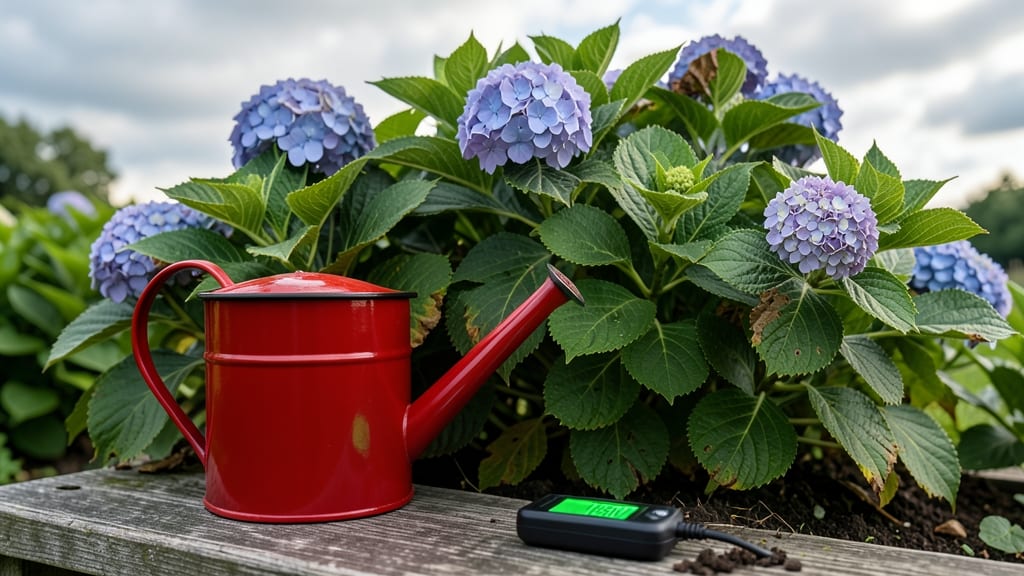
Even the most stunning hydrangeas can be an overwatered or underwatered disaster—wilting leaves, yellowing stems, and blooms that refuse to show their true colors, begging for a watering reset. 💧 I've seen this happen more than I'd like.
The fix isn't complicated, but it does require understanding the subtle signs your plants are either drowning or thirsty.
Here's the thing—hydrangeas hate soggy feet but also can't handle dry spells. The soil should feel like a damp sponge, not a swamp or a desert. I check by sticking my finger an inch deep; if it's dry, it's time to water, but if it's muddy, you're overdoing it.
Climate plays a role too: hot afternoons dry out soil faster, while rainy seasons can turn containers into water traps.
Once you get the watering right, you'll see those blooms pop with vibrant color in just a few weeks. The leaves stay lush, stems stay firm, and your plants stop dropping buds like they're playing a cruel game of chance.
It's all about finding that sweet spot where roots stay happy but never waterlogged.
This method works for backyard beds, containers, or even those hydrangeas in shady corners. The key is consistency—adjust your routine based on what you see, not what you think. Let's get those blooms back to their perfect selves!
Root Causes Of Water Woes
Hydrangeas are famously finicky about moisture—but why do they swing so wildly between drowning and thirsting? The answer lies in their biology, soil science, and even the hidden clues in their leaves. Let’s dig into the real reasons your hydrangea’s water balance is off-kilter.
Hydrangeas hate soggy feet, yet many gardeners unknowingly plant them in soil that acts like a sponge—holding water instead of releasing it. Here’s why this happens:
- Clay-heavy soil: Clay particles pack tightly, creating tiny airless pockets that suffocate roots. Water lingers because it can’t drain through the dense matrix. Test it: Grab a handful of damp soil—if it forms a tight ball that doesn’t crumble, you’ve got clay.
- Compacted soil: Foot traffic, construction, or heavy mulch can compress the top layer, turning it into an impermeable barrier. Roots struggle to breathe, and excess water pools around them.
- No organic matter: Soil rich in compost or peat moss drains well because organic material creates air pockets. Without it, water sits like a puddle at the roots.
Actionable fix: Amend clay soil with sand, perlite, or coconut coir (aim for a 50/50 mix with existing soil). For compacted areas, aerate with a garden fork or top-dress with wood chips to improve structure over time.
Hydrangeas thrive on consistency. When watering patterns swing from drenching to neglect, roots get whiplash—and the plant reacts with stress signals. Here’s the science:
- Deep but infrequent watering: If you soak the soil once a week but let it dry out completely in between, roots grow long and shallow, searching for moisture. This makes them vulnerable to drought and overwatering when you finally hydrate them.
- Surface-level watering: A light sprinkle from a hose or drip system only wets the top inch of soil. Roots stay shallow, and the plant never develops a deep taproot system to access moisture efficiently.
- Weather whiplash: Rain followed by a heatwave (or vice versa) throws off your hydrangea’s internal moisture regulators. Their stomata—tiny leaf pores—can’t adjust fast enough, leading to wilting or root rot.
Actionable fix: Water deeply 1–2 times per week (or daily in extreme heat) until moisture reaches 12–18 inches down. Use a moisture meter or the "screwdriver test" (if it slides in easily, the soil’s too dry). Pro tip: 💡 Drip irrigation or soaker hoses deliver steady moisture without surface runoff.
Hydrangeas aren’t just about water—they’re also thermoregulators. Temperature and humidity directly control how fast water evaporates from soil and leaves. Here’s how they mess with your plant:
- Hot, dry air: In summer, hydrangeas lose water 3x faster through transpiration (leaf evaporation). If the soil doesn’t keep up, roots dry out. Sign: Leaf edges turn crispy brown.
- Cold, wet soil: Below 50°F (10°C), hydrangea roots stop absorbing water efficiently. Combined with heavy rain, this creates the perfect storm for root rot.
- High humidity: While hydrangeas love moisture in the air, stagnant humidity (like in a greenhouse) slows evaporation—but it also traps fungal spores, leading to diseases like powdery mildew, which clogs leaf pores and disrupts water uptake.
Actionable fix:
- ✨ Mulch heavily (3–4 inches of shredded bark) to insulate roots and retain moisture.
- 🌡️ Monitor soil temp—if it’s <50°F, reduce watering until it warms up.
- 💨 Improve airflow around plants to balance humidity (prune dense foliage if needed).
Here’s the twist: pH affects water availability to hydrangea roots. If your soil is too acidic or alkaline, the plant can’t access the water it’s given, leading to false signals of over- or underwatering.
- Too acidic (pH < 5.5): Aluminum and manganese become toxic to roots, blocking water uptake. The plant wilts even when soil is wet.
- Too alkaline (pH > 7.0): Essential nutrients like phosphorus and iron become locked away. Roots can’t absorb water efficiently, mimicking drought stress.
- Hydrangea’s sweet spot: pH 5.5–6.2 for blue blooms; pH 6.0–7.0 for pink. Outside this range, water management goes haywire.
Actionable fix: Test your soil with a home pH kit. To adjust:
- 🔥 Lower pH (make more acidic): Add sulfur or peat moss.
- 🌡️ Raise pH (make less acidic): Mix in lime or wood ash.
Now that you know why your hydrangea’s water game is off, the next step is fixing it with science-backed solutions. The key? Consistency in soil, water, and pH—just like a hydrangea’s dream garden.
Fixing Your Hydrangea’s Water Woes
If your hydrangeas are struggling with overwatering or underwatering, don’t panic—this is a common issue with a straightforward fix. The key is balancing moisture, improving drainage, and adjusting your care routine to match your plant’s needs. Below, we’ve mapped out the best solutions for each problem, plus tips to keep your hydrangeas thriving long-term.
When hydrangeas get too much water, their roots suffocate, leading to yellowing leaves, wilting, and even root rot. Here’s how to revive them:
🔥 Step 1: Stop Watering Immediately
Let the soil dry out before watering again. Overwatering is often a habit—resist the urge to water just because the soil looks damp.
🍳 Step 2: Improve Soil Drainage
Hydrangeas hate soggy roots. Amend the soil with:
- Perlite or pumice (20-30%) to aerate compacted soil
- Coarse sand or gravel for better drainage
- Compost (10-20%) to retain moisture without waterlogging
Pro tip: If repotting, choose a container with drainage holes—no exceptions!
👨🍳 Step 3: Prune Damaged Foliage
Snip off yellow or mushy leaves to redirect energy to healthy growth. Use clean, sharp pruners to avoid spreading disease.
🥘 Step 4: Adjust Your Watering Schedule
Water deeply but infrequently—about 1-1.5 inches per week (more in extreme heat). Check soil moisture with your finger: if the top 2 inches are dry, it’s time to water.
⏰ Prevention Tip: Use a Moisture Meter
A simple moisture meter (under $10) takes the guesswork out of watering. Stick it in the soil—if it reads "dry," water; if "wet," wait.
Underwatered hydrangeas show signs like crispy leaf edges, drooping blooms, and dry soil pulling away from the pot. Here’s how to bring them back:
🔥 Step 1: Water Deeply & Slowly
Give your hydrangea a slow, thorough soak until water runs out the drainage holes. Avoid shallow watering, which only wets the surface.
🍳 Step 2: Mulch to Retain Moisture
Spread 2-3 inches of organic mulch (like shredded bark or straw) around the base. This keeps roots cool and locks in moisture.
👨🍳 Step 3: Move to a Shadier Spot (Temporarily)
If your hydrangea is in full sun, it may dry out faster. Relocate it to partial shade (4-6 hours of sun) for a few weeks to recover.
🥘 Step 4: Fertilize for Recovery
Use a balanced, water-soluble fertilizer (like 10-10-10) to boost growth. Follow package instructions—over-fertilizing can burn roots.
🎯 Prevention Tip: Group Plants for Humidity
Hydrangeas love humidity! Plant them near other moisture-loving shrubs (like azaleas or ferns) to create a microclimate that retains dampness.
Avoid future watering mishaps with these seasonal adjustments:
Season
Watering Goal
Extra Tips
Spring
1 inch per week (establish roots)
Test soil moisture before watering—spring rains can overdo it!
Summer
1.5–2 inches per week (more in heatwaves)
Water in the early morning to reduce evaporation.
Fall
Reduce to 1 inch per week (prep for dormancy)
Avoid late-season fertilizing—it encourages tender new growth.
Winter
Minimal watering (only if soil is bone-dry)
Mulch heavily to insulate roots from freezing.
Pro tip: Invest in a drip irrigation system for large hydrangea beds—it delivers consistent moisture without over- or underwatering.
With these fixes, your hydrangeas will bounce back with vibrant blooms and lush foliage. The secret? Consistency—neither soggy nor parched soil. Now grab your watering can (or hose) and give your plants the perfect drink!
Frequently asked questions
How can I tell if my hydrangea is overwatered vs. underwatered?
Check the leaves and soil: overwatered hydrangeas have yellowing leaves, mushy stems, and soil that stays clammy even days after watering. Underwatered plants show crispy brown leaf edges, drooping blooms, and soil that pulls away from the pot. The key is the soil—if it feels like a damp sponge, you're likely overdoing it.
Why do my hydrangea leaves turn yellow even when I water regularly?
Yellow leaves often signal overwatering, but could also mean poor drainage or root rot. Test by sticking your finger 2 inches deep—if it's soggy, reduce watering. Yellowing can also happen if your soil is too alkaline (pH > 7.0), blocking nutrient uptake. A simple soil test kit solves this mystery!
Can I save a hydrangea with root rot from overwatering?
Yes, but act fast! First, stop watering immediately and let the soil dry completely. Prune away mushy stems and repot in fresh, well-draining soil with perlite. For severe cases, you may need to trim back 1/3 of the plant to redirect energy. With proper care, new growth should appear within 4-6 weeks.
What's the best way to water hydrangeas in containers?
Use the soak-and-drain method: Water until it flows freely from drainage holes, then empty the saucer. In hot weather, water daily in the morning—containers dry out 3x faster than ground soil. A self-watering pot with a moisture meter keeps roots happy without guesswork.
Will mulch really help with underwatered hydrangeas?
A 2-3 inch layer of organic mulch (like shredded bark) locks in moisture and keeps roots cool. For extra help, group hydrangeas with other moisture-loving plants to create a humid microclimate. Just keep mulch 2 inches away from the stem to prevent rot.