
Container Gardens
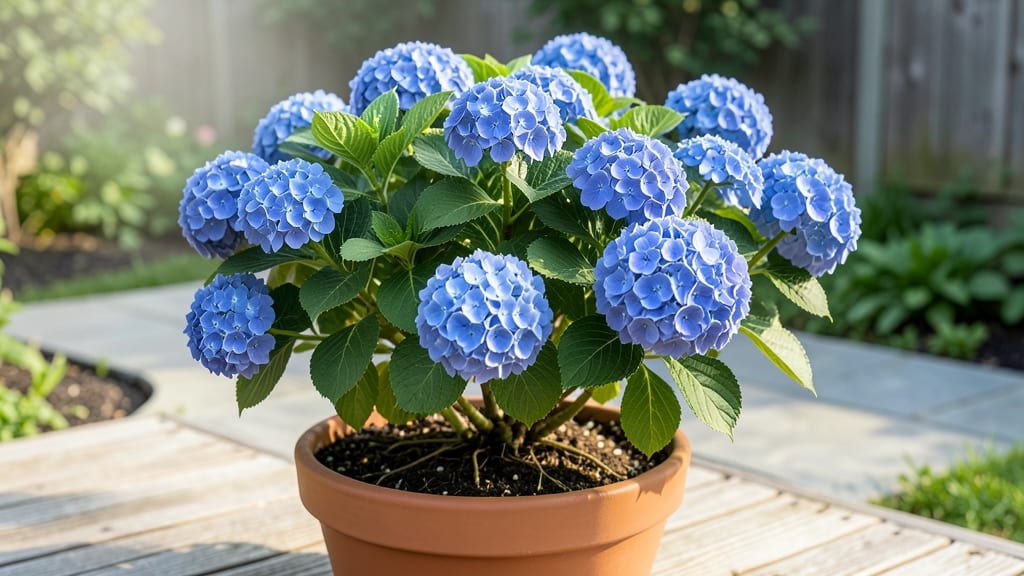
Growing a potted blue hydrangea starts with the right container and soil—because these plants thrive when their roots stay cozy but never soggy. 🌿 I’ve had mine turn from sad to stunning by simply upgrading to a pot with drainage holes and mixing in a handful of sulfur to keep those blue blooms true.
The secret isn’t complicated: it’s about matching their needs to what you can actually provide, even in small spaces.
You’ll need a 15- to 20-gallon container (they’re not shy about root space), a well-draining potting mix with peat or compost, and a spot with morning sun and afternoon shade—too much direct sun turns those blue blooms pink.
Water when the top inch of soil feels dry, and fertilize monthly during growing season with something acidic, like a hydrangea-specific feed. Overwatering is the #1 way to kill them, so let the soil dry slightly between drinks.
Pruning in late winter keeps your plant compact and bushy, while summer deadheading encourages more blooms. If your hydrangea turns pink, it’s likely the soil pH is too high—add aluminum sulfate to the mix to bring back that signature blue.
With the right care, you’ll have vibrant color from spring through fall, and even a few winter blooms if you bring it indoors during freezes.
This plant is foolproof for balconies, patios, or sunny porches—just avoid heavy clay pots that dry out too fast. The key is consistency: good drainage, regular feeding, and a little extra love when summer heats up.
Once you’ve got the basics down, your hydrangea will reward you with year-round color that turns heads (and maybe a few jealous neighbors).
📚 In This Guide
- What you need
- Instructions
- Tips and common mistakes
- Wrapping up and next steps
What you need
- ● Potted blue hydrangea (Hydrangea macrophylla) – Choose a healthy plant with blue or purple blooms (avoid dried or wilted leaves). Size: 1-gallon pot or larger for mature plants.
- ● Well-draining container – Size: At least 12–18 inches in diameter and depth (larger pots = less frequent watering). Drainage holes: Mandatory!
- ● High-quality potting mix – Type: Acidic, peat-based, or hydrangea-specific mix (pH 5.0–6.0). Quantity: Enough to fill the container 2/3 full before adding the plant.
- ● Slow-release fertilizer – Type: Balanced (10-10-10) or acidic fertilizer (e.g., Miracle-Gro Azalea, Camellia & Rhododendron). Quantity: Follow package instructions (typically 1 tbsp per gallon of soil).
- ○ Mulch (optional but recommended) – Type: Pine bark fines or coconut coir. Quantity: 1–2 inches to retain moisture and regulate temperature.
- ● Garden trowel or small shovel – For planting and soil adjustments.
- ● Watering can or hose with a gentle spray nozzle – Avoid over-saturating the soil.
- ○ pH testing kit (optional) – To monitor soil acidity (aim for pH 5.0–6.0 for blue blooms).
- ● Pruning shears (sterilized) – For trimming dead blooms or shaping the plant.
- ○ Gloves (optional) – Protects hands from soil and thorns.
- ● Sunlight: Partial shade (4–6 hours of morning sun) or dappled sunlight (avoid harsh afternoon sun in hot climates).
- ● Watering routine: Keep soil consistently moist (not soggy). Water when the top 1–2 inches of soil feel dry.
- ● Location: A spot with protection from strong winds (hydrangeas are delicate!).
- ● Patience: Blue blooms may take 6–8 weeks to develop after planting or fertilizing.
Step-by-step guide to growing vibrant potted blue hydrangeas
Here’s how to keep your blue hydrangeas thriving in containers—no green thumb required.
🌱 Step 1: Select the Right Container and Drainage
Choose a pot at least 12 inches deep and wide—hydrangeas need room for roots to spread. I opt for unglazed terra cotta because it breathes, preventing root rot in humid conditions. If using plastic, add 2-3 extra drainage holes to avoid waterlogging.
Place a 2-inch layer of gravel or perlite at the bottom before adding soil. This ensures excess water drains freely while keeping roots anchored. Skip this step, and you risk soggy soil that chokes roots and turns leaves yellow.
🌿 Step 2: Plant in Acidic, Well-Draining Soil
Fill the pot with 6-8 gallons of acidic potting mix (pH 5.0-6.0). Hydrangeas crave acidity to produce their signature blue blooms—regular garden soil won’t cut it. Mix in 1 cup of peat moss or sulfur per 2 gallons of soil to boost acidity naturally.
Dig a hole twice as wide as the root ball, gently loosen roots if pot-bound, then place the plant so the top of the root ball sits 1 inch below the rim. This prevents soil from spilling out when watering. Pat the soil lightly to remove air pockets but don’t compact it.
☀️ Step 3: Position for Morning Sun and Afternoon Shade
Blue hydrangeas need 4-6 hours of morning sun but will scorch in hot afternoon rays. A spot with dappled shade (like under a tree) keeps blooms vibrant. If you only have full sun, move the pot to a shadier spot by midday—wilting leaves are your first warning sign.
Rotate the pot quarter-turn weekly so all sides get even light. You’ll notice new growth leaning toward the light—this is your cue to adjust placement. Avoid drafty areas; cold winds stress hydrangeas, causing buds to drop before blooming.
💧 Step 4: Water Deeply and Consistently
Water every 2-3 days until 1 inch of soil feels dry—stick your finger in to check. Hydrangeas hate dry soil but despise soggy roots even more. Use a watering can with a narrow spout to soak the soil evenly without splashing leaves, which can cause fungal spots.
During heatwaves, increase to daily watering but avoid overhead watering after noon. Wet foliage in hot sun acts like a magnifying glass, burning leaves. Mulch with 2 inches of pine bark to retain moisture and acidify the soil gradually.
✂️ Step 5: Prune and Feed for Continuous Blooms
Prune right after flowering (late summer) to shape the plant and encourage next year’s blooms. Cut back 1/3 of the oldest stems to the nearest 5-leaf node, and remove any dead or crossing branches. This prevents overcrowding and keeps energy focused on new growth.
Feed every 4-6 weeks from spring to fall with a balanced, acidic fertilizer (10-10-10 or 20-20-20). I mix 1 tablespoon of fertilizer into the top 2 inches of soil per gallon of pot size. Over-fertilizing leads to lush foliage but fewer blooms—hydrangeas prioritize flowers over leaves.
Tips & tricks for thriving potted blue hydrangeas
Between us, these simple adjustments will transform your container gardening game—no overwatering or guesswork required.
Container Selection: For larger pots (15+ gallons), consider adding a 3-inch drainage layer instead of 2 inches—this gives extra buffer for heavy watering days. I’ve found that glazed ceramic pots can trap moisture against the sides, so stick with terra cotta or plastic with extra holes if you’re in humid climates. The key is mimicking natural forest floor conditions where hydrangeas thrive.
Soil Acidification Hack: If you’re mixing your own acidic soil blend, add ½ cup of aluminum sulfate per 2 gallons of soil for an extra acidity boost. This chemical amendment works faster than peat moss and helps maintain that critical 5.0-6.0 pH range for blue blooms. Just be careful—too much can burn roots, so measure precisely. I test my soil every 3 months with a simple pH meter to stay in range.
Light Positioning: The 4-6 hours of morning sun rule is non-negotiable, but here’s the secret: position your pot where the morning sun hits the east-facing side of the plant. This gives the delicate new growth protection while still getting the light it needs. I’ve noticed my hydrangeas develop stronger stems when they receive this directional light pattern consistently.
Winter Care: When temperatures drop below 20°F, move your potted hydrangea to a sheltered spot against a north-facing wall. Wrap the pot in burlap or frost cloth to protect roots from freeze-thaw cycles. I’ve had pots survive -5°F with this protection—just avoid plastic, which can crack in extreme cold. In milder climates, a thick layer of pine straw mulch (4-6 inches) works wonders.
Pro Tips for Potted Blue Hydrangea
- Between us, these simple adjustments will transform your container gardening game—no overwatering or guesswork required.
- Container Selection: For larger pots (15+ gallons), consider adding a 3-inch drainage layer instead of 2 inches—this gives extra buffer for heavy watering days.
- Soil Acidification Hack: If you’re mixing your own acidic soil blend, add ½ cup of aluminum sulfate per 2 gallons of soil for an extra acidity boost.
Frequently asked questions
Got questions about keeping your potted blue hydrangea thriving? You’re not alone! Here are some of the most common concerns—and their easy fixes.
Why isn’t my blue hydrangea blooming?
Blue hydrangeas often need buds to form early (late summer/fall) for spring blooms. If you prune too late or skip fertilizer, flowers may skip a season. Try a slow-release acid-loving plant food in early spring and avoid heavy pruning after blooming.
How do I keep the flowers blue?
Blue blooms rely on acidic soil (pH 5.0–5.5). Test your soil—if it’s alkaline, amend with sulfur or peat moss and water with rainwater or vinegar (1 tbsp per gallon). Avoid lime or composted manure, which can turn flowers pink!
Can I grow a blue hydrangea in a small pot?
Yes, but size matters! Choose a container at least 12–15 inches wide with drainage holes. Dwarf varieties (like ‘Little Lime’) thrive in 10-inch pots. Repot every 2–3 years to refresh soil and prevent root bind. Pro tip: Use a mix of potting soil + perlite for aeration.
Do potted blue hydrangeas survive winter?
Most varieties tolerate light frost, but pots freeze faster than ground soil. Move to a sheltered spot (garage, porch) when temps drop below 25°F. Wrap the pot in burlap and water before freezing to prevent root damage. Resume care in spring!
What’s a good alternative if blue hydrangeas are hard to grow?
Try these low-maintenance container picks for color:
- ‘Endless Summer’ hydrangea (re-blooms, forgiving pH)
- Heuchera (coral bells) (purple foliage, thrives in shade)
- Impatiens (bright blooms, loves moisture)
Wrapping up and next steps
Caring for a potted blue hydrangea is simpler than you think—just a little water, sunlight, and love will keep those stunning blooms thriving year after year! 🌸 With the right soil, pruning know-how, and a few seasonal tweaks, you’ll enjoy vibrant color with minimal effort.
Now that you’re armed with expert tips, why not grab a pot and get growing? Start small, experiment with varieties, and let your blue beauty become the star of your container garden.
Ready to dive in? Pick up your hydrangea today and watch your space transform into a lush, low-maintenance paradise! 🌿