
Pruning
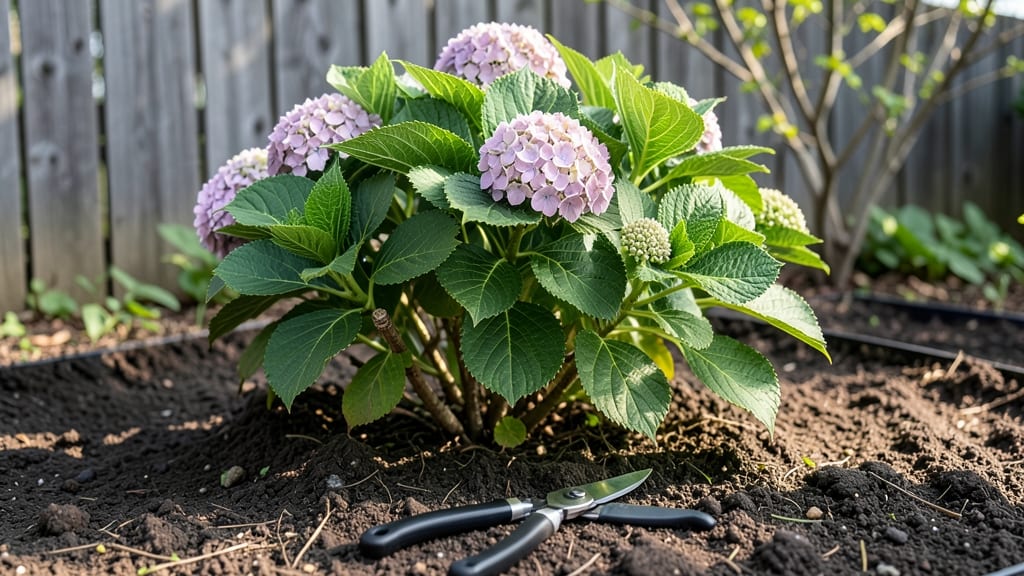
Pruning Endless Summer hydrangeas in spring unlocks their full potential—bigger blooms, stronger stems, and years of effortless growth. 🌿 I’ve seen these hydrangeas transform from leggy, sparse bushes into lush, flower-covered powerhouses after just one proper pruning session.
The key is timing: cut back in late winter or early spring before new growth appears, but after the worst frosts have passed.
Here’s what you’ll need: sharp pruners, gloves, and a clear morning to work. Identify last year’s blooms (they’ll look brown and dried) and cut them back to a set of three to five buds from the base.
These buds hold next year’s flowers, so don’t trim them off! The goal is to shape the plant while encouraging fresh, vigorous growth for the season ahead.
When done right, your Endless Summer hydrangeas will reward you with football-sized blooms by midsummer. The stems stay sturdy, the foliage thickens, and the plant resists pests and disease better.
Even if you’ve avoided pruning before, this method is foolproof—just follow the bud rule and avoid late cuts that risk frost damage.
This approach works for all Endless Summer varieties, whether you’re pruning a single plant or a row of them. For extra insurance, mark your calendar for February or March in your zone—just as buds begin to swell. Once you master this, you’ll never fear the pruners again.
📚 In This Guide
- What you need
- Instructions
- Tips and common mistakes
- Wrapping up and next steps
What you need
- ● Bypass pruning shears: Sharp, clean shears (4-6 inches long) for precise cuts—avoid anvil shears to prevent crushing stems.
- ○ Hand pruners (optional but helpful): For smaller stems or tight spaces (5-7 inches, ergonomic grip).
- ● Gloves: Heavy-duty gardening gloves (water-resistant) to protect hands from thorns and sap.
- ● Disinfectant (70% isopropyl alcohol or bleach solution): 1 part bleach to 9 parts water—clean tools between cuts to prevent disease spread.
- ● Garden twine or zip ties: To secure large branches if needed during pruning.
- ● Ladder or step stool: For reaching higher branches (ensure it’s stable and 6+ feet tall if needed).
- ● Trash bags or bucket: For collecting pruned debris (10+ gallons capacity).
- ● Sharpie or permanent marker: To label branches if you’re unsure which to prune.
- ● Hydrangea food or fertilizer: Balanced 10-10-10 or acid-loving plant fertilizer (follow package rates).
- ● Mulch (pine bark or shredded leaves): 2-3 inches to retain moisture and protect roots.
- ● Plant tie or Velcro strips: For supporting weak stems post-pruning.
- ● Camera or phone: Snap before/after photos to track progress!
How to prune Endless Summer hydrangeas for maximum spring blooms
Here’s the straightforward method I use every year to keep my Endless Summer hydrangeas thriving and bursting with blooms.
✂️ Step 1: Time Your Pruning for Peak Growth
Prune your Endless Summer hydrangeas in late winter or early spring, just as new growth begins but before buds swell. This timing ensures you’re cutting back old wood while encouraging fresh, vigorous stems to develop. I always wait until after the last frost date in my zone—typically mid-March—because cold snaps can stress newly pruned plants.
Look for dormant stems that have no leaves or buds. These are the ones you’ll remove entirely. Endless Summer hydrangeas bloom on both old and new wood, so you won’t be sacrificing next year’s flowers by cutting back. Just avoid pruning in fall, as this can leave stems vulnerable to winter damage.
✂️ Step 2: Cut Back Old Wood to Encourage New Growth
Use clean, sharp pruners to make your cuts at a 45-degree angle, about ¼ inch above a outward-facing bud or node. This angle helps water run off the stem and prevents rot. Start by removing any dead, damaged, or crossing branches—these compete with healthy growth and can spread disease.
For the main pruning, cut back last year’s stems to just 6-8 inches tall. You’ll be left with stubby stems, but don’t worry—this is exactly what these hydrangeas need to rebloom beautifully. I like to step back and admire the shape after this step; it’s amazing how much fuller the plant looks once the old wood is gone.
☀️ Step 3: Shape the Plant for Airflow and Sunlight
After removing the old wood, focus on thinning out the center of the plant. Endless Summer hydrangeas can get dense, and crowded growth leads to fewer blooms and more pests. Aim to create an open, vase-like shape by cutting back some of the newer stems to half their length. This lets sunlight and air reach the inner branches, which encourages stronger growth.
Watch for water sprouts—those long, weak stems that shoot straight up. These are energy vampires and should be cut back to the main stem. A well-shaped hydrangea will have multiple strong branches radiating outward, each with plenty of room to grow. If you’re unsure, less is more—you can always prune more later, but you can’t un-prune!
💧 Step 4: Feed and Water for a Strong Recovery
Once pruning is done, give your hydrangeas a balanced, slow-release fertilizer to replenish nutrients lost during the cutback. I use a 10-10-10 formula in early spring, following the package instructions. Water deeply right after pruning to help the plant recover and reduce stress. The soil should be moist but not soggy—think of it like a damp sponge.
Keep an eye on the new growth in the coming weeks. You’ll notice bright green leaves emerging from the cut stems, and within a few weeks, you’ll see small buds forming—these are the future blooms! If the weather turns dry, water once a week to keep the soil consistently moist, especially during the first month of regrowth.
⏰ Step 5: Monitor and Adjust Through the Season
As the season progresses, keep pruning lightly to maintain shape and remove any deadheading (spent blooms). This encourages more flowers to form. If you notice any yellowing leaves, it could be a sign of overwatering or nutrient deficiency—adjust your care routine accordingly. Endless Summer hydrangeas are forgiving, but they do best with consistent moisture and occasional feeding.
By mid-summer, you’ll start seeing new blooms on the current year’s growth, and the plant will look lush and full. The key is patience—these hydrangeas take a little time to bounce back after a heavy prune, but the payoff is worth it. With this method, you’ll have big, beautiful blooms from early summer all the way through fall.
Tips & tricks for pruning Endless Summer hydrangeas
Let me share the insider tricks I’ve learned over years of pruning these beauties—these details make all the difference between a decent prune and a showstopping transformation.
Timing Tip: The exact moment to prune is when you see those first tiny green shoots peeking through the soil but before the buds start swelling. I check my weather app for the last frost date in my zone, then add about 10 days—this gives the plant just enough time to wake up without being stressed by cold. If you’re in doubt, err on the side of waiting a few extra days rather than pruning too early.
Tool Prep: Your pruners are your most important tool—make sure they’re clean and sharp before you start. I run mine through the dishwasher between uses and sharpen them on a fine stone when I notice the cuts getting jagged. Dull blades crush stems instead of making clean cuts, which can damage the plant and leave it vulnerable to disease. A small investment in quality pruners pays off every year.
Visual Cue for Pruning: After cutting back last year’s stems to 6-8 inches, step back and look at your hydrangea from all sides. You should see an open, vase-like shape with multiple strong branches radiating outward. If you’re struggling to visualize, imagine a lighthouse—you want that same open, airy structure that lets sunlight reach all parts of the plant. This isn’t just about looks; it’s about creating the perfect environment for maximum blooms.
Post-Pruning Care: The first month after pruning is critical for recovery. I set a reminder on my phone to check the soil moisture every few days—these plants need consistent moisture but hate soggy roots. A good rule of thumb is to water when the top inch of soil feels dry to the touch. You’ll know you’re doing it right when you see bright green leaves emerging from those cut stems within a few weeks.
Pro Tips for Pruning Endless Summer Hydrangeas In Spring
- Let me share the insider tricks I’ve learned over years of pruning these beauties—these details make all the difference between a decent prune and a showstopping transformation.
- Timing Tip: The exact moment to prune is when you see those first tiny green shoots peeking through the soil but before the buds start swelling.
- Tool Prep: Your pruners are your most important tool—make sure they’re clean and sharp before you start.
Frequently asked questions
Got questions about pruning your Endless Summer hydrangeas? You’re not alone! Here are some of the most common queries—plus straightforward answers to keep your blooms thriving.
When is the exact best time to prune?
Prune your Endless Summer hydrangeas in late winter or early spring (just before new growth starts). Avoid pruning in fall or winter, as these hydrangeas bloom on old and new wood. If you miss spring, wait until after flowering—but trim lightly to avoid sacrificing next year’s blooms.
What if I prune too late or too early?
Pruning too early (before dormancy breaks) can shock the plant, while pruning too late (after blooms form) may reduce next year’s flowers. If you’ve already pruned outside the ideal window, don’t panic! Just focus on removing dead or diseased wood and light shaping. Your hydrangea is resilient—it’ll bounce back!
Can I prune Endless Summer hydrangeas the same as other types?
Nope! Unlike mophead or lacecap hydrangeas (which bloom only on old wood), Endless Summer blooms on both old and new wood. This means you can prune more aggressively—up to ⅓ of the plant—without fear of losing flowers. Just avoid cutting back into last year’s wooden stems (they’re woody, not flexible).
What if my hydrangea isn’t blooming after pruning?
Several factors could be at play: over-pruning (cutting too much old wood), poor sunlight (they need 6+ hours of sun), or nutrient deficiencies (feed with acidic fertilizer in spring). Check for buds forming at the base of stems—these indicate new growth. If you see none, wait a few weeks; blooms may appear after the first flush of leaves!
Do I need special tools or gloves?
While not mandatory, sharp, clean pruners (bypass pruners work best) and gardening gloves are highly recommended. Hydrangeas can have thorny stems, and clean tools prevent spreading disease. Disinfect your pruners with rubbing alcohol between cuts for extra safety. A small hand saw may help for thicker stems.
Wrapping up and next steps
Pruning your Endless Summer hydrangeas in spring isn’t just about tidying up—it’s your secret to stunning, long-lasting blooms all season! With the right tools, timing, and technique, you’ll transform last year’s growth into a lush, vibrant display. 🌸✨
Now that you’re armed with the know-how, grab those shears and get ready to revive your hydrangeas like a pro. For extra confidence, snap a photo of your pruned plant and compare it to your pruning checklist—you’ve got this!
Next, why not explore fertilizing tips to give your blooms the boost they deserve?