
Pruning
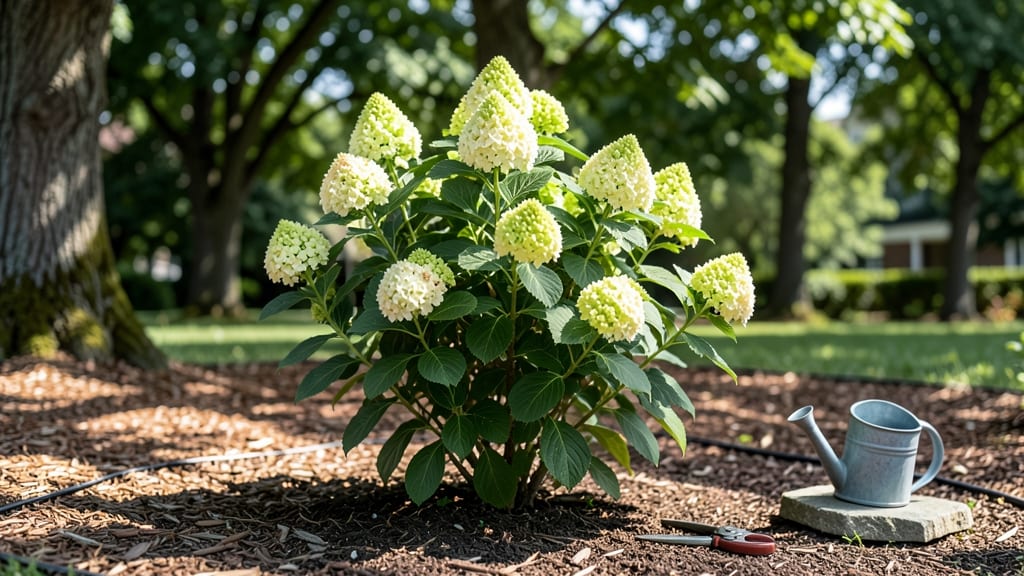
Transforming your Quick Fire hydrangea into a stunning tree form takes just three strategic cuts—no complicated techniques required. 🌿 I’ve trained mine into a showstopping centerpiece that blooms from top to bottom, and the secret lies in pruning at the right time and place.
The results? A compact, upright plant that steals the show without taking up garden real estate. Start with well-draining soil and morning sun with afternoon shade—this variety thrives where others struggle.
Plant your hydrangea with the top of the root ball just below soil level, then stake it immediately to prevent flopping. The first pruning comes in late winter or early spring, when you’ll shape the main stem and encourage strong branching.
By summer, you’ll see bold, arching branches loaded with vibrant blooms, all without the sprawling habit of standard hydrangeas. Water deeply once a week (more in heatwaves) and feed with a balanced fertilizer in spring. The payoff? A neighborhood-turning focal point that’s easier to maintain than you’d think.
For leggy growth, prune back one-third of the longest stems in early spring. Weak branches? Thin them out to improve air circulation. With this method, your Quick Fire will look like a pro’s design—no green thumb required.
📚 In This Guide
- What you need
- Instructions
- Tips and common mistakes
- Wrapping up and next steps
What you need
- ● Healthy hydrangea plant: Mature hydrangea (preferably Hydrangea macrophylla or Hydrangea paniculata)
- ● Established for at least 1–2 years (woody stems, 3–5 feet tall)
- ● Pruning tools: 1 pair bypass pruners (for clean cuts on smaller stems)
- ● 1 pruning saw (if branches are thicker than ½ inch)
- ● Support pole: 1 bamboo stake or metal tree stake (5–6 feet tall, sturdy enough to hold 10+ lbs)
- ○ Optional: A tree tie or soft garden twine (¼ inch wide) for securing
- ● Cleaning supplies: Rubbing alcohol (70% or higher) or pruning sealant (to disinfect tools)
- ● Paper towels or cloth rag
- ● Handheld step stool (for reaching higher branches)
- ● Garden gloves (to protect hands from thorns or sap)
- ● Small notebook or marker (to label cuts if training multiple plants)
- ● Mulch or compost (to refresh the base after pruning)
Instructions: transform hydrangeas into stunning tree forms
Here's how to sculpt hydrangeas into elegant tree forms with just three precise cuts—no fancy tools or years of waiting.
🌿 Step 1: Select and Prepare Your Hydrangea Bush
Choose a healthy hydrangea bush with multiple strong stems—bigleaf or panicle types work best. I always pick plants with stems at least ½ inch thick and 18-24 inches tall for best results. Remove any weak, damaged, or crossing stems first; you're shaping a tree, not a hedge.
Dig around the base to expose the main root system, then water deeply 24 hours before pruning. This ensures the plant is hydrated and less stressed when you make your cuts. Look for the thickest, most upright stem—this will become your trunk. Mark it with a small flag or ribbon so you don't accidentally cut it later.
✂️ Step 2: Create the Trunk by Removing Lower Branches
Use clean, sharp pruning shears to make your first cut: remove all lower branches up to 12-18 inches from the ground, leaving just 3-5 strong lateral branches at the top. Angle cuts ¼ inch above a leaf node to encourage outward growth. The goal is to create a clean, unbranched trunk—think of a young tree rather than a bush.
Here's the thing—if you leave too many lower branches, you'll end up with a lopsided tree. I always count the remaining branches after cutting: three is ideal, but five works if they're evenly spaced. Water the base immediately after pruning to help the plant recover from the shock of losing so many branches.
🌱 Step 3: Shape the Canopy with Strategic Cuts
Now focus on the top 3-5 branches you left behind. Cut back each one by ⅓ of its length to encourage bushier growth. Make cuts just above a leaf bud or lateral branch—this is where new growth will emerge. For a fuller look, trim the outer edges of these branches to create a rounded canopy shape.
Watch for new shoots emerging from the cut areas within 4-6 weeks. These will form your tree's foliage. If any shoots grow too close together, remove the weaker one to prevent crowding. Mulch around the base with 2-3 inches of organic mulch to retain moisture and protect roots as the plant recovers.
☀️ Step 4: Support and Maintain the New Tree Form
Install a 4-6 foot tall stake next to the trunk and tie it loosely with soft garden twine to support the young tree as it grows. Avoid tying too tightly—you want to guide growth, not strangle the stem. Place the stake on the shady side of the plant to prevent it from casting a shadow that could distort growth.
Fertilize lightly with a balanced 10-10-10 formula in early spring to encourage strong new growth. Hydrangeas love moisture, so water deeply once a week during dry spells, aiming for 1-1.5 gallons per watering. You'll see the tree form take shape within one growing season, with a defined trunk and lush canopy.
Tips & tricks for perfect hydrangea tree forms
Transforming hydrangeas into tree forms is easier than you think—these pro tips will help you achieve that elegant, polished look without the guesswork.
Selection is Everything: When choosing your hydrangea bush, focus on stems that are at least ½ inch thick and 18-24 inches tall. Thinner stems (under ¼ inch) won't hold the tree form well and may break under their own weight. I've learned this the hard way—once tried using a bush with ⅓-inch stems, and within a year, the trunk split from wind. Look for stems that feel firm when gently squeezed, not spongy or hollow.
Timing Matters for Hydration: The 24-hour deep watering before pruning isn't just a suggestion—it's critical. Hydrangeas store water in their stems, and well-hydrated plants recover faster from pruning shock. Water in the late afternoon so the soil has time to absorb moisture before you start cutting. If your soil drains quickly (like sandy soil), water twice that day—once in the morning and again in the evening—to ensure the roots are fully saturated.
Precision Cuts Create Perfect Trunks: When removing lower branches in Step 2, make your cuts at a 45-degree angle, ¼ inch above a leaf node. This angle helps water run off the cut, reducing rot risk. I use a small piece of masking tape with a pencil mark at the exact height to ensure consistency—especially important if you're working with multiple stems. For a truly clean trunk, remove any small branches that might sprout later and create an unsightly "skirt" at the base.
Canopy Shaping Secret: The ⅓ reduction of top branches in Step 3 isn't arbitrary—it triggers the plant's natural bush-out response. Make sure your cuts expose at least one healthy leaf bud or lateral branch. If you're unsure where these are, gently peel back the outer leaves to locate them before cutting. For a more natural look, leave the longest branches slightly longer (⅔ of their length) and trim the shorter ones more aggressively to create visual balance in the canopy.
Pro Tips for Quick Fire Hydrangea Tree Form
- Transforming hydrangeas into tree forms is easier than you think—these pro tips will help you achieve that elegant, polished look without the guesswork.
- Selection is Everything: When choosing your hydrangea bush, focus on stems that are at least ½ inch thick and 18-24 inches tall.
- Timing Matters for Hydration: The 24-hour deep watering before pruning isn't just a suggestion—it's critical.
Frequently asked questions
How long does it take for a hydrangea to grow into a tree form?
With consistent pruning and care, you’ll see noticeable tree-form results within 1–2 growing seasons. The first year focuses on shaping the trunk and scaffold branches, while the second year refines the canopy. Patience pays off—think of it as sculpting a living masterpiece!
Can I use this technique on any hydrangea variety?
Not all hydrangeas thrive as tree forms! Stick to smooth hydrangeas (Hydrangea arborescens) or panicle hydrangeas (Hydrangea paniculata)—they’re the most adaptable. Avoid mopheads (H. macrophylla) or oakleaf varieties (H. quercifolia) unless you’re experienced; they may struggle with the structure.
How much sunlight does a tree-form hydrangea need?
Tree-form hydrangeas prefer partial shade (4–6 hours of sunlight daily) to protect blooms from scorching. In hot climates, morning sun with afternoon shade is ideal. Overly shaded spots may lead to sparse flowering—balance is key!
What if my hydrangea’s branches die back after pruning?
Don’t panic! Dead branches are normal in the first year. Prune back to healthy green buds (not brown or mushy stems) and water deeply. If more than 50% of branches die, consider fertilizing with a balanced 10-10-10 formula to encourage regrowth. Most hydrangeas bounce back stronger!
Are there alternatives to the tree form for small spaces?
Try standard shrub training (pruning to a single central leader) or escalera-style pruning (tiered branches for a cascading look). For tiny gardens, dwarf hydrangeas like ‘Little Lime’ (H. paniculata) grow well in containers—no heavy pruning required!
Wrapping up and next steps
Transforming your hydrangeas into a stunning tree form is easier—and faster—than you think! With just three simple cuts and a little patience, you’ll unlock a bold, sculptural statement that blooms with elegance year after year.
Whether you’re a pruning pro or a curious beginner, this method proves that big results come from small efforts.
Ready to elevate your garden? Grab your shears, pick a sunny spot, and start training your hydrangea today—your future self (and your neighbors!) will thank you. 🌿✨