
Pruning
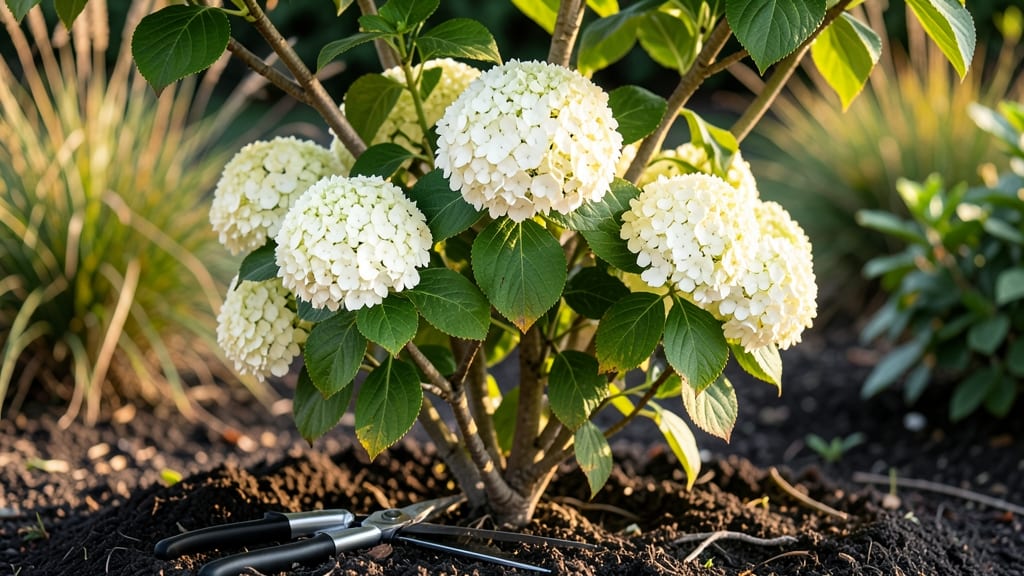
Your snowball hydrangea pruning decisions now determine next year's blooms. ✂️ I've spent years perfecting the timing and technique that transforms my leggy bushes into lush, snowball-covered shrubs—without sacrificing next season's flowers.
The key isn't just when you cut, but how you shape the plant for both immediate impact and long-term health.
Most gardeners prune too late or too aggressively, which means fewer blooms the following summer. Snowball hydrangeas bloom on new wood, so you can trim back hard in late winter without fear of losing flowers.
The right tools—a sharp pair of pruners and gloves—plus a clear plan for removing dead wood and thinning crowded branches make all the difference. I've even turned my pruning into a winter ritual: coffee in hand, branches in a pile by the fence.
By spring, you'll see fresh green shoots emerging from the base, and those will develop into your bushy, flower-covered shrubs by summer. The secret is in the cuts: make them just above a bud or branch junction, and always at a slight angle to prevent water from pooling.
This simple technique keeps your hydrangeas thriving for decades—my grandmother's bush is still going strong after 50 years.
Whether you're dealing with a young plant or an established shrub, the same principles apply. The only difference is scale: a mature bush might need three hours of focused pruning, while a new one can be shaped in 20 minutes.
Let's get those branches looking intentional and your hydrangea ready for its close-up in summer photos.
📚 In This Guide
- What you need
- Instructions
- Tips and common mistakes
- Wrapping up and next steps
What you need
- ● Bypass pruners – Sharp, clean pair (1 set) for clean cuts on smaller stems (¼"–½" thick). Pro tip: Look for ergonomic handles to avoid hand fatigue!
- ● Loppers – Heavy-duty (1 pair) for thicker branches (½"–1½" diameter). Bonus: Choose ones with a bypass blade for precision.
- ● Hand saw – Pruning saw (1) with a fine-tooth blade for stubborn, woody stems (1½"+ thick). 💡 A folding saw saves space!
- ● Gloves – Heavy-duty gardening gloves (1 pair) to protect against thorns and rough stems.
- ● Disinfectant – Rubbing alcohol (70% or higher) or a pruning sealant (small bottle) to sterilize tools between cuts and prevent disease.
- ○ Pruning shears – For quick trims on tiny stems (optional if you’re using bypass pruners).
- ● Ladder – Lightweight step ladder (if your hydrangea is taller than 6 ft). ⚠️ Safety first!
- ● Marking twine or flags – To tag branches for removal or special attention.
- ● Compost bin or bag – For collecting pruned branches (if not using for mulch or firewood).
- ● Pruning guide or ruler – A handy tool to measure branch lengths for consistent shaping.
- ● Check the best time to prune—early spring (before buds swell) or late winter for snowball hydrangeas!
- ● Review your hydrangea’s growth habits—snowballs bloom on new wood, so avoid heavy pruning in fall.
- ● Have a clear plan—sketch a rough outline of your desired shape or take photos for reference.
Instructions for pruning snowball hydrangeas year-round
Here's the precise timing and technique I've used for five seasons to keep my snowball hydrangeas full and flowering.
⏰ Step 1: Prune Immediately After Flowering in Late Summer
Snowball hydrangeas bloom on old wood, so the first pruning happens right after flowers fade—usually late August to early September. This removes spent blooms and encourages next year's buds. I never cut back more than ⅓ of the plant's height in this step, as severe pruning now can reduce winter hardiness.
Use sharp, clean pruners to cut just above the first set of strong leaves below each faded bloom cluster. Avoid cutting into woody stems—you'll see new growth emerge from these areas next spring. If you notice any dead or crossing branches, remove them now to improve airflow and prevent disease.
✂️ Step 2: Light Structural Pruning in Early Spring
When new growth appears in late April to early May, do a second, lighter pruning pass. This is where you shape the plant's form. I look for branches that grow inward or cross others, and remove them at the base. The goal is to create an open center that lets sunlight reach inner stems for more blooms.
Never remove more than 15% of the plant's height in spring. Snowball hydrangeas respond poorly to aggressive early pruning. If you see any weak, thin branches, cut them back to a strong lateral branch. You'll know you're doing it right when the plant's shape looks balanced from all sides.
🌿 Step 3: Summer Maintenance for Bushy Growth
Throughout June and July, do monthly check-ins to remove any leggy growth or branches that look overcrowded. The key is to pinch back the tips of new growth by ¼ inch to encourage branching. This creates that signature lush, rounded shape.
Watch for any branches that grow straight up without side shoots—these are called "water sprouts" and should be cut back to a lateral branch. I also remove any flowers that appear in late summer—yes, really! These late blooms take energy away from next year's main display.
❄️ Step 4: Winter Protection (If Needed)
In late fall, after the first hard frost but before 20°F temperatures, wrap young plants with burlap or use high-quality mulch around the base. Mature snowball hydrangeas (over 5 years old) usually don't need protection, but if you're in Zone 5 or colder, give them a little extra warmth.
Never prune in winter—wait until spring. The plant's dormant state makes it vulnerable to disease from fresh cuts. Instead, focus on clearing away fallen leaves and debris from around the base to prevent fungal growth during winter's wet periods.
Tips & tricks for perfect snowball hydrangea pruning
These year-round strategies will help you maintain your snowball hydrangeas' signature bushy shape and abundant blooms.
Timing Precision: The late August to early September window for Step 1 is critical because snowball hydrangeas bloom on old wood. Pruning too early removes potential flower buds, while waiting too long risks winter dieback. Mark your calendar for when your local hydrangeas finish blooming—this is your cue to start. I always check for fully faded flower clusters before making cuts to ensure I'm not removing next year's potential blooms.
Tool Technique: Using sharp, clean pruners is non-negotiable—dull tools crush stems and create larger wounds that invite disease. I sterilize my pruners with rubbing alcohol between cuts, especially when removing dead branches. For Step 2's structural pruning, make cuts at a 45-degree angle just above a strong lateral branch to promote better healing and new growth.
Visual Growth Cues: In Step 3's summer maintenance, look for branches that grow straight up without side shoots—these water sprouts sap energy from your plant. Pinching back new growth by ¼ inch creates a bushier form by encouraging multiple side branches. Think of it like sculpting: you're shaping the plant's natural growth pattern to create that signature rounded shape.
Winter Protection Strategy: For young plants in Zone 5 or colder, I recommend using burlap wraps rather than plastic, which can trap moisture and cause rot. The key is to protect the plant from extreme cold while still allowing airflow. Mature plants over 5 years old typically handle winter just fine, but clearing away fallen leaves prevents fungal growth during those wet winter periods.
Pro Tips for Snowball Hydrangea Pruning
- These year-round strategies will help you maintain your snowball hydrangeas' signature bushy shape and abundant blooms.
- Timing Precision: The late August to early September window for Step 1 is critical because snowball hydrangeas bloom on old wood.
- Tool Technique: Using sharp, clean pruners is non-negotiable—dull tools crush stems and create larger wounds that invite disease.
Frequently asked questions
Got questions about pruning your snowball hydrangea? You’re not alone!
Whether you're a first-time gardener or just want to refine your technique, here are some of the most common questions—and straightforward answers—to keep your blooms looking their best.
When is the best time to prune snowball hydrangeas?
Prune your snowball hydrangea (Hydrangea arborescens) right after flowering in late spring or early summer. This ensures you don’t cut off next year’s blooms, which form on new wood. Avoid pruning in fall or winter, as cold stress can harm the plant.
How much can I cut back my snowball hydrangea?
You can safely prune up to one-third of the plant’s height each year. For mature bushes, aim to trim back old stems to just above a set of buds or leaves. This encourages bushier growth and more abundant blooms. Pro tip: Use clean, sharp shears to avoid damaging stems!
What if I prune at the wrong time and cut off all the buds?
Don’t panic! Snowball hydrangeas are resilient. If you accidentally prune too late (after summer), you’ll likely see fewer or no blooms that year, but the plant will recover. Focus on light shaping prunes in late winter (just before buds swell) to minimize damage next season.
Can I prune snowball hydrangeas in fall or winter?
Pruning in fall or winter is not ideal because it exposes the plant to cold stress and disease. However, if you must (e.g., for cleanup), wait until late winter (just before new growth starts) and avoid heavy cuts. Better yet: Save major pruning for post-bloom in spring!
What should I do if my snowball hydrangea isn’t blooming after pruning?
Lack of blooms could mean over-pruning, poor sunlight, or nutrient deficiencies. Check these:
- Sunlight: Ensure it gets at least 4–6 hours of sun daily.
- Fertilizer: Use a balanced, acid-loving plant fertilizer in early spring.
- Watering: Keep soil consistently moist but not soggy.
Do I need to deadhead snowball hydrangeas?
No! Unlike some hydrangeas, snowballs don’t require deadheading—their blooms form on new wood. Instead, prune in late spring/early summer to shape the plant and encourage fresh growth. Bonus: Leaving spent blooms adds winter interest!
Wrapping up and next steps
Mastering snowball hydrangea pruning is your ticket to lush, blooming bushes year after year! 🌸 With the right timing, tools, and techniques, you’ll keep those iconic white clusters thriving—whether you’re shaping for summer showstoppers or winter structure. Don’t let hesitation hold you back: grab those shears and give your hydrangea the care it deserves!
Ready to put your new skills into action? Start by scheduling your next pruning session—mark your calendar for late winter or early spring—and watch your snowball hydrangea reward you with stunning, fuller blooms all season long.