
Pruning
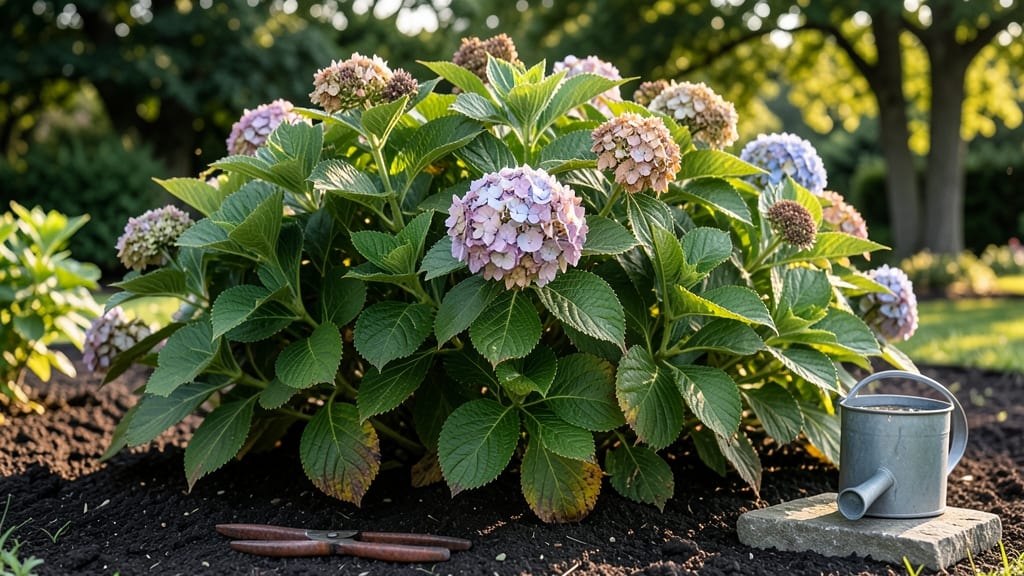
Deadheaded hydrangeas look like crispy, papery brown shells clinging to the stems after their blooms fade. 🌿 These dried flower heads—often called "mummies"—are nature's way of telling you it's time to prune, especially if they're larger than a golf ball or still attached after frost.
The contrast between their brittle texture and the fresh green leaves makes them impossible to miss, and they're the key to encouraging next year's blooms.
What sets them apart from healthy growth? Deadheaded flowers lose their color, turning from vibrant pink or blue to dull brown, while healthy buds stay plump and green. You'll also notice they feel light and hollow when touched, unlike firm, unopened buds.
The stems beneath them might even start looking woody, signaling it's past time for a trim—though never cut into old wood, as that's where next season's flowers form.
Recognizing these dried heads matters because pruning them now prevents the plant from wasting energy on seed production. Instead, it redirects that energy into stronger stems and bigger blooms next year.
A quick sweep with pruners or even your fingers (for smaller heads) keeps your hydrangeas looking tidy and sets them up for a showstopping comeback in spring.
Here's the trick: if the dried heads are still attached in late fall, they'll protect the buds from winter chill, but by early spring, they're ready to go.
Just don't confuse them with the fuzzy seed heads of some varieties—those stay on longer and should be left until they crumble on their own. Think of it as a two-step process: prune the deadheads now, and you'll thank yourself when those bold blooms return.
What Triggers Deadheading Needs
Deadheading hydrangeas isn’t just about aesthetics—it’s a response to their natural lifecycle and environmental cues. Understanding the science behind why these flowers dry out and drop can help you prune with precision. Here’s why it happens:
Hydrangeas follow a predictable bloom cycle: vibrant flowers open in spring/summer, then gradually fade as they age. This process is driven by ethylene gas, a plant hormone that signals the end of a flower’s life.
Once pollinated (or even if not), ethylene triggers the flower to dry out, turning brown and woody. This is nature’s way of redirecting the plant’s energy toward next year’s buds.
- Key signs: Petals shrivel, stems harden, and flower heads develop a papery texture.
- Actionable tip: 💡 Watch for color shifts—when blooms turn from green to brown, it’s time to act.
Hydrangeas like mophead and lacecap varieties produce two types of flowers: showy sterile blooms (for display) and smaller fertile blooms (for seed production). The sterile flowers dry first, often in late summer or early fall, while fertile blooms may linger longer.
If you see crispy, hollow centers or seed pods forming, these are clear deadheading triggers.
- Why it matters: Letting spent blooms stay on the plant wastes energy that could fuel new growth.
- Pro tip: ✨ Check the center—if it’s hollow and brown, it’s ready for removal.
Hydrangeas are sensitive to heat, drought, or sudden temperature drops. When stressed, they’ll drop blooms prematurely or let them dry out faster.
For example: - Heatwaves cause flowers to wilt and brown within days. - Drought reduces moisture in stems, making them brittle and prone to drying. - Frost can kill blooms overnight, leaving behind dead, leafless stems.
- Solution: 🌡️ Water deeply during dry spells to keep stems hydrated and delay drying.
Sometimes, deadheading isn’t natural—it’s a sign of trouble. Japanese beetles, slugs, or fungal infections (like powdery mildew) can chew or weaken flower heads, causing them to brown prematurely. If you spot:
- Holes in petals (beetle damage).
- Blackened, slimy stems (slug activity).
- White powdery residue (fungus).
Act fast: Treat with neem oil or organic pesticides to protect remaining blooms.
Pruning at the wrong time can cause deadheading. For example:
- Pruning too late in fall/winter removes next year’s buds (hydrangeas bloom on old wood).
- Cutting back in early spring (before blooms form) can stress the plant.
Rule of thumb: 🎯 Deadhead only after blooms are fully brown—usually late summer to early fall for most varieties.
Revive Your Hydrangeas Now
Deadheaded hydrangeas with browned, dried flower heads might seem like a lost cause, but with the right steps, you can bring them back to life—or at least ensure a vibrant comeback next season. Let’s tackle the problem head-on with practical solutions tailored to the root causes we explored earlier.
If you’ve accidentally pruned too late or too aggressively, your hydrangeas may look sad—but they’re not beyond saving.
How to Correct It:
- 🌱 Wait for New Growth – If you pruned in late fall or winter, hold off on drastic action. Hydrangeas often push new buds from old wood (especially bigleaf and oakleaf varieties). Wait until early spring (just as leaves begin to emerge) to assess damage.
- 🔪 Light Pruning for Recovery – If you see green buds on the stems, trim back only the dead, brown parts—never cut into live tissue. Use clean, sharp pruners to avoid tearing stems.
- 💧 Hydrate & Feed – After pruning, give your hydrangeas a deep watering and a balanced fertilizer (like 10-10-10) to encourage regrowth.
💡 Prevention Tip: Mark your calendar for late winter/early spring (just before buds swell) as the ideal pruning window for most hydrangeas. Avoid cutting back in fall—this removes next year’s blooms!
Dried, crispy flower heads can signal thirsty roots. Even mature hydrangeas need consistent moisture to thrive.
How to Correct It:
- 💦 Deep Watering Routine – Water slowly and deeply (1-2 inches per week) rather than shallowly. Use a soaker hose or drip irrigation to avoid wetting leaves (which can cause disease).
- 🌿 Mulch Like a Pro – Apply 2-3 inches of organic mulch (like shredded bark or pine needles) around the base (but not touching the stem) to retain moisture and regulate soil temperature.
- 🌱 Check Soil Drainage – If your hydrangeas are in clay-heavy soil, amend with compost or peat moss to improve drainage. Soggy roots are just as harmful as dry ones!
💡 Prevention Tip: Install a rain gauge near your garden to track weekly rainfall. Hydrangeas hate boom-and-bust watering—consistency is key!
If brown, mushy stems or holes in leaves are the culprit, pests or fungal issues may be at play.
How to Correct It:
- 🐜 Identify the Problem First –
- Slugs/Snails? Look for silver slime trails at night. Set out beer traps or use iron phosphate bait.
- Aphids/Spider Mites? Wipe leaves with soapy water (1 tsp mild dish soap per quart of water) or spray with neem oil.
- Fungal Issues (like powdery mildew)? Prune affected areas immediately and space plants for airflow. Apply baking soda spray (1 tsp baking soda + 1 quart water + a drop of soap).
- 🔪 Prune Infected Parts – Cut off any blackened, wilted, or moldy stems with sterilized pruners (wipe with rubbing alcohol between cuts).
- 🌡️ Boost Plant Immunity – Feed with compost tea or liquid kelp to strengthen your hydrangeas’ defenses.
💡 Prevention Tip: Preventive spraying in early spring (neem oil or copper fungicide) can stop pests and diseases before they take hold.
If you pruned after flowering season (common with panicle or smooth hydrangeas), don’t panic—these types bloom on new wood and can bounce back.
How to Correct It:
- 🌱 Fertilize for Growth – Use a high-nitrogen fertilizer (like 20-5-10) in early spring to encourage leafy, vigorous growth, which leads to more blooms.
- 💧 Keep Soil Moist – New growth needs consistent moisture, especially in hot weather. Consider self-watering containers if your garden dries out fast.
- ☀️ Watch the Sun – If your hydrangeas are in deep shade, they may struggle. Aim for morning sun + afternoon shade for optimal blooming.
💡 Prevention Tip: For panicle or smooth hydrangeas, prune in late winter/early spring (before buds swell) to stimulate fresh, flower-filled stems for the season.
Once you’ve revived your plants, keep them thriving with these easy maintenance habits: - 📅 Prune at the Right Time – Bigleaf? Prune right after flowering. Panicle/Smooth? Prune in late winter. - 🌱 Divide Every 3-5 Years – Overcrowded roots = fewer blooms.
Dig up and split clumps in early spring. - 🎯 Adjust pH for Color – Want blue flowers? Add aluminum sulfate. Pink? Use lime. Test soil pH with a home kit ($10 at garden centers).
Final Thought: Deadheaded hydrangeas aren’t a death sentence—they’re just asking for a little TLC. With the right cuts, water, and care, your bushes will be bursting with color before you know it! 🌸
Frequently asked questions
What’s the difference between deadheaded hydrangeas and healthy buds?
Deadheaded hydrangeas look like crispy, papery brown shells that crumble easily when touched, while healthy buds stay plump, green, and firm. Deadheads also feel light and hollow—almost like dried-up balloons—whereas healthy buds are dense with moisture. The stems beneath deadheads often appear woody, while new growth has smooth, green bark.
Can I still prune hydrangeas if the deadheads are frozen?
Yes, but wait until late winter or early spring (after the last frost) to prune. Frozen deadheads are easier to spot against bare stems, but cutting too early removes next year’s buds. For varieties like bigleaf hydrangeas, prune right after flowering—never in winter when buds are dormant. Use sharp pruners to avoid tearing stems.
Why do some hydrangea deadheads stay green longer?
Greenish deadheads usually mean the flowers are still developing seeds or the plant is stressed (from drought, poor soil, or pests). Fertile blooms (smaller, center flowers) often stay green longer than showy sterile blooms. If they’re soft and mushy, check for fungal issues or overwatering. For a cleaner look, remove them once they turn brown.
Do I need to deadhead hydrangeas every year?
Yes! Deadheading encourages bigger, healthier blooms next season by redirecting the plant’s energy. Skip it only if you’re growing hydrangeas for winter interest (like oakleaf varieties) or seed production. For most types, prune deadheads after flowering (late summer/fall) to keep the plant tidy and energized. Pro tip: Wear gloves—they can get prickly!
What if I accidentally prune off next year’s buds?
Don’t panic! Hydrangeas bloom on old wood (except panicle/smooth types). If you cut into green buds in winter, wait until spring to see if new growth emerges. For bigleaf varieties, prune after blooms fade—never in late fall or winter. If you’re unsure, snap a photo and compare it to healthy buds online.