
Blooming
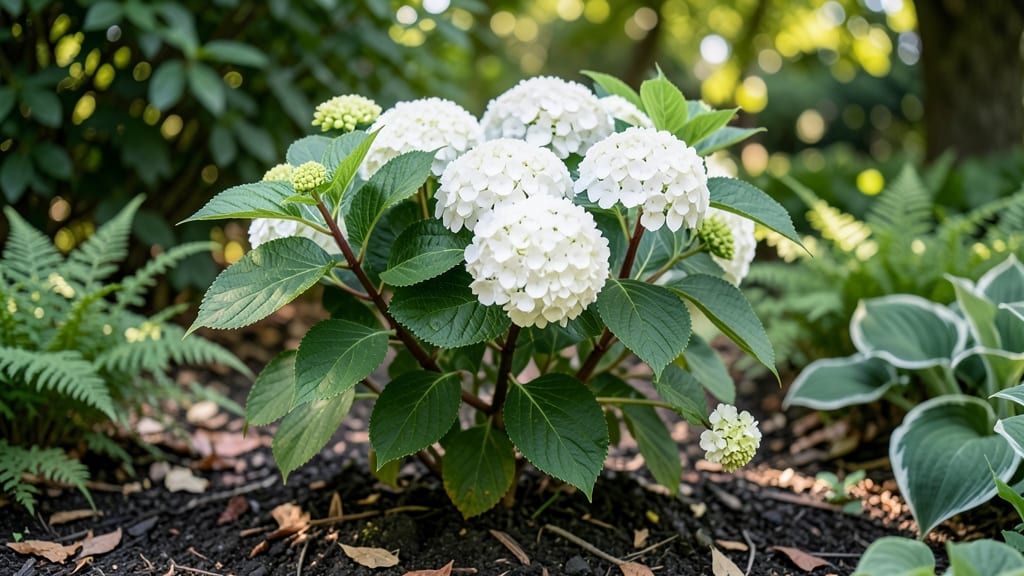
Your white blooming hydrangeas could be the star of the summer garden—if you master the acidic soil trick. ✨ The secret to those vibrant, long-lasting blooms isn’t just sunlight and water; it’s the pH level hiding beneath the surface.
I’ve watched my own hydrangeas go from pale, lackluster flowers to showstopping white clusters just by tweaking one simple thing in the soil.
Start with the right variety—Annabelle, Limelight, or Endless Summer—all of which thrive in partial shade and tolerate a range of soils. But here’s the game-changer: these plants crave acidic soil (pH 5.2–6.0). If your soil is neutral or alkaline, those white blooms will fade to pink or green.
The fix? A handful of sulfur or aluminum sulfate in the planting hole, or a monthly dose of citric acid in the watering can.
With the right soil, you’ll see bold, snow-white blooms that last from midsummer through fall. Prune in late winter or early spring to shape the plant and encourage fresh growth—just avoid cutting back old wood where the flowers form.
And don’t forget: consistent moisture keeps those blooms plump and prevents wilting.
Troubleshooting is easy once you know the signs. Yellow leaves? Too much aluminum. Pink blooms? Your soil’s too alkaline. Adjust with vinegar or peat moss, and you’ll be back on track in no time. These hydrangeas aren’t just pretty—they’re low-maintenance once you get the soil right.
📚 In This Guide
- What you need
- Instructions
- Tips and common mistakes
- Wrapping up and next steps
What you need
- ● White blooming hydrangea plants (preferably Hydrangea macrophylla or Hydrangea arborescens varieties like ‘Annabelle’ or ‘Endless Summer’). Quantity: 1-3 plants per desired display area.
- ○ Acidic soil (pH 5.0–6.0). Test kit required! (See optional tools below.)
- ● Peat moss or pine bark (1–2 bags, 2–3 cubic feet each) to amend soil acidity.
- ● Slow-release granular fertilizer (10-10-10 or 12-4-8 ratio, 1–2 lbs per plant).
- ● Aluminum sulfate or sulfur (for adjusting pH; 1–2 lbs per 100 sq ft if soil is too alkaline).
- ● Mulch (pine straw or pine bark) (2–3 inches thick, 1–2 bags per plant).
- ● Garden gloves & knee pads (for comfort and protection).
- ● Watering can or hose with adjustable nozzle (for gentle hydration).
- ● Soil pH test kit (digital or liquid test strips for accuracy).
- ● Trowel & pruning shears (for planting and trimming deadheads).
- ● Rain gauge or moisture meter (to monitor watering needs).
- ● Epsom salt (magnesium sulfate) (1 tbsp per gallon of water, monthly for extra nutrients).
- ● Plant stakes or cages (if your hydrangea variety needs support).
- ● Compost or worm castings (for organic soil enrichment).
How to cultivate stunning white hydrangeas through soil science
White hydrangeas aren't just pretty—they're a soil scientist's dream. Here's how to unlock their full potential with precise techniques.
🌱 Step 1: Select the Right Hydrangea Variety for White Blooms
Not all white hydrangeas are created equal. For true white blooms that stay white, choose varieties like 'Annabelle' (Hydrangea arborescens) or 'Vanille Fraise' (Hydrangea macrophylla). These types produce sterile flowers that maintain their color, unlike pink varieties that can revert under specific soil conditions.
The key difference lies in their flower structure. Sterile flowers (like those on 'Annabelle') never develop seed heads, so their color remains consistent. Fertile flowers (like many H. macrophylla) may shift hues based on soil pH. For pure white, stick with sterile-flowering types—your color will stay true season after season.
☀️ Step 2: Position for Optimal Sunlight and Shelter
White hydrangeas thrive in partial shade—think 4-6 hours of morning sun with afternoon shade protection. Too much direct sun bleaches petals and stresses plants, while too little shade reduces flowering. I position mine where they get dappled light through nearby trees or on the east side of the house.
Watch for leaf scorching—if edges turn crispy brown by midday, you've got too much sun. A simple test: If your hand feels warm in the planting spot at peak afternoon (around 2 PM), the plant needs more shade. For northern climates, full sun works; southern gardens require afternoon protection.
💧 Step 3: Create Acidic Soil Conditions for Vibrant Color
Here's the secret: soil pH between 5.0-5.5 keeps white hydrangeas blooming their brightest. Test your soil first—most garden centers sell affordable test kits. If your pH is above 6.0, you'll need to acidify it gradually over 2-3 months using elemental sulfur or peat moss.
Spread 1 pound of elemental sulfur per 100 square feet and water thoroughly. The sulfur converts to sulfuric acid in the soil, lowering pH over time. For immediate results, use hydrangea-specific acidifying granules (follow package rates). Re-test soil every 4-6 weeks until you hit that 5.0-5.5 range—this is non-negotiable for consistent white blooms.
✂️ Step 4: Prune Strategically for Next Season's Blooms
Timing matters with hydrangeas. For Hydrangea arborescens (like 'Annabelle'), prune late winter or early spring when buds are visible but before new growth starts. Cut back one-third of the oldest stems to the ground—this encourages vigorous new growth and larger blooms. For Hydrangea macrophylla, wait until after flowering in late summer to prune, as their buds form on previous year's growth.
Watch for "bleeding" sap when you cut—this is normal and harmless. If you see blackened stems, you've pruned too late in the season. Always use clean, sharp pruners to avoid spreading disease. After pruning, apply a 2-inch layer of mulch (like pine bark) to retain moisture and maintain soil acidity.
🌿 Step 5: Feed and Water for Long-Lasting Blooms
Feed your hydrangeas twice a year: Once in early spring with a balanced 10-10-10 fertilizer (follow label rates) to encourage leaf growth, and again in early summer with an acid-loving plant fertilizer (like one formulated for azaleas or rhododendrons) to support blooming. Avoid high-nitrogen fertilizers—they produce lush foliage but fewer flowers.
Water deeply once a week (or more in extreme heat) to keep the root zone consistently moist. Let the top 2 inches of soil dry between waterings—hydrangeas hate soggy roots but won't tolerate drought either. You'll know you're doing it right when leaves stay deep green and stems remain firm (not hollow or wilted).
Tips & tricks for perfect white hydrangea blooms
These precision-focused tricks will help you achieve that showstopping white display every season.
Variety Selection: The sterile-flowering varieties like 'Annabelle' are your best bet for consistently white blooms. These types never develop seed heads, so their color won't shift. If you're working with 'Vanille Fraise', be extra vigilant about maintaining that 5.0-5.5 pH range—fertile flowers can revert to pink if conditions change.
Sunlight Strategy: That 4-6 hours of morning sun recommendation isn't arbitrary—it's about balancing photosynthesis with petal protection. I always test my planting spot by placing my hand there at 2 PM. If it feels warm, you're getting too much afternoon sun. For southern gardens, consider a sheer white shade cloth during peak hours to prevent bleaching.
Soil pH Precision: The 2-3 month acidification timeline is crucial because sulfur works gradually. I've seen gardeners rush this process and end up with stressed plants. Start with 1 pound of elemental sulfur per 100 square feet and re-test every 4-6 weeks. If your soil is particularly alkaline (above 7.0), you might need to extend this process to 4-5 months for optimal results.
Pruning Timing: For 'Annabelle' types, those late winter/early spring buds are delicate—don't prune too early when stems are still dormant, or you'll cut off next season's blooms. I mark my calendar for the first week of February when I know the buds will be visible but before any green growth appears. For 'Vanille Fraise', wait until after flowering when the stems turn woody—this tells me it's safe to prune without affecting next year's blooms.
Pro Tips for White Blooming Hydrangea
- These precision-focused tricks will help you achieve that showstopping white display every season.
- Variety Selection: The sterile-flowering varieties like 'Annabelle' are your best bet for consistently white blooms.
- Sunlight Strategy: That 4-6 hours of morning sun recommendation isn't arbitrary—it's about balancing photosynthesis with petal protection.
Frequently asked questions
Got questions about growing and maintaining your white blooming hydrangea? You’re not alone! Here are some of the most common queries—plus expert answers to keep your plants thriving.
How do I know if my soil is acidic enough for white hydrangeas?
Test your soil’s pH with a soil test kit (available at garden centers). Aim for 5.2–5.5 for white blooms. If it’s too alkaline, amend with sulfur or peat moss. A quick fix: Use hydrangea-specific fertilizer (like Miracle-Gro Azalea, Camellia & Rhododendron) to acidify gradually.
Why are my white hydrangeas blooming late or not at all?
Late or sparse blooms often mean over-pruning (cut back in late winter/early spring, not fall) or nutrient deficiency. Check for yellow leaves (nitrogen) or weak stems (phosphorus). Deadhead spent blooms in summer to encourage new growth. If soil is too dry, water deeply 1–2x weekly.
Can I change my hydrangea’s flower color from white to pink or blue?
White hydrangeas (H. macrophylla) rarely change color—unlike pink/blue varieties. However, if your blooms turn pale pink, your soil may be slightly alkaline. To keep them pure white, stick to acidic soil (pH 5.2–5.5) and avoid lime or wood ash. For true color-changers, opt for ‘Nikko Blue’ or ‘Endless Summer’ varieties.
What pests or diseases should I watch for on white hydrangeas?
Keep an eye out for:
- Hydrangea sawfly larvae: Skeletons leaves? Handpick or spray neem oil.
- Spider mites: Tiny webs + speckled leaves? Spray plants with water or use insecticidal soap.
- Powdery mildew: White dust on leaves? Improve airflow and treat with baking soda spray (1 tsp baking soda + 1 quart water + drop of soap).
Are there white hydrangea alternatives that bloom longer?
If you love white blooms but want extended seasons, try:
- ‘Annabelle’ (H. arborescens): Large, snow-white blooms from summer to fall; thrives in partial sun.
- ‘Limelight’ (H. paniculata): Creamy-white cones that turn pinkish in fall; heat- and drought-tolerant.
- ‘Vanille Fraise’ (H. macrophylla): Fragrant, lacy white blooms that rebloom all season.
Wrapping up and next steps
Transforming your garden with stunning white blooming hydrangeas is easier than you think—just tweak the soil’s pH! 🌸 By embracing acidic conditions (pH 5.0–6.0), you’ll unlock lush, vibrant blooms that last all season.
Remember, consistency is key: test your soil regularly, mulch wisely, and don’t shy away from amendments like sulfur or pine needles.
Ready to see your hydrangeas thrive? Grab your gloves, head to the garden, and start experimenting today—your future floral masterpiece is waiting! For extra inspiration, bookmark this guide or share it with fellow plant lovers to spread the joy of hydrangea gardening. 🌱