
Container Gardens
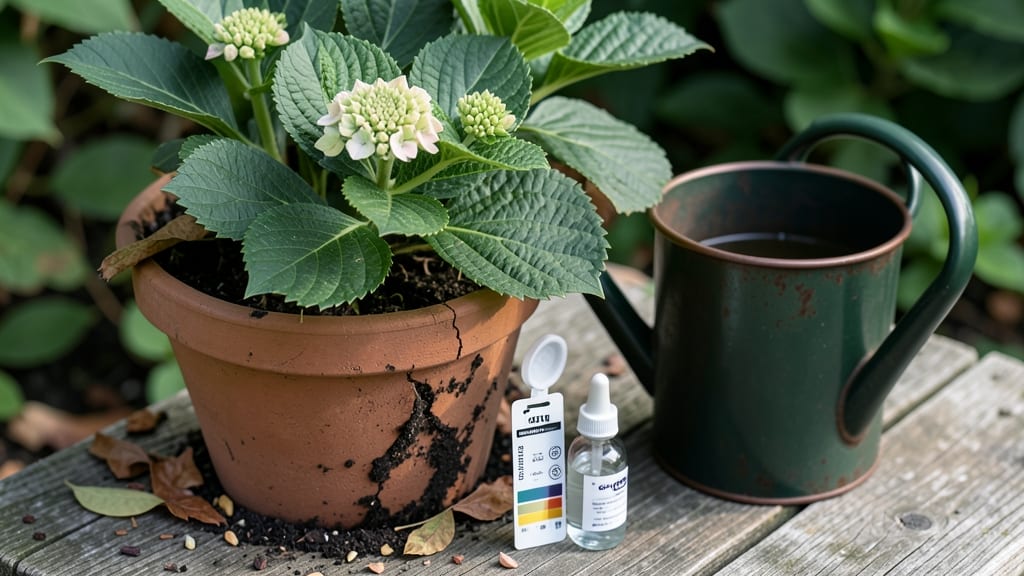
Why aren’t your hydrangeas growing? The clues are right in front of you—but they’re begging for help. 🌿 The most common reason they’re not thriving? Either too much water drowning their roots or not enough letting them drink up nutrients.
I’ve nursed back more hydrangeas than I’d like to admit, and the fix usually starts with checking the soil moisture and adjusting your watering routine.
Start by sticking your finger 2 inches into the soil—if it’s soggy, you’re overwatering; if it’s bone-dry, you’re underwatering. Hydrangeas need 1-1.5 inches of water per week, but they hate soggy feet. Yellowing leaves or wilting despite damp soil?
That’s a red flag. Prune back any dead stems now to redirect energy toward new growth, and test your soil pH—hydrangeas thrive in 5.5-6.2 for blue blooms or 7.0+ for pink.
Within 4-6 weeks, you’ll see fresh green leaves pushing out if you’ve got the watering right. The blooms might take longer, but consistent moisture and proper pruning will get them back on track.
Think of this as a reset button for your plants—once you find the balance, they’ll reward you with lush foliage and those showstopping clusters.
Works for both in-ground and container hydrangeas, though pots dry out faster. The key is patience—hydrangeas are slow to bounce back, but they will come around if you give them the right care. Let’s get those roots breathing again.
Root Causes Behind Stunted Hydrangeas
Hydrangeas are finicky but rewarding plants—when they thrive, they burst with color, but when they struggle, it’s often due to hidden environmental or care-related factors.
Understanding these causes is the first step to reviving your blooms. Let’s dig into the science behind why your hydrangeas might be playing the slow-growth game.
Hydrangeas are heavy feeders, and their growth hinges on soil that’s moist, well-draining, and rich in organic matter. If your soil is compacted, sandy, or nutrient-poor, roots suffocate or starve, leading to stunted growth.
- Clay-heavy soil: Holds too much water, causing root rot (🔬 Phytophthora fungi thrive in waterlogged conditions).
- Sandy soil: Drains too quickly, depriving roots of moisture and nutrients.
- Low organic matter: Without compost or aged manure, soil lacks microorganisms and essential minerals like nitrogen, phosphorus, and potassium.
💡 Pro Tip: Test your soil’s pH (hydrangeas prefer 5.2–6.0 for blue blooms or 6.0–7.0 for pink). Amend with peat moss, compost, or pine bark fines to improve structure and fertility.
Hydrangeas need consistent moisture—but the balance is tricky. Overwatering or underwatering both stress plants, halting growth.
- Overwatering: Soggy soil cuts off oxygen to roots, leading to anaerobic conditions (🔬 lack of O₂ triggers ethylene production, stunting growth).
- Underwatering: Wilting leaves signal osmotic stress—roots can’t absorb water, causing transpiration rate spikes and leaf drop.
✨ Key Fix: Water deeply 1–2 inches per week (check soil moisture 2 inches down—if dry, water). Use mulch to retain moisture and prevent evaporation.
Hydrangeas prefer partial shade (morning sun + afternoon shade). Too much direct sun or extreme heat causes:
- Leaf scorch: Sunburnt edges (UV damage) reduce photosynthesis, limiting energy for growth.
- Heat stress: Temperatures above 90°F (32°C) force buds into dormancy early, stunting blooms.
🌡️ Quick Solution: Move containers to dappled shade in summer. Use lightweight shade cloth (30–50%) if full sun is unavoidable.
Hydrangeas need a balanced diet. Deficiencies show up as:
| Symptom | Likely Cause | Fix |
|---|---|---|
| Yellowing leaves (oldest) | Nitrogen deficiency | Apply balanced fertilizer (10-10-10) or compost. |
| Purple stems/leaves | Phosphorus deficiency | Use bone meal or rock phosphate. |
| Weak, leggy growth | Potassium deficiency | Add wood ash or banana peel tea. |
| Small, sparse blooms | Magnesium/calcium deficiency | Sprinkle Epsom salt (magnesium) or crushed eggshells. |
💪 Feed Smart: Fertilize in early spring (before new growth) and mid-summer for a second bloom push. Avoid high-nitrogen fertilizers in fall—they encourage tender growth vulnerable to frost.
Hidden invaders can drain your hydrangea’s energy:
- Aphids/Spider Mites: Sap-sucking pests (reduce chlorophyll, causing yellowing and stunted leaves).
- Scale Insects: Secretive and sticky—they excrete honeydew, fostering sooty mold (blocks sunlight).
- Root Rot (Fungal): Phytophthora thrives in wet soil, rotting roots and halting nutrient uptake.
🔥 Act Fast: Spray with neem oil or insecticidal soap for pests. For root rot, improve drainage and treat with hydrogen peroxide (3%) to kill fungi.
Sudden temperature drops or harsh winds can shock hydrangeas, causing:
- Bud blast: Freeze-sensitive buds (below 20°F/-7°C) blacken and fail to open.
- Desiccation: Wind dries leaves faster than roots can replace moisture (transpiration > absorption).
🌿 Protect Them: Wrap containers in burlap in winter. In windy areas, plant near a windbreak (fence, hedge) or use stakes for support.
Revive Your Hydrangeas Now
If your hydrangeas are struggling to grow, the good news is that most issues are fixable with the right adjustments. Below, we’ve mapped out the most common causes of stunted growth—whether it’s overwatering, underwatering, or other factors—and provided step-by-step solutions to get your plants thriving again.
Plus, we’ll share prevention tips to keep your hydrangeas lush and happy long-term.
If your hydrangeas are sitting in soggy soil, their roots can’t breathe, leading to yellowing leaves, wilting, or even root rot. Here’s how to fix it:
🔥 Step 1: Check Your Soil
Stick your finger about 2 inches into the soil. If it feels damp (not just moist), you’re overwatering. Hydrangeas prefer soil that drains well but stays slightly moist—like a damp sponge.
🍳 Step 2: Improve Drainage
- Repot if needed: If your container lacks drainage holes, transfer your hydrangea to a pot with holes at the bottom.
- Add perlite or sand: Mix in 20-30% perlite, coarse sand, or orchid bark to loosen heavy soil.
- Raise the pot: Place it on a saucer or elevated stand to prevent water pooling.
👨🍳 Step 3: Adjust Your Watering Routine
- Water deeply but less often: Instead of daily light watering, give your hydrangea a slow, thorough drink every 2-3 days (adjust for heat/wind).
- Water at the base: Avoid wetting the leaves to prevent fungal diseases.
- Use the "finger test": Wait until the top inch of soil feels dry before watering again.
🌡️ Prevention Tips
- Choose the right pot: Terracotta pots dry out faster than plastic—great for hydrangeas!
- Mulch lightly: Add 1-2 inches of mulch (like pine bark) to retain moisture without suffocating roots.
- Monitor weather: Cut back on watering during rainy spells.
Cracked soil, crispy leaf edges, or drooping stems? Your hydrangea is thirsty. Here’s how to hydrate it properly:
🔥 Step 1: Soak the Roots
- Bottom-watering trick: Place the pot in a tray of water for 15-20 minutes to encourage roots to absorb moisture evenly.
- Slow and steady: Water until it runs out the drainage holes, then let excess drain away.
🍳 Step 2: Boost Soil Moisture Retention
- Amend with organic matter: Mix in compost or peat moss to help soil hold water better.
- Group pots together: Place containers close to each other to create a microclimate that retains humidity.
👨🍳 Step 3: Create a Watering Schedule
- Morning watering: Hydrate early in the day to reduce evaporation.
- Mulch deeply: Use 2-3 inches of mulch (like shredded bark) to lock in moisture.
- Check soil depth: For container hydrangeas, water when the top 3 inches of soil are dry.
🎯 Prevention Tips
- Use moisture meters: These handy tools tell you exactly when to water.
- Choose shade: Hydrangeas in full sun dry out faster—provide afternoon shade if needed.
- Upgrade your soil: If your mix is too sandy, switch to a peat-based pH-balanced formula for hydrangeas.
Not just water? Here are quick fixes for other growth killers:
🌿 Poor Soil Nutrition
Hydrangeas love acidic, nutrient-rich soil. If your soil is depleted:
- Feed with acid-loving fertilizer: Use a hydrangea-specific fertilizer or mix in coffee grounds (for acidity) and compost.
- Test your soil: A simple pH test kit (available at garden centers) helps you adjust—aim for 5.2–5.5 for blue flowers or 6.0+ for pink.
🌞 Too Much or Too Little Sun
- Ideal light: Partial shade (4–6 hours of morning sun). Too much sun scorches leaves; too little weakens growth.
- Adjust placement: Move your pot to a spot with dappled sunlight or use a shade cloth in peak hours.
🐛 Pests & Diseases
- Check for aphids/spider mites: Wipe leaves with soapy water or spray with neem oil.
- Fungal issues? Prune affected leaves and improve airflow by spacing plants apart.
❄️ Temperature Stress
- Protect from frost: Move potted hydrangeas indoors or wrap them in burlap before winter.
- Avoid cold drafts: Keep containers away from AC vents or open windows in spring/fall.
Pro Tip 💡: Prune strategically! If your hydrangea blooms on old wood (like bigleaf types), wait until after flowering to trim. For new wood bloomers (like panicle hydrangeas), prune in late winter.
With these fixes, your hydrangeas should perk up within 2–4 weeks. Keep an eye on their progress and adjust as needed—your container garden will thank you with bold, vibrant blooms all season!
Frequently asked questions
Why do my hydrangea leaves turn yellow even when I water regularly?
Yellowing leaves usually signal overwatering or nutrient deficiencies. Check if the soil stays soggy—hydrangeas prefer moist but well-draining soil. If the yellowing starts with older leaves, it’s likely a nitrogen deficiency. Try feeding with a balanced fertilizer (10-10-10) or compost. For container plants, ensure the pot has drainage holes.
Can I move my hydrangea to a sunnier spot if it’s not growing well?
Hydrangeas prefer partial shade (morning sun + afternoon shade). Moving to full sun can scorch leaves, while too little light weakens growth. If relocating, do it gradually over 2-3 weeks to avoid shock. Use a shade cloth (30-50%) if full sun is unavoidable, especially in hot climates.
How do I know if my hydrangea has root rot?
Root rot causes yellowing leaves, wilting, and mushy stems despite damp soil. Gently dig around the roots—healthy roots are firm and white, while rotted roots are brown, soft, and smell foul. Improve drainage immediately by adding perlite or sand to the soil and avoid overwatering.
Should I fertilize my hydrangeas in the fall?
No, avoid fertilizing in late fall or winter—it encourages tender new growth vulnerable to frost. Focus on feeding in early spring (before buds swell) and mid-summer for a second bloom push. Use a hydrangea-specific fertilizer or compost for best results.
Why are my container hydrangeas growing slower than in-ground ones?
Containers dry out faster and have limited root space, which restricts growth. Use a well-draining potting mix with peat moss and upgrade to a larger pot if roots are circling. Water more frequently (check soil daily in summer) and fertilize every 4-6 weeks during growing season.