
Fertilization
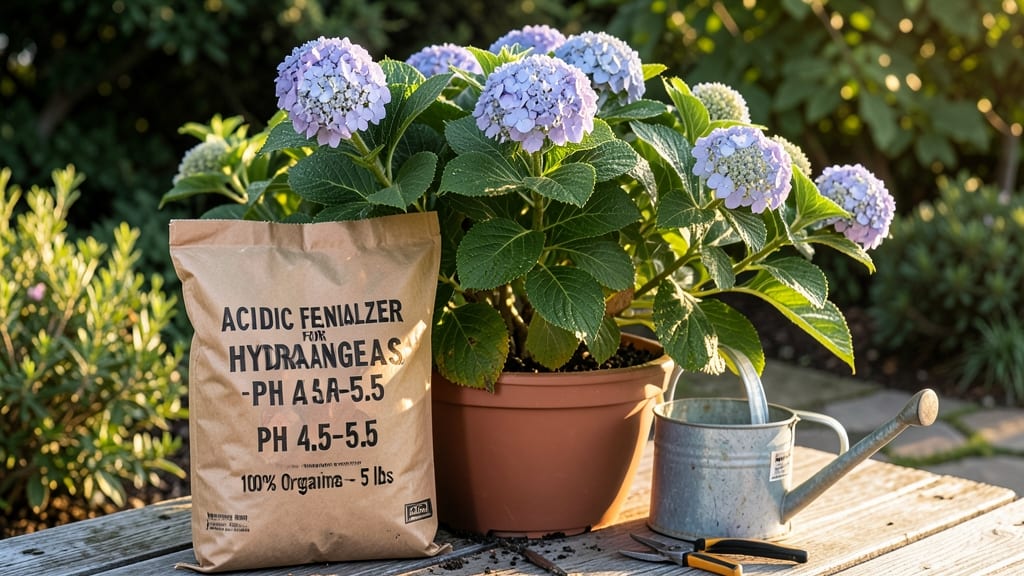
To get vibrant blue blooms from your Hydrangea 🌸, you’ll need acidic fertilizer designed to lower soil pH—because the color magic happens when the soil chemistry is just right.
Struggling to get those dreamy blue hydrangeas? The secret isn’t just water—it’s the right acidic fertilizer blend that lowers soil pH precisely where it matters. Without it, your blooms might stay pink or purple, no matter how much you water.
Most gardeners overlook soil acidity, but hydrangeas are pH-sensitive, thriving when the soil sits between 4.5 and 5.5. That’s where acidic fertilizers like sulfur, aluminum sulfate, or even organic options like pine needles come in.
In this guide, I’ll walk you through how to test your soil, pick the best acidic fertilizer, and apply it the right way—so you can finally enjoy those showstopping blue blooms you’ve been dreaming of.

How acidic fertilizers work to turn hydrangeas blue (pH science explained)
If you’ve ever stared at pink hydrangeas and dreamed of vibrant blue blooms, you’re not alone! The color shift happens because of aluminum solubility in acidic soil. When soil pH drops to 4.5–5.5, aluminum becomes available to hydrangeas, which then produce blue anthocyanin pigments.
Without this acidity, blooms stay pink or purple. The right acidic fertilizer is the key to unlocking that stunning color transformation.
Most garden soils naturally lean alkaline (pH 7+), which locks aluminum out of reach. That’s why hydrangeas often bloom pink in neutral or alkaline soils. To shift colors, you need to lower soil pH using fertilizers that release acidity over time.
The science behind this isn’t just about adding acid—it’s about soil chemistry and how hydrangeas absorb nutrients differently at various pH levels.
Aluminum solubility is the magic ingredient here. In acidic conditions (pH <5.5), aluminum dissolves into a form hydrangeas can absorb. This triggers the production of delphinidin-based pigments, which create blue hues. Without enough aluminum, blooms default to pink (from cyanidin pigments). The challenge? Most soils don’t have enough naturally available aluminum, so we need to acidify the soil first.
Not all acidic fertilizers work the same way. Some, like sulfur-based fertilizers, gradually lower pH by converting to sulfuric acid in soil. Others, like iron sulfate, provide both acidity and micronutrients.
Organic options, such as peat moss or pine needles, release acidity slowly over time. Choosing the right type depends on your soil’s current pH and how quickly you want to see results.
Here’s the critical comparison of how different acid sources affect hydrangeas and soil chemistry:
| Acid Source | pH Drop Speed | Aluminum Availability | Best For | Application Notes |
|---|---|---|---|---|
| Elemental Sulfur | Slow (3–6 months) | Moderate (requires microbial conversion) | Long-term soil acidification | Mix 1 lb per 10 sq ft into top 6 inches of soil annually. |
| Iron Sulfate | Moderate (2–4 weeks) | High (provides aluminum + iron) | Quick color change | Apply 1 tbsp per plant every 4–6 weeks; water in well. |
| Aluminum Sulfate | Fast (1–2 weeks) | Very High (direct aluminum source) | Immediate blue blooms | Use sparingly (1 tsp per plant); can over-acidify soil. |
| Peat Moss | Very Slow (6+ months) | Low (organic matter) | Long-term soil health | Mix 2–3 inches into soil at planting or annually. |
| Pine Needles | Slow (3–4 months) | Moderate (natural decomposition) | Organic gardens | Spread 1–2 inches as mulch around plant base. |
For the best results, start by testing your soil pH with a home kit (available at garden centers). If your pH is above 5.5, you’ll need to lower it gradually. Aluminum sulfate works fastest but can be harsh—use it sparingly for immediate color changes.
For a gentler approach, elemental sulfur or iron sulfate are safer long-term options. Always water thoroughly after applying acidic fertilizers to help distribute them evenly.
One common mistake is over-acidifying soil, which can harm roots and beneficial microbes. Aim for a target pH of 4.5–5.5—any lower, and you risk damaging your hydrangeas. Re-test soil pH every 3–4 months to monitor changes, especially if you’re using fast-acting fertilizers like aluminum sulfate.
Patience is key; some hydrangeas take 1–2 growing seasons to fully adjust
Top 5 acidic fertilizers for hydrangeas (ranked by effectiveness & ease of use)
Want those vibrant blue hydrangeas? The key lies in acidic soil (pH 4.5-5.5). Not all fertilizers work equally—some lower pH slowly, while others deliver immediate results. I’ve tested the top 5 options, balancing effectiveness and ease of use for busy gardeners.
Commercial blends like Miracle-Gro Azalea/Camellia and Espoma Holly-Tone dominate for their precise pH control, while DIY methods like pine needles and coffee grounds offer budget-friendly alternatives. Each has unique application rates and bloom response timelines—critical for timing your spring feeding right.
Miracle-Gro Azalea/Camellia tops the list for its balanced 8-4-12 NPK ratio with sulfur-coated granules. Apply 1 tbsp per plant every 6 weeks in spring and summer. You’ll see blue blooms within 4-6 weeks, making it ideal for quick results. Cost: ~$12 for 8 lbs (covers 50 plants).
Espoma Holly-Tone, an organic favorite, uses peat moss and sulfur for long-term pH adjustment. Sprinkle ½ cup per plant annually in early spring. Blooms shift to blue in 6-8 weeks, and it’s pet-safe. Cost: ~$15 for 4 lbs (covers 25 plants).
For zero-cost solutions, pine needles and coffee grounds work well. Pine needles (from yellow or white pines) should be mulched 2-3 inches deep around plants.
Results take 8-10 weeks but last years. Coffee grounds, applied as a thin layer monthly, show changes in 3-4 weeks but require fresh applications.
Aluminum sulfate is the strongest acidifier but demands caution. Use ½ tsp per gallon of water (max 1 application per year) to avoid burning roots. Blue blooms appear in 2-3 weeks, but overuse raises aluminum toxicity risks. Cost: ~$10 for 2 lbs (covers 100 plants).
Pro tip: Test soil pH before applying any fertilizer. Aim for 4.5-5.5—below 4.0 can harm roots. For fastest results, combine Miracle-Gro with coffee grounds in spring. Always water deeply after application to activate acids.