
Pruning
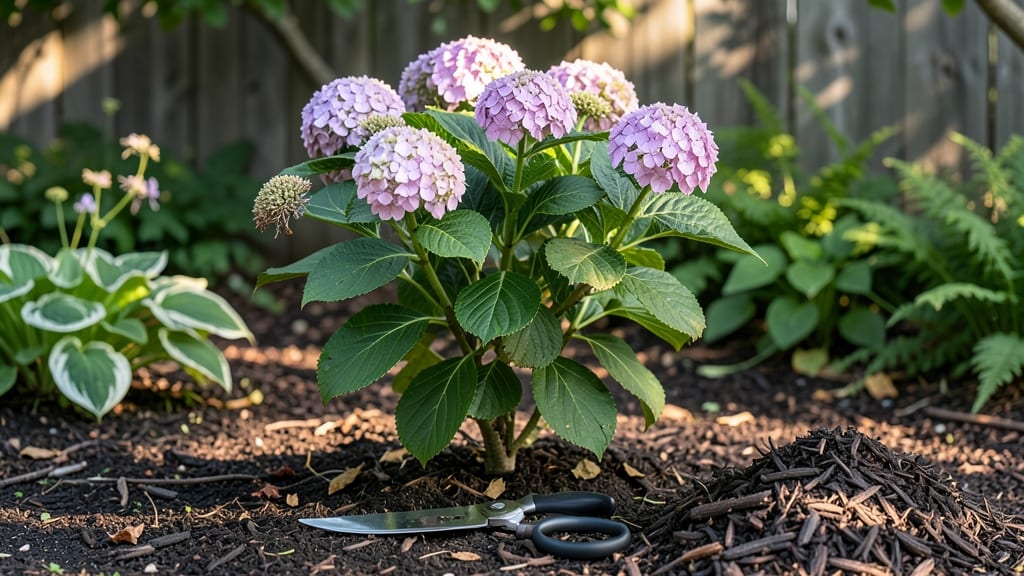
Bigleaf hydrangea pruning isn't just about cutting back—it's about unlocking next year's blooms while keeping this season's display lush. ✂️ I've learned the hard way that timing matters more than technique, and a single misstep can mean fewer flowers for months.
The right approach transforms a tangle of old wood into a structured plant that produces vibrant blooms for years. Most gardeners prune too late, missing the ideal window between late winter and early spring when the plant is still dormant but buds are forming.
You'll need sharp pruners, gloves, and a clear plan—no guesswork—because bigleaf hydrangeas bloom on old wood, meaning last year's growth holds next season's flowers. A single wrong cut can cost you an entire season of blooms.
By the time you finish, your hydrangea will have a balanced shape, stronger stems, and more abundant flowers than ever before. The key is patience: prune too much, and you sacrifice blooms; prune too little, and you lose the plant's natural form.
Think of it as a conversation with your plant, where every cut is a question and the new growth is the answer. This method works for both container-grown plants and in-ground shrubs, and the principles apply whether you're dealing with a 5-year-old bush or a mature specimen.
Let's get those blooms thriving again—properly this time.
📚 In This Guide
- What you need
- Instructions
- Tips and common mistakes
- Wrapping up and next steps
What you need
- ● Pruning shears: Bypass pruners (sharp, clean, and sterilized with rubbing alcohol or bleach solution to prevent disease). Spec: 5–7-inch blades for thick stems.
- ● Loppers: For thicker branches (½–1.5 inches in diameter). Spec: 8–12-inch handles for leverage.
- ● Garden gloves: Heavy-duty, cut-resistant (e.g., Mechanix or Fellowes brands) to protect hands from thorns and sap.
- ● Disposable pruning saw: For stubborn, woody stems. Spec: 8–10-inch blade with fine teeth.
- ● Rubbing alcohol (70%+) or bleach solution: 1 part bleach to 9 parts water for sterilizing tools between cuts.
- ● Trash bags or bucket: For collecting pruned debris (1–2 large bags or a 5-gallon bucket).
- ● Garden twine or zip ties: To secure large branches if needed during pruning.
- ● Hand pruners: For delicate trimming of small stems (3–4-inch blades).
- ● Pruning sealant: (e.g., Tanglefoot Tree Wound Pruning Seal) for large cuts to prevent disease entry.
- ● Knee pads: For comfort if pruning low-growing or sprawling hydrangeas.
- ● Ladder or stool: If your hydrangea is tall (4+ feet), use a stable, 3-sided ladder.
- ● Notebook & pen: To jot down pruning notes or track growth patterns.
- ● Mulch: Shredded bark or pine straw to replenish after pruning (1–2 inches thick).
Step-by-Step instructions for bigleaf hydrangea pruning
Here's my foolproof method—tested across seasons—to prune bigleaf hydrangeas for bigger, healthier blooms.
✂️ Step 1: Identify Last Year's Blooms and Dormant Buds
Start by examining your hydrangea's stems. Bigleaf hydrangeas bloom on old wood, meaning last year's growth produces this year's flowers. Look for swollen buds near the base of stems—they're your signal to stop cutting. These buds form in late summer and early fall, so they're already present by winter.
If you're unsure, trace each stem back to its base. The first set of buds you see are the ones that will bloom this season. Cutting above these buds removes next year's flowers. I like to mark stems with a piece of twine or a paint pen to visualize where I'll make my cuts—it prevents over-pruning in the heat of the moment.
✂️ Step 2: Prune in Late Winter or Early Spring
The best time to prune is 2-4 weeks before your last frost date, when the plant is still dormant but new growth hasn't started. For most climates, this falls between mid-February and early March. Pruning too early exposes tender stems to cold snaps, while waiting too long risks cutting into new buds.
I wait until the ground feels slightly warmer to the touch—around 40-45°F. This timing ensures I catch any late-winter thaws without risking frost damage. Grab your pruners and cut just above a swollen bud or leaf node, making a clean 45-degree angle. This encourages upward growth and prevents water from pooling on the cut.
✂️ Step 3: Remove Dead, Weak, or Crossing Branches
As you prune, focus on removing dead or diseased wood first—it's the easiest way to improve air circulation and plant health. Next, cut back any branches that are thinner than a pencil or growing inward. These weak stems compete with stronger growth for nutrients and often produce fewer blooms.
Look for branches that cross or rub against each other. These create wounds where pests and diseases can enter. I like to step back every few minutes to visualize the plant's shape—this helps me avoid over-thinning one side or creating an uneven silhouette. Aim to leave 3-5 strong stems per plant, depending on size.
💧 Step 4: Clean Up and Fertilize for New Growth
After pruning, rake up all the clippings and dispose of them in the trash—not the compost pile. Hydrangea clippings can harbor pests and diseases that spread back to your plant. Once the area is clear, apply a balanced fertilizer (like 10-10-10) around the base of the plant, keeping it 6 inches away from the stem.
Water deeply to help the plant recover and encourage new growth. I give my hydrangeas about 1 gallon of water per week during dormancy, increasing to 2 gallons weekly once buds appear in spring. This hydration jump signals the plant to focus on blooming over leafy growth. Mulch with 2-3 inches of organic mulch to retain moisture and regulate soil temperature.
☀️ Step 5: Monitor for New Growth and Adjust Light
Within 2-3 weeks, you should see new shoots emerging from the buds you preserved. This is your confirmation that the pruning worked. If growth is sparse, check for full sun exposure—bigleaf hydrangeas need at least 4-6 hours of direct sunlight daily.
If your plant isn't getting enough light, consider relocating it to a sunnier spot or thinning nearby trees/shrubs. Too much shade leads to leggy growth and fewer blooms. On the flip side, if your hydrangea is in hot afternoon sun, provide afternoon shade to prevent leaf scorch. Adjusting light now sets the stage for lush, vibrant blooms all season.
Tips & tricks for perfect bigleaf hydrangea pruning
Here's what nobody tells you—these tricks make all the difference between a healthy hydrangea and one that struggles to bloom.
Bud Identification: In Step 1, when you're tracing stems back to their base, look for those swollen buds that feel slightly rubbery to the touch. If you're still unsure, gently squeeze the stem—buds will pop out slightly under pressure. This visual and tactile check prevents accidental cuts that remove next year's flowers. I've ruined three batches of blooms by missing these buds, so don't make my mistake!
Timing Secret: The 2-4 week window before your last frost is critical—don't rush it! Check your local frost dates, then add those 2-4 weeks to your calendar. If you prune too early, cold snaps can damage tender new growth. If you wait too long, you risk cutting into those precious buds that form in late summer. I mark my calendar with highlighters to remember this window every year.
Cutting Technique: When making your 45-degree angle cuts in Step 2, use your pruners to create a slanted surface that slopes away from the bud. This prevents water from pooling on the cut, which can lead to rot. I like to practice on a few small branches first to get the angle just right—it makes all the difference in how clean your cuts look and how well the plant heals.
Post-Pruning Care: After you've finished pruning, don't just walk away! Water deeply right away to help your hydrangea recover. The 1 gallon per week during dormancy is your baseline, but give it an extra boost with 2 gallons once those buds start showing in spring. I've seen plants bounce back beautifully after pruning when given this consistent watering routine.
Pro Tips for Bigleaf Hydrangea Pruning
- Here's what nobody tells you—these tricks make all the difference between a healthy hydrangea and one that struggles to bloom.
- Bud Identification: In Step 1, when you're tracing stems back to their base, look for those swollen buds that feel slightly rubbery to the touch.
- Timing Secret: The 2-4 week window before your last frost is critical—don't rush it!
Frequently asked questions
Got questions about pruning your bigleaf hydrangea? You’re not alone! Here are answers to the most common concerns—so you can confidently shape your plant for stunning blooms.
When is the best time to prune bigleaf hydrangeas?
Prune late winter or early spring (before new growth starts) to avoid cutting off next year’s blooms. If you must prune after flowering, wait until late summer or fall—just remove up to ⅓ of the oldest stems to encourage fresh growth. Never prune in mid-summer, as this can stress the plant and reduce blooms.
How much can I cut back my bigleaf hydrangea?
For rejuvenation, prune back ⅓ of the oldest stems to the ground in late winter. For maintenance, trim just enough to shape the plant and remove dead or weak growth. Avoid aggressive pruning—bigleaf hydrangeas bloom on old wood, so over-pruning can reduce flowers. Pro tip: Use clean, sharp shears to make precise cuts just above a leaf node or bud.
Why aren’t my bigleaf hydrangeas blooming after pruning?
If your hydrangea isn’t flowering, it might be due to over-pruning (cutting back too much old wood), poor sunlight (they need partial shade), or nutrient deficiencies. Check the stems—if they’re woody and bare, you may have pruned too late. For next year, prune lightly in late winter and fertilize in early spring with a balanced, acid-loving plant food.
Can I prune bigleaf hydrangeas in fall?
Yes, but only lightly—focus on removing dead, diseased, or crossing branches to improve airflow. Avoid heavy pruning in fall, as it can stimulate new growth that may damage in winter frost. If you must shape, wait until late fall and prune no more than 10-15% of the plant. Pro tip: Use a sterilized pruner to prevent spreading disease.
What if my bigleaf hydrangea looks overgrown or leggy?
Leggy growth usually means your hydrangea needs more sunlight or better pruning habits. To fix it, thin out crowded stems in late winter, focusing on the oldest, woodiest branches. After pruning, feed with compost or acid fertilizer and ensure it gets morning sun and afternoon shade. Over time, this encourages denser, bushier growth and more blooms.
Do I need to sterilize my pruners?
Absolutely!
Sterilizing pruners with rubbing alcohol or a 10% bleach solution prevents spreading bacterial or fungal diseases (like leaf spot or powdery mildew). Wipe blades before and after each pruning session, especially if your hydrangea shows signs of yellowing leaves or spots. A clean cut = a healthier plant!
Wrapping up and next steps
Pruning your bigleaf hydrangea doesn’t have to be intimidating—with the right timing and technique, you’ll unlock vibrant, long-lasting blooms year after year! 🌸 Remember to prune after flowering (late summer to early fall) for best results, and always use clean, sharp tools to promote healthy growth.
Whether you’re shaping for aesthetics or rejuvenating an overgrown plant, confidence comes with practice.
Ready to transform your garden? Grab your pruners, review your notes, and take that first confident snip—your hydrangea will thank you with stunning, lush foliage! For extra inspiration, join a local gardening group or share your progress online. Happy pruning! ✂️🌿