
Flowers
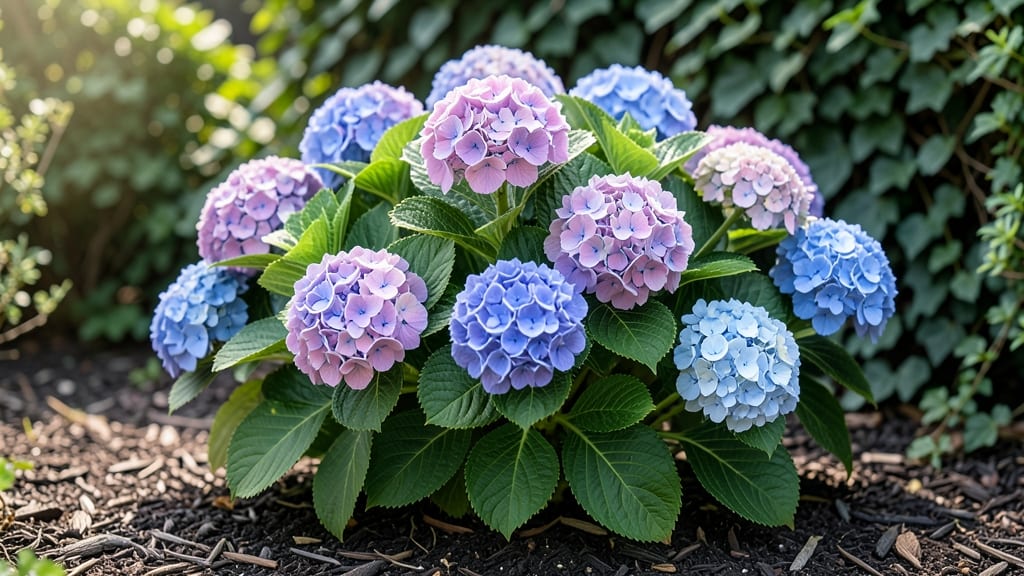
Blue, pink, and purple hydrangeas don’t just bloom—they put on a season-long color show that changes with the pH of your soil. ✨ I’ve spent years experimenting with these mood rings of the garden world, and the secret to their dramatic shifts isn’t complicated: it’s all about the soil, placement, and a little pruning finesse.
The magic happens when you group them by variety—like the deep blues of 'Nikko Blue' next to the soft pinks of 'Endless Summer'—so their colors complement each other even as they change.
Think of them as living watercolors: in spring, they might blush pink, then deepen to lavender by summer, and fade to a dreamy blue in fall. The key is planting them where they’ll get morning sun and afternoon shade, which keeps their blooms vibrant longer.
You’ll end up with a garden that feels like a living postcard, shifting hues with the seasons while requiring almost no extra work. The blooms stay lush and full when you prune just once a year—right after they finish flowering—and mulch heavily to lock in moisture.
Even in containers, they’ll thrive, letting you move them to highlight different color schemes as they evolve.
Perfect for borders, cottage-style gardens, or as a dramatic focal point near patios. The best part? You don’t need a green thumb—just a little patience to watch the colors unfold. Here’s how to make it happen without the guesswork.
📚 In This Guide
- What you need
- Instructions
- Tips and common mistakes
- Wrapping up and next steps
What you need
- ● Hydrangea plants: Choose Hydrangea macrophylla varieties (e.g., 'Nikko Blue,' 'Endless Summer,' or 'Limelight') for vibrant color shifts. Buy 3–5 mature plants (3–5 gallons each) for a full-season display.
- ● Well-draining potting mix or garden soil: 50 lbs of organic compost or a 50/50 blend of garden soil and peat moss (or coconut coir for sustainability).
- ○ Aluminum sulfate or hydrangea flower color changer: 1–2 lbs (for blue tones) or 1 lb of lime (for pink/purple shifts). Optional but game-changing!
- ● Mulch: 2–3 cubic feet of shredded bark or pine needles to retain moisture and regulate soil pH.
- ● Garden trowel or spade: For planting and soil amendments.
- ● Pruning shears: Bypass pruners (sharp, clean, and sterilized with rubbing alcohol).
- ● Gloves: Heavy-duty gardening gloves to protect from thorns and soil.
- ● Watering can or hose with a gentle spray nozzle: Hydrangeas hate soggy roots!
- ● pH test kit or strips: To monitor soil acidity (aim for 5.2–5.5 for blue or 6.0+ for pink/purple).
- ● Measuring cups/spoons: For precise application of soil amendments.
- ● Slow-release fertilizer: 10–12 lbs of 10-10-10 or 5-10-5 (spring and early summer).
- ● Epsom salt: 1 tbsp per gallon of water (monthly spray for deeper greens and blooms).
- ● Rain gauge or moisture meter: Hydrangeas thrive with 1–1.5 inches of water weekly.
- ● Decorative stakes or trellis: For support if growing Hydrangea paniculata varieties.
- ● Photo journal: Track color changes and soil pH adjustments!
How to grow hydrangeas that shift from blue to pink to purple
Here's the simple system I use to coax dramatic color changes in my hydrangeas—no fancy tricks, just smart care.
☀️ Step 1: Pick the Right Variety for Color Shifts
Not all hydrangeas change color—focus on mophead or lacecap types like 'Nikko Blue,' 'Endless Summer,' or 'Limelight.' These varieties naturally shift based on soil pH and sunlight. Avoid oakleaf or smooth hydrangeas—they don't respond the same way.
I always plant mine in full sun to partial shade (at least 6 hours of sunlight daily). Too much shade dulls the color shifts, while too much direct sun can scorch leaves. Watch for leaves that look crispy at the edges—that's your sign to move the plant to a shadier spot by mid-afternoon.
💧 Step 2: Adjust Soil pH for Dramatic Color Changes
The secret to blue-to-pink shifts is soil pH. For blue flowers, aim for pH 5.5 or lower—use elemental sulfur or peat moss to acidify the soil. For pink or purple blooms, raise the pH to 6.0 or higher with lime. Test your soil every 2-3 months using a simple pH kit.
I like to add 2 tablespoons of sulfur per plant in early spring for blue blooms, then switch to 1 tablespoon of garden lime in summer for pink. Don't overdo it—sudden pH swings stress the plant. Water well after amending to help the soil adjust gradually.
✂️ Step 3: Prune for Season-Long Blooms (Not Just Summer)
Most people prune hydrangeas too late or too aggressively. For season-long color shifts, prune right after flowering (late summer/early fall) to encourage next year's blooms. Cut back old wood (last year's stems) by ⅓, but leave new growth untouched—it's where next season's flowers form.
If your hydrangea isn't blooming much, it might be getting too much pruning. I avoid cutting back until after the flowers fade—this ensures you don't accidentally remove next year's buds. Deadhead spent blooms in early fall to keep the plant tidy without sacrificing future color.
🌿 Step 4: Feed and Water for Vibrant Shifts
Use a balanced fertilizer (like 10-10-10) in early spring to jumpstart growth, then switch to low-phosphorus (like 5-1-5) in summer to avoid leafy overgrowth. I fertilize every 4-6 weeks during the growing season, always watering well after to prevent root burn.
Hydrangeas love consistent moisture—keep the soil evenly damp but not soggy. Mulch with 2-3 inches of shredded bark to retain moisture and regulate soil temperature. If the leaves start wilting or turning yellow, it's time to water deeply until you see moisture 6 inches down.
🌱 Step 5: Watch and Adjust for Best Results
Color shifts happen gradually—start seeing changes 4-6 weeks after adjusting pH. If your hydrangea isn't responding, check the soil pH again and light exposure. Sometimes, even the right variety needs a little more time to show its full range.
I keep a color journal next to my plants, noting pH levels, sunlight hours, and bloom colors each week. It's amazing how small tweaks—like moving a plant 2 feet closer to shade—can deepen the purple or brighten the pink. Patience is key here!
Tips & tricks for season-long hydrangea color shifts
Real talk: The difference between hydrangeas that shift colors beautifully and those that stay dull lies in these small but mighty details.
Variety Matters: If you're starting with the wrong type, no amount of pH tweaking will work. Stick to mophead or lacecap varieties like 'Nikko Blue' or 'Endless Summer'—these are the ones that actually respond to sunlight and soil changes. I've tried oakleaf types, and they just don't play ball with color shifts. Also, those crispy leaf edges? That's your plant screaming for shade—move it before it's too late.
Soil pH Timing: The 2-3 month soil testing schedule in Step 2 is non-negotiable. I learned this the hard way when my hydrangeas went from blue to muddy brown after a sudden pH swing. Apply that 2 tablespoons of sulfur in early spring and 1 tablespoon of lime in summer, but always water thoroughly after—this helps the soil adjust gradually without shocking your plant. Think of it like seasoning a steak: you don't dump all the salt at once.
Pruning Precision: That ⅓ cut back on old wood is about balance. I see people hacking off half their plant in winter, and then they wonder why they get sparse blooms. Wait until right after flowering (late summer/early fall) to prune, and only trim those last year's stems. The new growth you see now? That's where next year's flowers are hiding—don't touch it! And deadhead those spent blooms in early fall, but leave the stems intact if you want next year's color show.
Fertilizer Strategy: The switch from 10-10-10 in spring to 5-1-5 in summer isn't just random numbers—it's about controlling growth. Too much nitrogen (that first number) in summer gives you lush leaves but few flowers. I fertilize every 4-6 weeks, but I always water it in right after. Dry fertilizer burns roots faster than you can say "blue blooms."
Pro Tips for Blue Pink Purple Hydrangea
- Real talk: The difference between hydrangeas that shift colors beautifully and those that stay dull lies in these small but mighty details.
- Variety Matters: If you're starting with the wrong type, no amount of pH tweaking will work.
- Soil pH Timing: The 2-3 month soil testing schedule in Step 2 is non-negotiable.
Frequently asked questions
Got questions about those stunning blue, pink, and purple hydrangeas that seem to change color with the seasons? You’re not alone! Here are some of the most common queries—and their answers—to help you master these magical blooms with confidence.
Why do my hydrangeas change color from pink to blue?
The color shift depends on soil pH! Acidic soil (pH < 6.0) produces blue blooms, while alkaline soil (pH > 7.0) yields pink. Purple hues occur in neutral soil (pH 6.0–7.0). Test your soil and adjust with lime (to raise pH) or sulfur (to lower pH) for dramatic results.
When is the best time to prune hydrangeas for maximum color?
Timing matters! For bigleaf hydrangeas (H. macrophylla), prune right after flowering (late summer/early fall) to avoid cutting off next year’s buds. For panicle or oakleaf types, prune in late winter/early spring before new growth starts. Never prune in mid-summer—it can stunt blooms!
Can I grow blue hydrangeas in containers? If so, how?
Use a large container (15+ gallons) with well-draining soil and add hydrangea-specific fertilizer (high in phosphorus). For blue blooms, mix in peat moss or pine bark to keep soil acidic. Repot every 2–3 years and water consistently—containers dry out faster!
What should I do if my hydrangeas turn brown or crispy?
Brown edges or wilting often signal underwatering, overwatering, or fungal issues. Check the soil—it should be moist but not soggy. If fungal spots appear, treat with neem oil or fungicide. Avoid overhead watering, and ensure 6+ hours of sunlight daily (too much shade can also stress plants).
Are there hydrangea varieties that stay one color all season?
Most hydrangeas shift hues, but some varieties are more stable:
- ‘Endless Summer’ (pink/blue, minimal color change)
- ‘Nikko Blue’ (deep blue with slight purple tinges)
- ‘Limelight’ (greenish-white, stays consistent)
Wrapping up and next steps
Transforming your garden into a vibrant canvas with blue, pink, and purple hydrangeas is easier—and more rewarding—than you think! These stunning blooms don’t just add color; they adapt beautifully to your care, shifting hues with the seasons and thriving with minimal pruning.
Whether you’re a gardening novice or a seasoned green thumb, the key is patience, the right soil, and a little seasonal attention.
Ready to dive in? Start small—plant a single hydrangea this spring and watch it evolve into a showstopper! For even more tips, explore our seasonal care guide or join a local gardening group to swap tricks with fellow plant lovers. 🌸 Your future garden awaits!