
Companion Plants
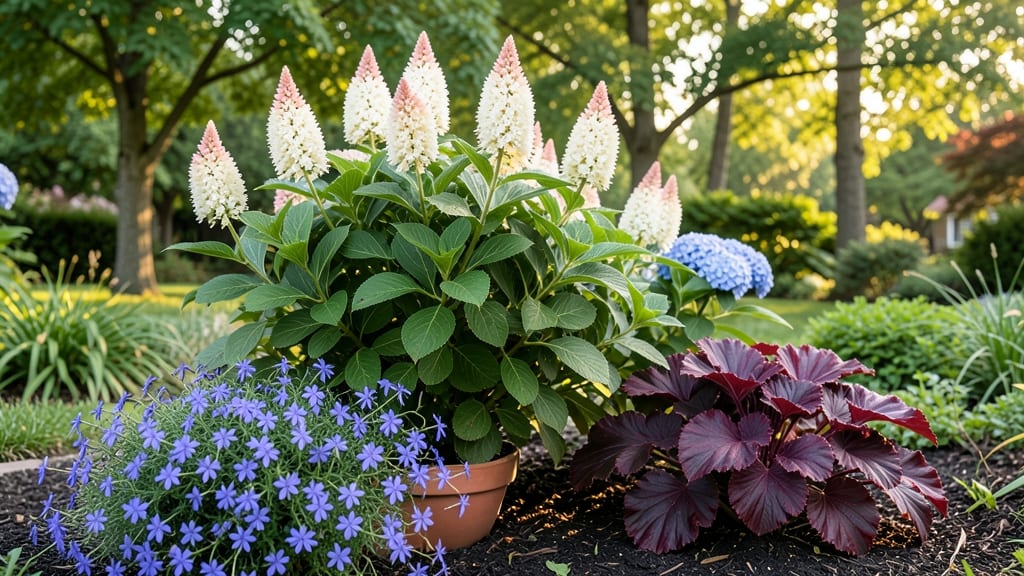
Pairing border hydrangeas with the right companions turns your shade garden into a year-round showstopper. 🌿 I’ve learned that the best combinations aren’t just about pretty colors—they’re about creating a thriving ecosystem where plants support each other’s growth, deter pests, and fill in gaps when hydrangeas aren’t blooming.
The secret lies in matching height, light needs, and textures. Tall ferns like Ostrich or Holly frame hydrangeas beautifully, while low-growing heucheras or ajugas spill over the edges for a lush, layered look. These pairings also improve soil moisture retention, so you’ll water less and see more blooms.
By the end of the season, you’ll have a border that’s bursting with color from spring to fall—hydrangeas in bloom, ferns adding structure, and ground covers keeping weeds at bay.
The best part? These combinations work in partial shade to full shade, so they’re perfect for tricky spots in your garden.
Start with one or two plants per hydrangea to avoid overcrowding, and watch how the whole border transforms. The key is patience—give plants a season to settle in before expecting full impact. Trust me, your garden will thank you.
📚 In This Guide
- What you need
- Instructions
- Tips and common mistakes
- Wrapping up and next steps
What you need
- ● Border hydrangeas (Hydrangea paniculata or H. arborescens): 3–5 mature plants (spaced 3–5 feet apart for optimal airflow and growth).
- ● Companion plants: Perennials: Heuchera (3–5 plants), Astilbe (3–5 plants), or Ferns (e.g., Matteuccia struthiopteris, 3–5 plants).
- ● Bulbs: Daffodils or Alliums (10–15 bulbs for early spring color).
- ● Ground covers: Ajuga or Liriope (5–10 plants to suppress weeds).
- ● High-quality garden soil: 2–3 cubic yards (amend with compost or peat moss for moisture retention).
- ● Mulch: 2–3 inches of organic mulch (e.g., pine bark or shredded leaves).
- ● Slow-release fertilizer: 10–15 lbs of balanced 10-10-10 or acid-loving plant fertilizer (e.g., for hydrangeas).
- ● Garden trowel (for planting bulbs and small perennials).
- ● Garden fork or spade (for amending soil).
- ● Pruners (sterilized, for trimming companion plants).
- ● Measuring tape or ruler (to ensure proper spacing).
- ● Watering can or hose with a gentle spray nozzle (hydrangeas love moisture!).
- ● Gloves (to protect your hands from thorns or rough mulch).
- ● Epsom salt (1 tbsp/month in water for blue hydrangea blooms).
- ● Soil pH test kit (to monitor acidity for hydrangeas).
- ● Decorative stones or edging (to define borders neatly).
- ● Drip irrigation system (for consistent moisture in shade gardens).
- ● Plant labels (to track varieties and care needs).
Thriving border hydrangea pairings: step-by-step planting plan
Here's my foolproof method for creating a lush, low-maintenance shade garden where hydrangeas shine alongside their perfect partners.
🌿 Step 1: Select the Right Hydrangea Varieties for Your Climate
Start with border hydrangeas suited to your hardiness zone—Oakleaf (Hydrangea quercifolia) thrives in zones 5-9 with its stunning fall foliage, while Panicle (Hydrangea paniculata) like 'Little Lime' handles zones 3-8 with heat tolerance. I always check the USDA zone map before buying, because a mismatched variety will struggle even with perfect companions.
For shade gardens, focus on Bigleaf (Hydrangea macrophylla) varieties like 'Endless Summer' which bloom on both old and new wood. These need morning sun and afternoon shade—the key to vibrant blooms without leaf scorch. Plant them where they'll receive 3-6 hours of filtered light daily, typically under tall trees where dappled sunlight creates perfect growing conditions.
🌱 Step 2: Choose Complementary Perennials for Texture and Color
I pair border hydrangeas with hostas (for lush foliage) and heucheras (for vibrant leaf color) to create layered interest. For example, a purple-leaved heuchera ('Plum Pudding') contrasts beautifully with blue hydrangea blooms, while hosta 'Blue Angel' adds silvery-blue foliage that echoes the flower color. These shade-lovers thrive in the same rich, well-draining soil that hydrangeas prefer.
Add ferns like Ostrich Fern (Matteuccia struthiopteris) for feathery texture—its arching fronds soften the hydrangea's rounded shape. For height variation, include Astilbe 'Fanal' with its fiery red plumes that bloom when hydrangeas fade. All these plants share the same moist, acidic soil needs, making maintenance effortless.
☀️ Step 3: Plant in Staggered Layers for Visual Impact
Begin with the tallest plants at the back—Astilbe or Cimicifuga (Bugbane)—followed by mid-height hydrangeas (3-4 feet), then heucheras and hostas in front. I space hydrangeas 4-6 feet apart to allow airflow and prevent fungal diseases. Dig holes twice as wide as the root ball but only as deep as the container level to avoid burying stems.
Amend the planting hole with 2 inches of peat moss or sulfur to lower soil pH (hydrangeas love acidic soil, pH 5.2-6.0). Mix in compost for fertility, but avoid fresh manure—it raises pH and burns roots. Water deeply after planting to settle the soil, then mulch with 3 inches of shredded bark to retain moisture and suppress weeds.
💧 Step 4: Maintain Consistent Moisture and Soil Conditions
Water deeply 2-3 times per week during the first growing season to establish roots, then taper to once weekly once established. I check soil moisture by sticking my finger 2 inches deep—if it feels dry, water thoroughly. Hydrangeas wilt dramatically when thirsty, so don't wait until leaves droop to water.
Fertilize in early spring with hydrangea-specific fertilizer (high in phosphorus for blooms) and again in mid-summer after the first flush of flowers. Avoid high-nitrogen fertilizers—they produce lush foliage at the expense of blooms. For blue flowers, add aluminum sulfate (1 tablespoon per gallon of water) every 4-6 weeks during the growing season.
✂️ Step 5: Prune and Deadhead for Continuous Blooms
Prune Bigleaf hydrangeas in late winter (before buds swell) by cutting back 1/3 of the oldest stems to encourage new growth. For Panicle hydrangeas, wait until late winter/early spring and prune to shape—these bloom on new wood and reward bold cuts. Remove wilted blooms in early summer to extend the flowering season.
Watch for yellowing leaves—this often signals overwatering or nutrient deficiency. If the soil feels soggy, reduce watering immediately. For pests, spray with neem oil if aphids appear on new growth. With proper care, your hydrangea companions will create a year-round display of color and texture in even the shadiest corners of your garden.
Tips & tricks for perfect border hydrangea pairings
Here's what I've learned from years of creating stunning shade gardens—these tricks will help your border hydrangea companions thrive and create visual magic.
Lighting Strategy: When selecting that perfect 3-6 hours of filtered light, prioritize locations where sunlight hits between 9 AM and 2 PM. Eastern exposures work beautifully for morning sun protection, while deciduous trees provide natural afternoon shade. I've found that hydrangeas planted under silver maples get just the right dappled light—watch how the leaves filter sunlight throughout the day to mimic this effect.
Soil pH Precision: The pH 5.2-6.0 range is crucial for vibrant blooms, but testing is key. I use a simple soil test kit every spring and adjust with aluminum sulfate for blue flowers or lime for pinks if needed. Remember that peat moss and sulfur break down over time, so retest annually—especially if you notice leaf yellowing despite proper watering. This small adjustment makes all the difference in flower color intensity.
Layering Technique: For that professional garden look, space your mid-height hydrangeas 4-6 feet apart but stagger them in odd-number groupings (3 or 5 plants). This creates natural flow while preventing fungal diseases from spreading between crowded plants. I always plant the tallest companions like Astilbe at the back first, then work forward—it's like building a stage set where each plant has its perfect spotlight moment.
Seasonal Maintenance: The early spring and mid-summer fertilization schedule is non-negotiable, but here's my secret: I mix hydrangea-specific fertilizer with compost at a 1:3 ratio. This gives you the phosphorus boost for blooms while improving soil structure. And for those blue flowers, I make aluminum sulfate applications every 5 weeks during the growing season—just don't exceed the 1 tablespoon per gallon ratio or you'll risk aluminum toxicity.
Pro Tips for Border Hydrangea Companion Plants
- Here's what I've learned from years of creating stunning shade gardens—these tricks will help your border hydrangea companions thrive and create visual magic.
- Lighting Strategy: When selecting that perfect 3-6 hours of filtered light, prioritize locations where sunlight hits between 9 AM and 2 PM.
- Soil pH Precision: The pH 5.2-6.0 range is crucial for vibrant blooms, but testing is key.
Frequently asked questions
about border hydrangea companion plants—because every gardener deserves a little clarity!What are the best shade-tolerant companions for border hydrangeas?
Border hydrangeas thrive with hostas, ferns, heucheras, and astilbes—all of which love dappled shade and moist soil. Avoid sun-lovers like lavender or succulents, which could stress your hydrangeas. Stick to plants with similar water and light needs for a harmonious border!
When is the best time to plant companion plants with hydrangeas?
Spring (after the last frost) or early fall (4-6 weeks before frost) are ideal. This gives roots time to establish before extreme heat or cold. If transplanting mature plants, water deeply for the first 2 weeks to reduce shock. Pro tip: Mulch around the base to retain moisture!
Do border hydrangeas need special soil for their companions?
Yes! They prefer acidic, well-draining soil (pH 5.5–6.5). Amend clay soil with compost or peat moss, and avoid lime-heavy mixes. Test soil annually—hydrangeas (and their companions) will reward you with vibrant blooms when happy! A slow-release fertilizer in spring keeps everyone thriving.
How do I prevent pests from affecting both hydrangeas and companions?
Slugs and aphids love hydrangeas! Use copper tape barriers for slugs and spray companions with neem oil for aphids. Plant garlic or chives nearby—they repel pests naturally. Healthy, well-watered plants are less tempting to critters!
Can I mix border hydrangeas with perennials that bloom at different times?
Pair them with bleeding hearts (spring), coral bells (summer), and toad lilies (fall) for year-round color. Just ensure companions have comparable water needs. Aim for a mix of heights and textures—like a living tapestry!
| Quick Reference |
|---|
| Do: Plant in spring/fall, mulch, test soil pH. |
| Avoid: Sun-loving plants, alkaline soil, overcrowding. |
Wrapping up and next steps
Creating a stunning border hydrangea garden is all about strategic pairings that thrive together! 🌿 By choosing the right companion plants—like ferns, astilbes, or hostas—you’ll not only enhance beauty but also improve soil health and pest control. Remember, shade-loving plants are your best friends for a lush, low-maintenance garden.
Now that you’re armed with the perfect plant combos, it’s time to roll up your sleeves and get planting! Start small—pick one or two companions to pair with your hydrangeas—and watch your garden flourish. Happy gardening! 🌸