
Blooming
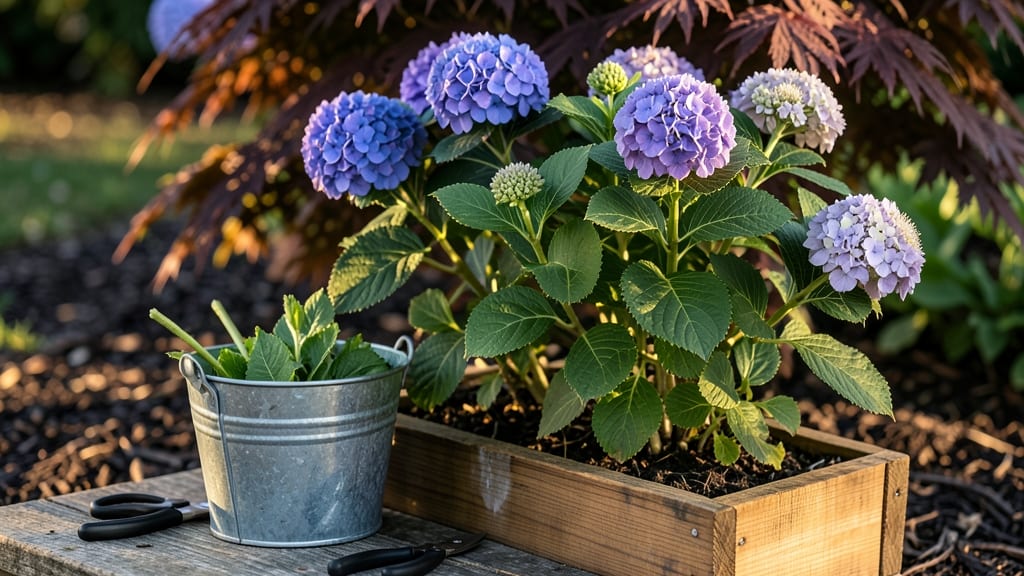
Cutting hydrangea blooms at the right time turns your garden into a floral treasure chest. ✂️ I learned the hard way that timing matters—cut too early, and you stunt next year's flowers; too late, and the stems wilt fast.
The secret is harvesting when blooms are fully open but still firm, usually in mid-to-late summer, depending on your climate.
You only need sharp pruners, a clean bucket of water, and a sunny spot for arrangements. Cut stems at a 45-degree angle just below a leaf node, leaving a few leaves attached to help the plant recover.
The first time I did this, I filled my kitchen with hydrangeas that lasted two full weeks in vases—no preservatives needed.
After cutting, your hydrangeas will bounce back stronger for next season. The plants focus energy on root growth and next year’s buds instead of supporting spent blooms. You’ll notice fresh green shoots appearing within 2-3 weeks, and by fall, your bushes will be stockier and healthier than ever.
Works for all hydrangea types—mopheads, lacecaps, and panicles—just adjust timing slightly. Pro tip: Store cuttings in water overnight to maximize vase life. Now grab those pruners and let’s get cutting!
📚 In This Guide
- What you need
- Instructions
- Tips and common mistakes
- Wrapping up and next steps
What you need
- ● Bypass pruners – Sharp, clean pruners (1 pair) for precise cuts on smaller stems.
- ● Loppers – Heavy-duty loppers (1 pair) for thicker branches (½" to 1½" diameter).
- ● Garden gloves – Durable, cut-resistant gloves (1 pair) to protect your hands from thorns and sap.
- ● Disinfectant solution – 1 part bleach to 9 parts water (1 small spray bottle) to sterilize tools between cuts.
- ● Rubbing alcohol or hand sanitizer – For wiping down tools and hands before/after pruning.
- ● Trash bags or bucket – To collect pruned blooms and debris (1-2 large bags or a 5-gallon bucket).
- ○ Garden twine or zip ties – (Optional but helpful) To secure large branches if needed.
- ● Pruning saw – For stubborn, thick stems (if your loppers can’t handle them).
- ● Plant marker or labels – To tag hydrangeas by type (e.g., mophead, panicle) if you have multiple varieties.
- ● Knee pads or stool – For comfort, especially if your hydrangeas are tall or ground-level.
- ● Hose or water spray bottle – To rinse off sap or dust from tools and hands.
Step-by-step guide to pruning hydrangeas for maximum blooms
Here’s how I transform my hydrangeas from scraggly to spectacular every year.
🌿 Step 1: Identify Your Hydrangea Type
Hydrangeas bloom on either old wood (last year’s growth) or new wood (current year’s stems). Bigleaf hydrangeas (H. macrophylla) bloom on old wood, while panicle (H. paniculata) and smooth (H. arborescens) bloom on new wood. I check the stems: if buds form on last year’s branches, it’s old wood. If new stems sprout from the base, it’s new wood.
This is the moment that matters: pruning at the wrong time can mean no blooms. Old-wood types bloom on stems from last season, so prune right after flowering. New-wood types bloom on current growth, so prune in late winter or early spring. I always mark my plants with a flag to remember which is which.
✂️ Step 2: Time Your Pruning Perfectly
For old-wood bloomers, wait until late summer or early fall—after flowers fade but before new buds form. I like to prune in September because it gives stems time to harden before winter. For new-wood types, prune in late winter or early spring (February-March) before new growth starts.
Don’t rush—wait until you see at least 50% of blooms wilted on old-wood types. For new-wood types, prune when the ground is thawed but before leaves emerge. This timing ensures you don’t cut off next year’s flowers.
✂️ Step 3: Cut Back with Precision
Use clean, sharp pruners to make cuts at a 45-degree angle, about ¼ inch above a bud or lateral branch. For old-wood types, cut back just above the first set of buds below the faded blooms. For new-wood types, cut back to 2-3 inches above the ground or to strong outward-facing buds.
I know it seems weird, but don’t overthink it—hydrangeas are forgiving. Just avoid cutting into the center of the plant (the “donut hole”), as this weakens structure. After pruning, step back and admire your work: you’ll see a clearer framework for next year’s blooms.
💧 Step 4: Post-Pruning Care
Water deeply right after pruning to help the plant recover. Hydrangeas are thirsty, so give them 1-2 inches of water per week, especially in dry spells. I also add a balanced fertilizer (10-10-10) in early spring to encourage new growth.
Mulch around the base with 2-3 inches of organic mulch to retain moisture and protect roots. This step is crucial for old-wood types, as it helps them store energy for next year’s blooms. Avoid heavy pruning in fall—just a light cleanup keeps pests away.
☀️ Step 5: Monitor for New Growth
In early spring, watch for new shoots emerging from the base. For new-wood types, these are your future blooms. For old-wood types, these shoots won’t bloom until next year, so don’t prune them off. If you see weak, leggy growth, it’s a sign of over-pruning or poor light—move the plant to a sunnier spot if needed.
Here’s the thing—hydrangeas reward patience. If you prune correctly, you’ll see fuller, larger blooms by next summer. I promise, the first year after a good pruning is always the best.
Tips & tricks for perfect hydrangea pruning
Here's what I've learned from years of pruning hydrangeas—these tricks will help you avoid common mistakes and maximize next year's blooms.
Timing is Everything: For old-wood types, don't wait until flowers are completely dead—aim to prune when about 50% of blooms have wilted but before new buds appear. I've ruined blooms by waiting too long, so mark your calendar for late September. For new-wood types, prune in February-March when the ground is thawed but before leaves emerge. This ensures you're cutting back last year's growth while preserving this year's flower buds.
Precision Cuts Make All the Difference: When cutting at a 45-degree angle, visualize making the cut just above a bud that faces outward. This creates a stronger branch structure and better airflow. I always test my pruners first—they should cut cleanly without tearing the stems. For old-wood types, look for the first set of buds below the faded blooms; for new-wood types, cut back to 2-3 inches above the ground to encourage strong new growth from the base.
Post-Pruning Care Prevents Stress: After pruning, give your hydrangeas a deep watering to help them recover. I've seen plants wilt dramatically after pruning because they weren't properly hydrated. Add 2-3 inches of organic mulch around the base to protect roots and retain moisture—this is especially important for old-wood types that need to store energy for next year's blooms. Avoid heavy pruning in fall; just do a light cleanup to remove dead stems and pests.
Pro Tips for Cutting Hydrangea Blooms
- Here's what I've learned from years of pruning hydrangeas—these tricks will help you avoid common mistakes and maximize next year's blooms.
- Timing is Everything: For old-wood types, don't wait until flowers are completely dead—aim to prune when about 50% of blooms have wilted but before new buds appear.
- Precision Cuts Make All the Difference: When cutting at a 45-degree angle, visualize making the cut just above a bud that faces outward.
Frequently asked questions
Got questions about cutting hydrangea blooms?
You’re not alone—pruning these beauties can feel tricky! Here are answers to the most common queries to help you master the art of cutting hydrangea blooms like a pro.
When is the best time to cut hydrangea blooms for next year’s flowers?
The ideal time depends on your hydrangea type! For mophead and lacecap varieties (which bloom on new wood), prune in late winter or early spring before buds swell. For bigleaf hydrangeas (which bloom on old wood), wait until after flowering—usually summer or early fall—to avoid sacrificing blooms.
How do I know if I’m cutting the blooms in the right place?
Look for the buds! For new-wood bloomers, cut just above a pair of healthy buds (about ¼ inch above). For old-wood types, prune dead or weak stems back to a strong bud or branch. Avoid over-pruning—never remove more than 1/3 of the plant at once!
Can I still cut hydrangea blooms if they’re already dead or brown?
Dead or brown blooms should be removed immediately to encourage new growth. Use clean, sharp pruners to snip stems at the base. If the entire branch is dead, cut it back to a live bud or healthy growth point. Pro tip: Wear gloves—hydrangea leaves can be prickly!
What should I do with the cut blooms after harvesting?
Your cut hydrangeas are versatile! Use them in:
- Floral arrangements: Remove lower leaves and trim stems at an angle for longer vase life.
- Dried flowers: Hang blooms upside down in a dry, dark place for 2–3 weeks.
- Compost: Chop stems into smaller pieces and add to your compost pile (avoid diseased plants).
Bonus: Hydrangeas make stunning paper! Press petals between heavy books for a unique craft.
My hydrangeas aren’t blooming after pruning—what went wrong?
Common mistakes include:
- Pruning old-wood varieties in winter (they need last year’s stems!).
- Cutting too aggressively—leave some stems for energy.
- Not fertilizing or watering enough post-prune.
If you’re unsure of your hydrangea type, take a photo and compare it to online guides. Patience is key—some varieties take 1–2 years to rebound after heavy pruning!
Wrapping up and next steps
Cutting hydrangea blooms isn’t just about keeping your garden tidy—it’s your secret weapon for stunning, larger blooms next season! 🌸 With the right tools, timing, and technique, you’ll transform your hydrangeas into showstoppers.
Remember: deadhead spent blooms, prune at the right time, and give those new stems the love they deserve.
Ready to level up your hydrangea game? Grab your pruners, mark your calendar, and get ready to watch your garden bloom like never before—start with just one plant and let the magic unfold! 🌿✨