
Pruning
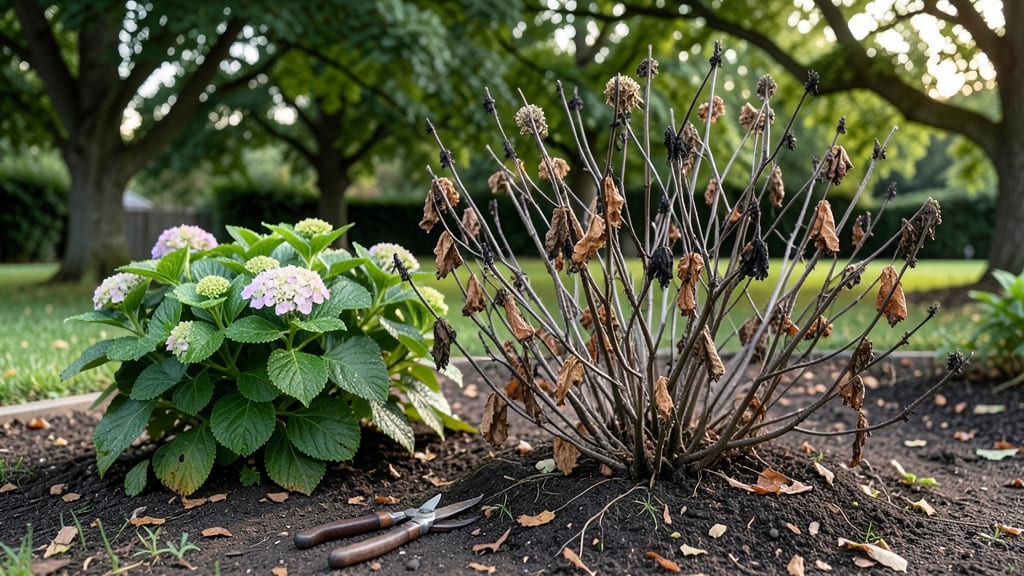
Your hydrangea bush isn’t dead—it’s just asking for the right care. 🌿 I’ve nursed back more than my share of wilted hydrangeas, and the secret lies in diagnosing the real problem before jumping to fixes.
Overwatering, underwatering, or even hidden pests could be the culprit, but each has a specific solution that brings those lush blooms back faster than you’d expect.
The first step is checking for visual clues: yellowing leaves often mean overwatering or root rot, while crispy edges signal underwatering. Powdery mildew shows up as white dust on leaves, and pests like spider mites leave tiny webs or speckled damage.
Once you spot the issue, you’re already halfway to a fix—whether it’s adjusting your watering routine, pruning dead growth, or applying a simple fungicide spray.
Within 4-6 weeks, you’ll see new green leaves pushing through, followed by buds that’ll bloom into the vibrant colors you love. The key is consistency: hydrangeas thrive on 1-1.5 inches of water per week, well-draining soil, and a little morning sun.
I’ve revived bushes that looked hopeless with these exact steps—your turn to bring yours back to life.
This works for all hydrangea types, from bigleaf to panicle varieties, and even saves struggling plants in containers. The best part? Once you fix the root cause, your bush will stay healthier for years. Let’s get those blooms back before next season!
Understanding Root Causes
A once-vibrant hydrangea bush can turn crispy and lifeless surprisingly fast—often leaving gardeners scratching their heads. 🌿💔 The truth is, your hydrangea’s decline is almost always a sign of an underlying issue, not just "bad luck."
Let’s break down the real culprits behind a dead hydrangea bush, so you can diagnose (and fix!) the problem with confidence.
Hydrangeas love moisture, but too much water—or waterlogged soil—can suffocate roots by cutting off oxygen. This triggers root rot, a fungal infection that kills tissue and halts nutrient uptake.
Why it happens:
- Compacted or clay-heavy soil holds excess water, creating anaerobic conditions where roots drown.
- Overzealous watering (especially without checking soil moisture) leads to soggy roots.
- Lack of mulch or improper layering traps moisture against the stem, promoting rot.
🔍 Actionable clue: Wilting despite wet soil? Yellowing leaves with a foul smell? That’s root rot knocking.
While hydrangeas thrive in moist conditions, prolonged drought forces them to conserve water, causing leaves to curl, brown, and eventually die back.
Why it happens:
- Shallow root systems (common in hydrangeas) dry out faster in hot, windy, or sandy soils.
- Inconsistent watering (e.g., deep soaks followed by neglect) stresses plants.
- Improper irrigation (e.g., sprinklers that don’t reach the root zone) leaves roots parched.
🔍 Actionable clue: Dry, crispy leaf edges and soil pulling away from the pot? Your hydrangea is thirsty.
Hydrangeas are heavy feeders, and poor soil quality leads to weak growth, yellowing leaves, and eventual death.
Why it happens:
- Low organic matter (e.g., peat moss or compost) depletes essential nutrients like nitrogen, phosphorus, and potassium.
- pH imbalances (especially too alkaline for blue hydrangeas or too acidic for pink) block nutrient absorption.
- Over-fertilizing with synthetic salts burns roots, while under-fertilizing starves the plant.
🔍 Actionable clue:
- Yellow leaves? Likely nitrogen deficiency or chlorosis (iron/manganese blockage from high pH).
- Purple stems? Phosphorus deficiency (critical for root and bloom health).
Hidden invaders like aphids, scale insects, or fungal pathogens (e.g., powdery mildew, botrytis blight) weaken hydrangeas until they collapse.
Why it happens:
- Aphids/scale suck sap, causing stunted growth and black sooty mold (a fungal hitchhiker).
- Powdery mildew thrives in humid, shaded conditions, coating leaves and blocking sunlight.
- Botrytis blight (gray mold) attacks damaged or stressed tissue, especially in wet climates.
🔍 Actionable clue:
- Sticky leaves? Aphids or scale.
- White powdery film? Powdery mildew.
- Mushy stems with gray fuzz? Botrytis blight.
Hydrangeas are tender perennials—they hate extremes.
Why it happens:
- Frost damage (below 20°F/-7°C) kills stems and buds, leading to no spring blooms.
- Intense heat waves (above 90°F/32°C) cause leaf scorch and bud drop.
- Strong winds desiccate leaves, while poor air circulation invites fungal diseases.
🔍 Actionable clue:
- Brown, papery leaves in summer? Heat stress.
- Blackened stems in spring? Winter dieback.
Cutting at the wrong time or over-pruning removes next year’s blooms or exposes the plant to bacterial infections.
Why it happens:
- Pruning old wood (mopheads) in late winter removes next year’s flower buds.
- Ragged cuts create entry points for bacterial wilt or canker diseases.
- Mechanical damage (e.g., lawnmower hits, animal gnawing) severs vital stems.
🔍 Actionable clue:
- Sudden wilting after pruning? Check for clean cuts—jagged edges invite rot.
Moving a hydrangea disrupts its root zone, and container-grown plants often suffer from root circling when repotted too late.
Why it happens:
- Root disturbance during transplanting severs mycorrhizal fungi (beneficial soil partners).
- Small pots force roots to circle, choking growth when planted.
- Delayed repotting (every 2–3 years) leads to nutrient exhaustion.
🔍 Actionable clue:
- Slow growth after transplanting? Roots need 6+ weeks to establish.
Stick your finger 1–2 inches into the soil:
- Dry? Underwatering.
- Soggy? Overwatering/rot.
- Crumbly but moist? Ideal!
Now that you know the real reasons your hydrangea died, the next step is revival—and luckily, most of these issues are easily fixable with the right care. Stay tuned for our 3-step rescue plan!
Revive Your Dying Hydrangeas Now
A dead or dying hydrangea bush doesn’t mean the end of your garden dreams—it’s just a call to action! With the right care, you can bring those lush blooms back to life.
Below, we’ve mapped out practical fixes for the most common causes of a struggling hydrangea, plus prevention tips to keep it thriving long-term.
If your hydrangea’s leaves are yellowing, wilting, or the soil feels soggy, root rot could be the culprit. Too much moisture suffocates roots, cutting off nutrients.
How to Fix It: ✅ 🔪 Prune Damaged Roots & Soil
- Gently dig around the base (1–2 inches deep) and trim any black, mushy roots with clean pruners. Healthy roots should be firm and white or light brown.
- If the soil is compacted or waterlogged, mix in 2–3 inches of perlite, sand, or compost to improve aeration.
✅ 💧 Adjust Your Watering Routine
- Hydrangeas need 1–1.5 inches of water per week, but they hate "wet feet." Water deeply 2–3 times per week (early morning) instead of daily shallow sprinkles.
- Install a soaker hose or drip irrigation to deliver moisture slowly at the roots.
✅ 🌱 Raise the Plant (If Needed)
- If your hydrangea sits in a low spot where water pools, mound soil or gravel around it to create a slight elevation.
💡 Prevention Tip: Test your soil’s drainage by digging a 6-inch hole, filling it with water, and timing how long it takes to drain. If it’s slower than 4–6 hours, amend the soil immediately.
Brown, crispy leaves or a dry, brittle stem? Your hydrangea might be thirsty or overheated, especially in hot, dry spells.
How to Fix It: ✅ 🍳 Deep Watering Sessions
- Water slowly until the soil 6 inches deep is moist (not soggy). Use a moisture meter or stick your finger in—if the first inch is dry, it’s time to water.
- Mulch heavily (3–4 inches of shredded bark or straw) to retain moisture and cool roots.
✅ 🌳 Provide Afternoon Shade
- If your hydrangea is in a south-facing spot, add temporary shade with a lightweight shade cloth (30–50%) or a nearby tree during peak sun (12–4 PM).
✅ 💦 Mist Leaves (Temporary Relief)
- On extreme heat days, lightly mist leaves in the early morning to prevent wilting. Avoid evening misting—it encourages fungal growth.
💡 Prevention Tip: Group hydrangeas with other thirsty plants (like hostas or astilbes) to create a microclimate that retains humidity. A small pebble tray under pots can also help.
White powder on leaves? Dark spots with yellow halos? Fungal infections clog pores, preventing your hydrangea from absorbing sunlight and water.
How to Fix It: ✅ 🧹 Prune & Dispose of Infected Parts
- Remove all diseased leaves and stems (even if they’re green) with sterilized pruners (wipe with rubbing alcohol between cuts).
- Do not compost infected plant debris—bag and trash it to stop spores from spreading.
✅ 🧴 Apply Fungicide (Natural or Store-Bought)
- DIY Spray: Mix 1 tsp baking soda + 1 quart water + a drop of dish soap (spray undersides of leaves weekly).
- Store-Bought: Use neem oil, copper fungicide, or sulfur spray (follow label instructions).
✅ 🌿 Improve Air Circulation
- Thin out overcrowded branches to let air flow. Space hydrangeas 3–5 feet apart in the garden.
💡 Prevention Tip: Water at the base (not overhead) and prune for airflow in early spring. Avoid wetting foliage in the evening.
If your hydrangea dropped buds early or has blackened stems, it might have suffered winter burn or late frost damage.
How to Fix It: ✅ 🌿 Prune Dead Wood in Early Spring
- Wait until after the last frost (when new growth appears). Cut back blackened or hollow stems to healthy green tissue.
- Do not prune in fall—it encourages tender new growth that freezes.
✅ 🛡️ Shield from Late Frosts
- Cover young plants with frost cloth on nights below 28°F. Remove it when temps rise to 50°F+.
✅ 🌱 Mulch Heavily Before Winter
- Apply 4–6 inches of mulch (straw or leaves) around the base after the first frost to insulate roots.
💡 Prevention Tip: Choose cold-hardy varieties like ‘Annabelle’ or ‘Endless Summer’ if you live in Zone 5 or colder.
Yellow leaves with green veins? Pale stems? Your hydrangea might be starving for key nutrients.
How to Fix It: ✅ 📊 Test Your Soil
- Use a DIY soil test kit (available at garden centers) to check pH and nutrient levels. Hydrangeas prefer pH 5.5–6.2 (acidic).
✅ 💪 Fertilize Correctly
- For Acid-Loving Hydrangeas: Use an acid-forming fertilizer (like Miracle-Gro Azalea/Camellia) in early spring and mid-summer.
- For Color Boost: Add hydrangea-specific food (high in iron, magnesium, and potassium).
✅ 🍎 Organic Boost
- Mix compost or worm castings into the top 6 inches of soil around the base. Coffee grounds (sparingly) can also lower pH naturally.
💡 Prevention Tip: Avoid high-nitrogen fertilizers (like lawn food)—they promote leafy growth over blooms. Stick to balanced (10-10-10) or bloom-specific formulas.
If your hydrangea is beyond saving (completely woody, no new growth, or severely diseased), it’s time to cut your losses and start fresh.
How to Do It: ✅ 🌱 Transplant to a Better Spot
- Dig up the entire root ball, trim any dead roots, and replant in well-draining, acidic soil with morning sun + afternoon shade.
✅ 🌿 Propagate from Cuttings
- Take 4–6 inch cuttings from healthy stems in early summer, dip in rooting hormone, and plant in moist perlite/sand mix. Keep humid until roots form (~4–6 weeks).
✅ 🛒 Buy a New Plant
- If propagation fails, choose a disease-resistant variety (like ‘Limelight’ or ‘Nikko Blue’) and plant it in the same corrected conditions as above.
💡 Prevention Tip: Research your hydrangea’s needs before planting—some varieties (like mopheads) thrive in shade, while others (like panicle hydrangeas) need more sun.
Before you call it quits, run through this quick revival checklist: ✔ Water deeply 2x this week (no soggy soil!) ✔ Prune dead/diseased stems (sterilize tools!) ✔ Test soil pH (aim for 5.5–6.2) ✔ Add mulch (3–4 inches)
Frequently asked questions
My hydrangea bush looks completely dead—how do I know if it's truly gone?
Check for green buds at the base of stems or along branches—even if leaves are gone, these indicate life. Dig carefully around the roots: if they're firm and white (not black/mushy), your bush may still recover. For woody stems, scratch the bark—if it's green underneath, it's alive but dormant.
Can I save a hydrangea with only brown, crispy stems?
Yes! Cut back all dead stems to healthy green tissue (about 6 inches from the ground) in early spring. The plant often regrows from the base. For severe cases, take 4-6 inch cuttings from any remaining green growth, dip in rooting hormone, and propagate in moist perlite—new plants often root within 4-6 weeks.
Why does my hydrangea keep dying back every winter?
Most hydrangeas need winter protection—especially in cold climates. Mulch heavily (4-6 inches) after first frost, and wrap young plants in burlap or use frost cloth for temps below 20°F. Varieties like 'Annabelle' are hardier—consider switching if your current one struggles annually.
How often should I water a struggling hydrangea?
Water deeply 2-3 times per week (1-1.5 inches total) rather than daily light sprinkles. Test soil moisture by sticking your finger 2 inches deep—if dry, it's time to water. For potted hydrangeas, check soil daily in summer heat—they dry out faster.
What's the fastest way to fix yellow leaves on my hydrangea?
Yellow leaves usually mean overwatering or nutrient deficiency. First, adjust watering—let topsoil dry between waterings. Then add compost or a balanced fertilizer (10-10-10) around the base. For chlorosis (yellow with green veins), add chelated iron or coffee grounds to acidify soil.