
Vegetables
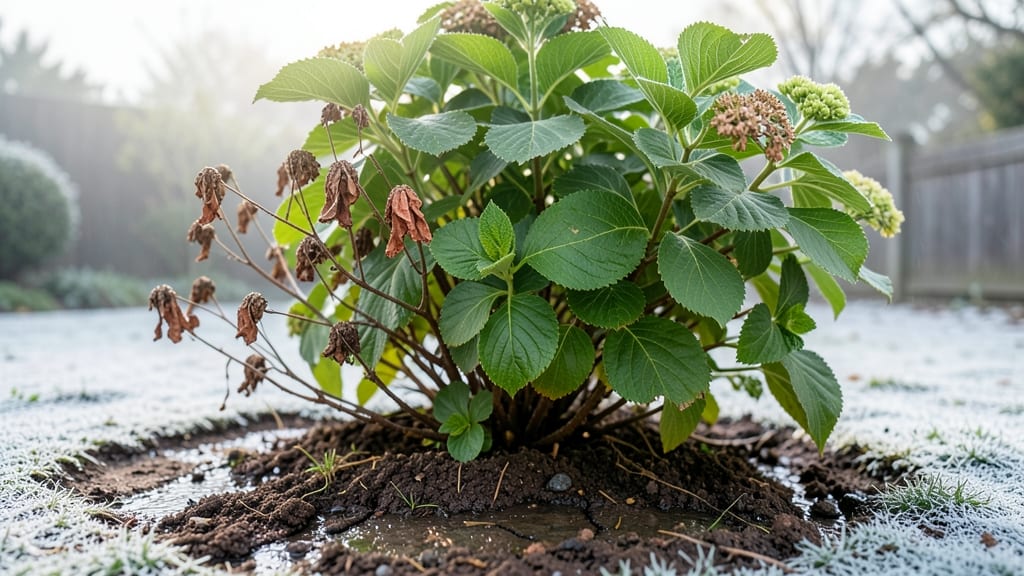
Will a dead hydrangea come back after winter—even this one—if you know what to look for and how to help it bounce back? ✨ That brown, brittle mess could hide next spring’s showstopper blooms.
Hydrangeas go dormant in winter, but late frosts or dry soil can make them look dead when they’re not. The key is checking for green buds at the base of stems or under the bark—those mean life’s still there.
Even if the top looks gone, roots often survive, and with the right care, new growth will emerge. Start by pruning only the dead parts in late winter, then water deeply when new shoots appear. Mulch around the base to protect roots from temperature swings.
Most hydrangeas rebound within 4-6 weeks of warm weather if they’ve got healthy roots. Don’t panic if it’s slow—hydrangeas are tougher than they look. With patience and a little TLC, you’ll have those lush blooms back before you know it.
Root Causes Of Winter Death
Understanding why your hydrangea might not bounce back after winter starts with digging into the science behind plant survival. These woody shrubs are tough, but they’re not invincible—especially when faced with harsh conditions or human missteps.
Let’s break down the key reasons your hydrangea might have taken a turn for the worse this season.
Hydrangeas are hardy, but they have limits. Most varieties (like Bigleaf, Oakleaf, or Panicle hydrangeas) can tolerate temperatures down to -10°F to -20°F, depending on the species.
However, prolonged exposure to sub-zero temps, especially when combined with dry soil or wind, can cause cellular damage in the stems and roots.
- How it happens: When water inside plant cells freezes, it expands and ruptures cell walls. This is called freeze-thaw injury, and it’s irreversible in severe cases.
If the vascular system (xylem and phloem) is damaged, the plant can’t transport water and nutrients, leading to wilting or death. - Actionable clue: Look for blackened, mushy stems or peeling bark—signs of frost damage.
If the roots are still intact but the stems are dead, the plant might regrow from the base, but it’ll be slow.
💡 Pro Tip: Mulch heavily (4-6 inches of organic mulch like straw or shredded leaves) before the first hard frost to insulate roots. Wrap young or tender stems with burlap or frost cloth for extra protection.
Hydrangeas hate wet feet—especially in winter. While some moisture helps insulate roots, soggy soil can lead to anaerobic conditions, where roots suffocate from lack of oxygen. Conversely, completely dry soil in winter makes roots more vulnerable to freezing.
- How it happens: - Waterlogged soil: Excess moisture forces roots to use up oxygen, leading to root rot (often caused by Phytophthora fungi).
By spring, the roots may be too weak to support regrowth. - Frozen soil: If the ground freezes solid, roots can’t absorb moisture, and osmotic stress occurs, causing cells to dehydrate and die. - Actionable clue: Dig around the base in early spring.
If the roots smell rotten or look mushy, that’s a red flag. Healthy roots should be firm, white, and fibrous.
🌡️ Pro Tip: Improve drainage by amending soil with compost or perlite before winter. If your yard floods easily, consider raising the planting bed or installing a French drain.
Pruning hydrangeas at the wrong time (especially late fall or winter) can signal the plant to stop growing before it’s ready for dormancy. Worse, aggressive pruning removes the buds that would otherwise regrow in spring.
- How it happens: - Late-season pruning: Hydrangeas store next year’s buds in old wood (for Bigleaf/Oakleaf) or new wood (for Panicle).
Cutting back too late removes these buds, leaving nothing to sprout. - Over-pruning: If you strip all leaves or cut stems back to the ground, the plant loses its energy reserves and may not have enough strength to regenerate. - Actionable clue: If you pruned in November or December, your hydrangea might be starving for buds.
Check for dormant buds (small bumps on stems)—if they’re gone, regrowth is unlikely.
✂️ Pro Tip: Wait until late winter/early spring (just as new growth starts) to prune. For Bigleaf hydrangeas, prune right after flowering to avoid cutting off next year’s blooms.
Even in winter, insects, fungi, and bacteria can wreak havoc on hydrangeas. Boring insects (like hydrangea sawfly larvae) or fungal infections (such as powdery mildew or botrytis) can weaken the plant so much that it fails to recover when temperatures rise.
- How it happens: - Insect damage: Larvae burrow into stems, creating entry points for disease or starving the plant by consuming sap. - Fungal infections: Overhead watering or poor air circulation in winter can trap moisture, encouraging saprophytic fungi to colonize dead tissue. - Actionable clue: Look for holes in stems, sawdust-like frass (insect droppings), or black/moldy growth at the base.
If the stems are hollow or oozing sap, pests or disease are likely the culprit.
🔥 Pro Tip: Apply dormant oil spray in late fall to smother overwintering insects. Remove and dispose of infected stems (don’t compost!) to prevent spread.
Hydrangeas are heavy feeders, and if the soil lacks essential nutrients, they struggle to recover after winter stress. Low nitrogen, phosphorus, or micronutrient deficiencies can stunt root and stem regrowth.
- How it happens: - Nitrogen deficiency: Leads to weak, spindly stems that can’t withstand cold. - Phosphorus deficiency: Slows root development, making the plant more susceptible to freeze damage. - Compacted or acidic soil: Hydrangeas prefer slightly acidic soil (pH 5.2-6.2).
If soil is too alkaline, iron or manganese deficiencies occur, causing yellowing leaves and poor recovery. - Actionable clue: Perform a soil test in early spring. If soil is clay-heavy or alkaline, amend with peat moss or sulfur.
Yellow leaves with green veins? That’s a classic iron deficiency.
💪 Pro Tip: Feed with a balanced fertilizer (10-10-10) in early spring as new growth emerges. For acid-loving hydrangeas, use hydrangea-specific fertilizer or alfalfa meal to boost organic matter.
Revive Your Hydrangea Step by Step
A dormant hydrangea isn’t always a lost cause—with the right care, it can bounce back to life and bloom beautifully next season. Below are practical, actionable solutions tailored to the most common reasons your hydrangea might appear dead after winter. Follow these steps to diagnose, treat, and prevent future issues.
If your hydrangea’s stems blackened or shriveled after cold snaps, it’s likely suffered frost burn or ice encasement. Don’t panic—hydrangeas are tougher than they look!
How to Fix It
🔥 Step 1: Wait for Warmth 🌡️
- Avoid pruning until late spring (after the last frost). New growth signals life beneath the surface.
- If stems are mushy or hollow, they’re dead—trim them back to healthy green tissue.
🍳 Step 2: Inspect for Hidden Buds 👨🍳
- Scratch the base of stems with your fingernail. If green pith (inner tissue) appears, buds are alive!
- Look for swollen nodes (bumps) near the base—these are potential regrowth points.
🥘 Step 3: Mulch for Recovery ⏰
- Apply 3–4 inches of organic mulch (straw, shredded leaves) around the base to protect roots from temperature swings.
- Water deeply but infrequently (1–2 inches per week) to encourage root regrowth.
💡 Pro Tip: If your hydrangea is mophead or bigleaf, it’s more frost-sensitive. Consider wrapping stems in burlap next winter for extra protection.
Wilting, yellowing leaves, or crispy stems often mean underwatering, overwatering, or poor drainage. Hydrangeas hate soggy roots but also can’t survive drought.
How to Fix It
🔥 Step 1: Check Soil Moisture 🌡️
- Stick your finger 2 inches into the soil. If it’s dry, water deeply. If it’s muddy, hold off and improve drainage.
🍳 Step 2: Adjust Watering Habits 👨🍳
- Water at the base (not leaves) in the early morning to reduce fungal risks.
- Aim for 1–1.5 gallons per week, depending on pot size (container hydrangeas dry out faster).
🥘 Step 3: Amend the Soil ⏰
- Mix in compost or peat moss to retain moisture without suffocating roots.
- For clay soil, add perlite or sand to improve airflow.
💡 Pro Tip: If your hydrangea is in a container, ensure pots have drainage holes and use a well-draining potting mix (like 60% peat, 30% perlite, 10% compost).
Cutting back too early, too late, or too aggressively can signal death when buds are still dormant.
How to Fix It
🔥 Step 1: Identify Pruning Mistakes 🌡️
- Wrong time? Prune mophead/bigleaf types in late winter/early spring (after blooms fade) or right after flowering for summer bloomers (like panicle hydrangeas).
- Wrong cuts? Avoid heading back (cutting into old wood)—always trim just above a node or bud.
🍳 Step 2: Corrective Pruning 👨🍳
- For dead stems, cut back to healthy green growth or the main trunk.
- For over-pruned bushes, leave 2–3 strong stems to encourage bushier regrowth.
🥘 Step 3: Fertilize for Recovery ⏰
- Apply a balanced fertilizer (10-10-10) in early spring to support new growth.
- Avoid high-nitrogen fertilizers—they promote leaves over flowers.
💡 Pro Tip: Use pruning shears (not scissors) for clean cuts. Dip tools in rubbing alcohol between cuts to prevent disease spread.
Black spots, holes, or sawdust-like frass (insect droppings) mean your hydrangea is under biological attack.
How to Fix It
🔥 Step 1: Diagnose the Problem 🌡️
- Fungal issues? Look for powdery mildew (white dust) or leaf spot (black/yellow patches).
- Pests? Check for aphids, spider mites, or scale insects (sticky residue or tiny webs).
🍳 Step 2: Treat Naturally 👨🍳
- For fungus: Spray with a baking soda solution (1 tsp baking soda + 1 quart water + a drop of dish soap).
- For pests: Blast off aphids with water or use neem oil spray (1 tbsp neem oil + 1 quart water).
🥘 Step 3: Prevent Future Outbreaks ⏰
- Remove fallen leaves (fungal spores love hiding there).
- Space plants for airflow (hydrangeas need 3–5 feet between bushes).
- Water at the base to keep foliage dry.
💡 Pro Tip: Companion planting with marigolds or garlic deters pests naturally!
- Mulch heavily in fall (4–6 inches) to insulate roots.
- Wrap stems in burlap for extreme winters.
- Monitor soil moisture—hydrangeas prefer consistently damp (not soggy) soil.
- Prune strategically—know your hydrangea type (mophead vs. panicle)!
- Fertilize in stages—spring for leaves, summer for blooms.
Remember: Patience is key! Hydrangeas can take 4–6 weeks to show signs of recovery.
If you’ve followed these steps and still see no green by late spring, it may be time to replace the plant—but in most cases, your hydrangea will thrive again with a little TLC. 🌸
Frequently asked questions
How can I tell if my hydrangea is truly dead or just dormant?
Check for green buds at the base of stems or under the bark—these mean life remains! Scratch the stem with your fingernail: if you see green pith inside, roots are likely alive. Healthy roots should also feel firm and white when you gently dig around the base in early spring. If stems are mushy or hollow, they're dead.
What's the best time to prune a hydrangea that looks dead after winter?
Wait until late winter/early spring (after the last frost) to prune. For mophead or bigleaf types, cut back only dead stems to healthy growth or the main trunk. Panicle hydrangeas can be pruned in late winter to encourage new growth. Never prune in fall—this removes next year's buds.
Can I save a hydrangea with blackened stems from frost damage?
Yes! Blackened stems may still have living buds. Cut back to healthy green tissue or the base, then mulch heavily (3-4 inches) to protect roots. Water deeply when new shoots appear (usually within 4-6 weeks of warm weather). Wrap stems in burlap next winter for extra frost protection.
Why did my hydrangea die after winter even though I watered it regularly?
Winter watering alone isn't enough—hydrangeas need consistent moisture but hate soggy roots. Frozen soil prevents water absorption, while waterlogged conditions cause root rot. Improve drainage by amending soil with compost or perlite, and water only when the top 2 inches of soil are dry in spring.
How long does it take for a hydrangea to show signs of recovery?
With proper care, you should see new growth within 4-6 weeks of warm spring temperatures. If no green appears by late spring (after last frost), the plant may be beyond revival. Patience is key—hydrangeas store energy in roots and can take time to regenerate after winter stress.