
Diseases
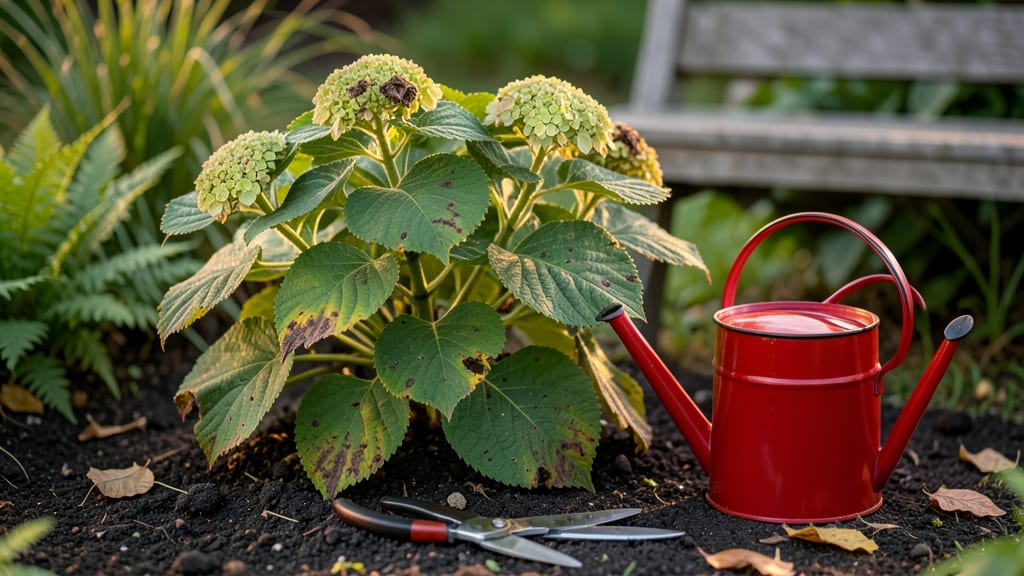
Your hydrangea’s leaves are turning brown, yellow, or spotted—and those blooms won’t last if you don’t act fast. 🌿 Diseased hydrangea leaves don’t mean your plant is doomed, but they do need immediate attention to revive that lush, blooming glory.
The good news? Most issues (fungal spots, powdery mildew, or bacterial infections) respond to targeted fixes within days, not weeks.
First, identify the problem: crunchy brown spots? Likely fungal. Yellowing edges? Probably environmental stress. Once you know the culprit, you’ll prune the worst leaves, apply the right treatment (neem oil for fungus, copper spray for bacteria), and adjust watering to stop the spread.
I’ve saved more hydrangeas this way than I’ve lost—and the blooms come back even bigger.
By the time you’re done, your plant will be on the mend, with fresh growth pushing through within 7-10 days. The key is acting now—before the disease spreads to the stems or buds.
Prevent future issues with proper spacing, air circulation, and a quick spray schedule during humid months.
This works for bigleaf, panicle, and oakleaf hydrangeas alike, whether your plant’s in a sunny border or a shady corner. Let’s get those leaves healthy again so you can enjoy those showstopping blooms all season.
Root Causes of Leaf Trouble
When your hydrangea’s leaves start looking more like a crime scene than a lush garden centerpiece, the culprit is almost always one (or more) of these sneaky factors.
Understanding why your plant is throwing a leafy tantrum is half the battle—because once you know the enemy, you can fight back with precision. Let’s break down the science behind the suffering.
Fungi like Phytophthora, Botrytis, or Powdery Mildew are the garden’s version of a stealthy heist crew. They thrive in damp, shaded conditions and latch onto hydrangeas like a bad reality show.
- 🌧️ Overhead Watering: Fungi love moisture on leaves—think of it as their personal spa. Splashing water onto foliage creates the perfect breeding ground. Actionable fix: Water at the base, never from above.
- 🌿 Poor Air Circulation: Dense plantings or crowded pots trap humidity, giving fungi a cozy hideout. Actionable fix: Prune nearby growth and space plants 2–3 feet apart.
- 🌡️ Warm, Humid Weather: Fungi party in temps between 60–80°F with high humidity. Actionable fix: Mulch to regulate soil moisture and avoid late-day watering.
💡 Pro Tip: If leaves develop yellow spots with brown edges or a white powdery film, fungal infection is likely. Snip affected leaves below the damage and sterilize pruners with rubbing alcohol.
Not all leaf damage comes from invisible microbes—sometimes, it’s the work of aphids, spider mites, or Japanese beetles, who see your hydrangea as an all-you-can-eat buffet. Their saliva and feeding habits trigger stress responses, like yellowing, curling, or stippled leaves.
- 🐜 Aphids & Spider Mites: These sap-suckers leave behind sticky residue (honeydew) and fine webbing. Actionable fix: Blast them off with a strong spray of water or use insecticidal soap.
- 🐞 Japanese Beetles: These metallic invaders skeletonize leaves, leaving behind a lace-like pattern. Actionable fix: Handpick them (drop into soapy water) or use neem oil.
- 🐜 Scale Insects: These armored pests suction nutrients, causing leaves to wilt or drop. Actionable fix: Scrape them off with a toothbrush dipped in alcohol.
🎯 Spot the Sign: Check the undersides of leaves for pests—this is their favorite hiding spot. Early detection = easier eradication!
Hydrangeas are drama queens when it comes to their environment. Too much sun? Too little water? Extreme temps? They’ll scream in leafy distress signals.
- 🔥 Sunburn (Scorched Leaves): Hydrangeas prefer partial shade. Full sun can cause brown, crispy edges, especially in hot afternoons. Actionable fix: Move to a spot with morning sun + afternoon shade.
- 💦 Underwatering (Wilted, Dry Leaves): Hydrangeas hate drought. Drooping or paper-like leaves scream, “I’m thirsty!” Actionable fix: Water deeply 1–2 inches per week (more in heatwaves).
- ❄️ Cold Shock (Blackened or Frozen Leaves): Sudden freezes or late-spring frosts can kill leaf tissue overnight. Actionable fix: Mulch heavily in winter and protect young plants with burlap.
🌡️ Ideal Conditions: Aim for 60–75°F, well-draining soil, and consistent moisture. If your hydrangea is in a container, it’ll dry out faster—check soil moisture daily in summer.
Yellowing leaves? It might not be a disease—it could be a hunger strike. Hydrangeas need balanced nutrition, and deficiencies show up in specific leaf patterns.
| Symptom | Likely Culprit | Fix It Fast |
|---|---|---|
| Yellow leaves with green veins (chlorosis) | Iron or magnesium deficiency (common in alkaline soil) | Apply chelated iron or Epsom salt (1 tbsp/gallon water, monthly). |
| Purple-tinged leaves | Phosphorus deficiency (struggling to bloom) | Use a balanced fertilizer (10-10-10) at planting and mid-season. |
| Brown leaf edges | Potassium deficiency or over-fertilization | Flush soil with water and add wood ash (for potassium) or compost. |
💡 Soil Test Savior: If leaves look uniformly unhealthy, test your soil’s pH and nutrients. Hydrangeas prefer acidic soil (pH 5.5–6.2) for blue blooms or neutral (pH 6.5–7.0) for pink.
Now that you’ve identified the real villain behind your hydrangea’s leafy meltdown, it’s time to fight back with targeted fixes. The good news? Most of these issues are reversible—if you act fast!
Revive Your Hydrangeas Fast
Watching your hydrangeas wilt with diseased leaves can be heartbreaking, but the good news is that most issues have quick, effective fixes. The key is identifying the root cause and acting fast—whether it’s fungal infections, pests, or environmental stress.
Below, we’ve mapped out practical solutions for each common problem, plus prevention tips to keep your hydrangeas thriving long-term.
Fungal diseases thrive in damp, shaded conditions and can turn your hydrangea leaves into a sad, spotted mess. Here’s how to tackle them:
🔥 Step 1: Prune the Problem Areas
- 👨🍳 Remove infected leaves and stems—cut at least ½ inch below the affected area to stop the spread.
- 🗑️ Dispose of pruned material in the trash (not your compost pile) to prevent reinfection.
🍳 Step 2: Apply Fungicide
- 💡 For mild cases: Use a baking soda spray (1 tsp baking soda + 1 quart water + a few drops of dish soap) every 7–10 days.
- 🌡️ For severe infections: Switch to a copper fungicide or neem oil spray (follow label instructions). Reapply after rain.
✨ Prevention Tips
- 🌿 Improve airflow by spacing plants 3–5 feet apart and thinning dense foliage.
- ☀️ Water at the base (avoid overhead sprinkling) and water early in the day so leaves dry quickly.
- 🎯 Mulch properly—use 2–3 inches of organic mulch (like shredded bark) to keep soil moist but not soggy.
Pests suck the life out of hydrangeas, causing yellowing, curling, or sticky residue. Here’s how to evict them:
🔪 Step 1: Blast Them Off
- 💦 Spray leaves with a strong jet of water (early morning) to dislodge aphids and spider mites.
- 🧼 Use insecticidal soap (mix 2 tbsp mild soap + 1 quart water) and spray undersides of leaves where pests hide.
👨🍳 Step 2: Introduce Natural Predators
- 🐞 Ladybugs or lacewings love aphids—buy them online or attract them with dill or fennel plants nearby.
- 🌿 Prune heavily infested stems and drop them in soapy water to drown pests.
💡 Prevention Tips
- 🌡️ Monitor regularly—check undersides of leaves weekly for early signs.
- 🎯 Avoid over-fertilizing (especially with nitrogen), which attracts soft-bodied pests.
- 🍃 Use reflective mulch (like aluminum foil) to deter spider mites by confusing them with light.
Sometimes, "disease-like" symptoms are actually your hydrangea’s way of screaming for help from its environment. Fix these fast:
🌿 Step 1: Adjust Watering Habits
- 💧 Overwatering? Let the top 1–2 inches of soil dry out between waterings. Ensure pots have drainage holes.
- ☀️ Sunburn? Move your hydrangea to partial shade (morning sun is best) or use a light shade cloth for a few weeks.
🍳 Step 2: Feed Smart
- 📊 Yellow leaves? Test soil pH—hydrangeas need acidic soil (pH 5.5–6.2) for blue blooms or alkaline (pH 6.0–7.0) for pink.
- 💪 Add organic matter: Mix compost or peat moss into the soil and feed with a balanced fertilizer (10-10-10) in spring.
✨ Prevention Tips
- 🌡️ Mulch annually to retain moisture and regulate soil temperature.
- 🎯 Avoid heavy clay soil—amend with sand or perlite for better drainage.
- 🍃 Prune in late winter/early spring to encourage new, healthy growth.
With these fixes, your hydrangeas should bounce back in days to weeks, depending on the severity. The secret? Act fast, stay consistent, and give your plants the right conditions—then sit back and enjoy those showstopping blooms!
Frequently asked questions
How can I tell if my hydrangea leaves have a fungal infection vs. pest damage?
Fungal infections often show as yellow or brown spots with defined edges, powdery white coatings (like powdery mildew), or dark, irregular patches. Pests, however, leave sticky residue (honeydew from aphids), tiny webs (spider mites), or chewed edges (Japanese beetles). Check leaf undersides—pests love hiding there!
Can I save my hydrangea if the disease has spread to the stems?
It depends on how severe it is. If only a few stems are affected, prune them back to healthy growth immediately. For widespread stem infections, you may need to remove the entire plant to prevent soil contamination. Always sterilize pruners with rubbing alcohol between cuts to avoid spreading spores.
Is baking soda really effective for treating fungal diseases on hydrangeas?
Yes! A homemade baking soda spray (1 tsp baking soda + 1 quart water + a few drops of dish soap) works well for early-stage fungal issues. Spray leaves thoroughly every 7–10 days, especially on humid mornings. For stubborn infections, switch to a copper fungicide or neem oil for stronger protection.
Why do my hydrangea leaves turn yellow even after I've treated them?
Yellow leaves could signal nutrient deficiencies (like iron or magnesium), overwatering, or root stress. Test your soil pH (hydrangeas prefer 5.5–6.2) and adjust with chelated iron or Epsom salt. Also, ensure proper drainage—soggy roots can't absorb nutrients, even if you're treating the leaves!
How often should I inspect my hydrangeas for early signs of disease?
Check your hydrangeas weekly during growing season (spring to fall) and biweekly in winter. Focus on leaf undersides (pests love hiding there) and new growth (early signs appear fastest). Morning inspections work best—pests are sluggish in cooler temps and easier to spot!