
Leaf Blower
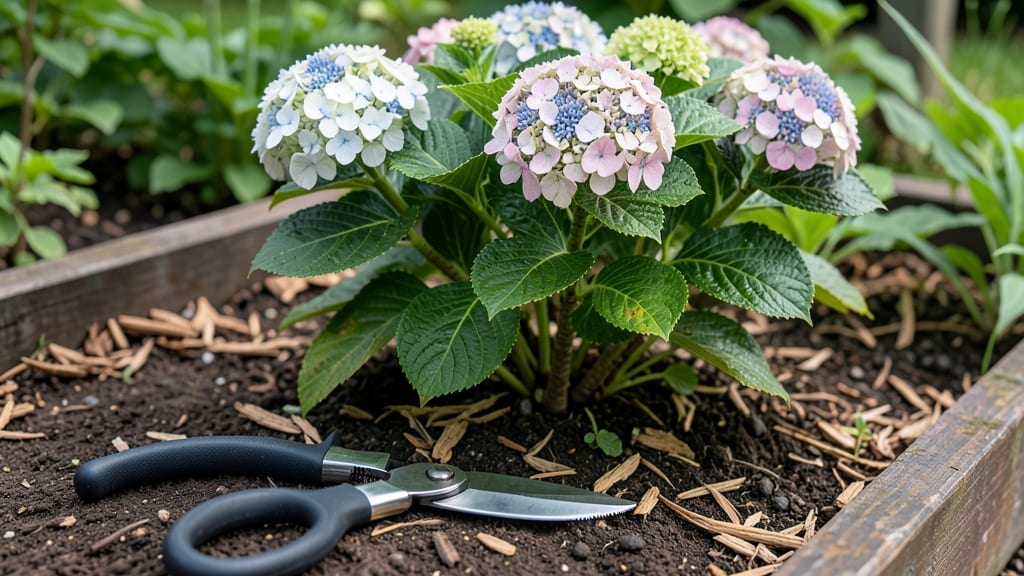
Big leaf hydrangeas do not grow on old wood—they bloom exclusively on new growth from the current season’s stems. Pruning old wood risks removing next year’s flower buds, which form on fresh shoots.
This is why timing matters: big leaf hydrangeas produce their flower buds on the current season’s growth, not the previous year’s stems. 🌸 The buds form at the tips of new shoots, so cutting back old wood removes potential blooms before they even appear.
Unlike oakleaf hydrangeas, which bloom on last year’s wood, big leaf varieties rely entirely on fresh stems for their stunning summer displays.
Think of it like a tree—if you prune the branches where next year’s fruit is forming, you’ll have no harvest. The same logic applies here: pruning too late or too aggressively can leave your hydrangea with sparse or nonexistent blooms.
I’ve seen gardeners accidentally turn their hydrangeas into leafy shrubs by over-pruning old wood, only to realize too late why their flowers disappeared.
💡 In This Article
- Why Big Leaf Hydrangeas Bloom on New Wood
- Best Pruning Practices for Big Leaf Hydrangeas
Why big leaf hydrangeas bloom on new wood
The secret lies in how big leaf hydrangeas (Hydrangea macrophylla) develop their buds. Unlike oakleaf hydrangeas, which form flower buds in late summer on the previous year's stems, big leaf varieties create their buds in late spring to early summer on the current season's growth.
These buds appear at the tips of new shoots, where the plant's energy focuses on producing both leaves and flowers simultaneously. The old wood—those woody stems from last year—is biologically sterile for blooming, serving only as a support structure for new growth. 🌿
Here's the science: Big leaf hydrangeas are "monecious," meaning they produce separate male and female flowers on the same plant. The female flowers (which develop into the showy blooms) form exclusively on new wood.
When you prune old wood, you're essentially cutting off the plant's potential for next year's flowers before they even appear. This is why gardeners often see lush foliage but no blooms after aggressive pruning—what they're cutting away contains next year's flower buds.
Consider this comparison: Oakleaf hydrangeas bloom on old wood because their buds form in late summer on last year's growth. By contrast, big leaf hydrangeas' buds form in June or July on fresh stems. If you prune after that window, you risk removing next year's blooms.
The plant's growth cycle is tightly linked to temperature and daylight—once buds form, they won't appear again until the following season's new growth emerges.
What makes this even more critical is the plant's energy allocation. Big leaf hydrangeas invest significant resources into producing both leaves and flowers on new growth. Removing old wood doesn't just affect blooms—it can also reduce the plant's overall vigor, as the remaining stems must compensate for lost growth potential.
This is why proper pruning timing (late winter/early spring, before buds swell) is crucial for maintaining both health and flowering.
Visualize the process: Imagine a hydrangea stem in June. The terminal bud (at the very tip) is where next year's flowers will form. If you cut this stem back now, you're removing that bud.
However, if you leave it until late winter, you can prune just above a bud that faces outward—encouraging new growth that will produce both leaves and flowers. This precision is what separates successful pruning from accidental deflowering. 🌸
One common misconception is that all hydrangeas bloom on old wood. In reality, only about 20% of hydrangea species (like oakleaf or panicle types) produce flowers on last year's growth.
Big leaf hydrangeas represent the majority that rely entirely on current-season stems. This fundamental difference explains why pruning strategies vary so dramatically between types.