
Size
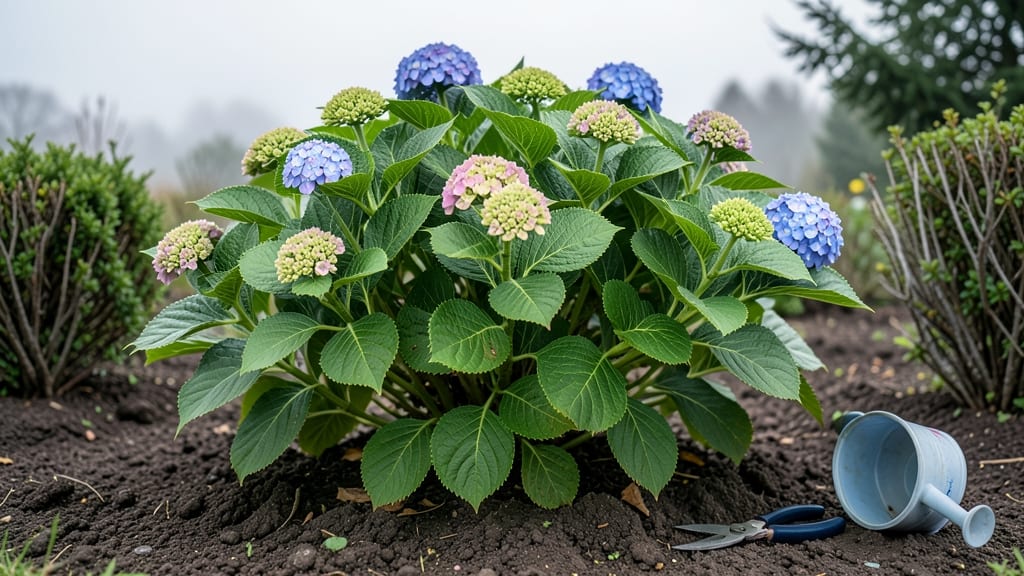
Yes, hydrangeas do grow back every year as perennials in most climates, though cold-hardy varieties like oakleaf or Annabelle thrive through winter dormancy, while tender types may die back in frost but regrow from roots if protected.
Most hydrangeas return annually because they're hardy perennials, meaning their roots survive winter to produce new growth in spring. 🌱 Cold-hardy varieties like oakleaf hydrangeas can handle temperatures down to -20°F, while others may need winter protection like mulch or burlap wraps.
The key difference lies in their root systems—even if stems die back, the roots often remain alive and ready to sprout when temperatures warm.
For reliable regrowth, focus on proper seasonal care. Prune in late winter or early spring before new shoots appear, and always mulch around the base in fall to insulate roots.
Tender varieties might need extra protection in harsh winters, but with the right precautions, you'll see those familiar blooms return year after year.
💡 In This Article
- Hydrangea Perennial Types and Winter Survival Guide
- Year-Round Hydrangea Care for Reliable Regrowth
Hydrangea perennial types and winter survival guide
The reason hydrangeas return each year lies in their classification as hardy perennials—plants that die back to the ground annually but regrow from their root systems.
Cold-hardy varieties like oakleaf hydrangeas (Hydrangea quercifolia) and Annabelle hydrangeas (Hydrangea arborescens) can survive winter dormancy in USDA zones 4-9, meaning their roots endure temperatures down to -20°F without permanent damage.
This survival mechanism involves a natural process called endodormancy, where the plant's growth stops completely during winter to conserve energy.
Tender hydrangea types, such as the popular bigleaf (mophead) varieties (Hydrangea macrophylla), typically thrive in zones 6-9. When exposed to temperatures below 10°F, these varieties may experience stem dieback, but their roots often remain alive if protected.
The key difference is their cold tolerance threshold: oakleaf hydrangeas can handle 30°F colder temperatures than bigleaf types. For example, while Annabelle hydrangeas might survive a -15°F winter, a mophead hydrangea could suffer irreversible damage at -5°F without protection.
What happens during winter dormancy is fascinating: the plant's vascular system shuts down, and specialized cells called pith parenchyma in the stems store sugars that fuel regrowth. This is why you might see new shoots emerging from the base in early spring—even if the previous year's stems look completely dead.
The root system acts like a biological battery, storing energy until temperatures rise above 50°F, signaling the plant to resume growth. 🌿
To understand how hydrangeas regrow, consider their growth habit: most varieties produce new stems from the base (called crown) rather than from old wood. This means even if frost kills the current year's blooms, the plant's survival depends on protecting that 2-3 inch crown area where new shoots emerge.
In colder climates, this often requires mulching with 4-6 inches of organic matter like straw or shredded leaves to insulate the roots.
Here's what most gardeners don't realize: the timing of dormancy matters just as much as temperature. Hydrangeas enter dormancy when day lengths shorten and temperatures drop consistently below 50°F for several weeks. This physiological shift is triggered by photoperiodism—the plant's internal clock responding to daylight changes.
That's why late-season pruning can sometimes confuse the plant, leading to weaker regrowth the following spring. The ideal window for pruning is late winter to early spring, just as the plant begins its natural awakening cycle.
For visual learners, think of hydrangeas like a layered cake: the top layer (stems and blooms) is the most vulnerable to frost, while the bottom layers (roots and crown) contain the plant's survival mechanisms. Protecting that base is what ensures those stunning summer blooms return year after year.
The most cold-hardy varieties can even handle brief exposures to -30°F if their roots stay protected, demonstrating nature's remarkable adaptation strategies. ❄️