
Blooming
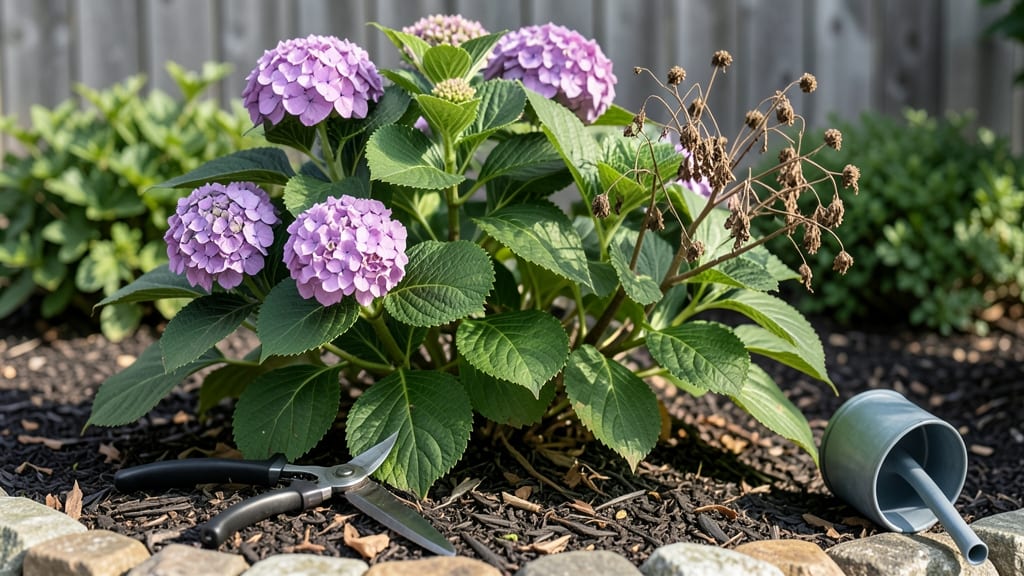
Whether hydrangeas rebloom depends entirely on their variety: late-summer bloomers like 'Endless Summer' produce second flowers, while classic types such as 'Annabelle' bloom only once per season. Proper pruning and care maximize reblooming potential for compatible types.
Not all hydrangeas have the same blooming habits—it's all about their growth cycle. 🌸 The key difference lies in when they set buds: rebloomers like 'Nikko Blue' produce flowers on both old and new wood, while once-a-year bloomers like 'Limelight' rely solely on last year's growth.
This means timing your pruning is critical—cutting back too early can accidentally remove next year's flowers for non-rebloomers. I've learned that reblooming varieties often need a little extra care, like consistent moisture and balanced fertilizer, to encourage that second flush of blooms in late summer.
For those eager to extend their hydrangea's show, focus on the right varieties and pruning techniques. Rebloomers typically need light pruning in late winter or early spring, while non-rebloomers should be pruned right after their first bloom fades.
The payoff? A garden that stays vibrant well into fall, with some varieties even producing sporadic blooms in mild winters.
💡 In This Article
- Reblooming Hydrangea Varieties and Their Growth Habits
- Pruning and Care Tips for Encouraging Second Blooms
Reblooming hydrangea varieties and their growth habits
The magic of reblooming hydrangeas lies in their growth patterns. Varieties like 'Endless Summer' and 'Little Lime' produce flowers on both old and new wood, meaning they can generate two blooming cycles per season. This dual-flowering ability stems from their genetic adaptation to temperate climates where summers extend into fall.
The plant's meristem cells (growth points) remain active longer, allowing new stems to develop flowers even after the first flush. 🌿 For example, 'Nikko Blue' lacecap hydrangeas can rebloom if given ideal conditions, producing delicate white blooms that transition to blue in late summer.
Non-reblooming types like 'Annabelle' and 'Limelight' rely solely on buds formed the previous season, which develop on last year's growth. These varieties bloom spectacularly once in early summer, but their energy shifts entirely to preparing for winter after that.
The key difference is in their dormancy cycles: rebloomers have a shorter dormancy period, allowing them to push new growth when temperatures dip into the 60-70°F range in late summer. This explains why you'll often see second blooms appearing in September when nights remain warm but days stay mild.
Sunlight plays a crucial role in this process. Reblooming varieties typically need 4-6 hours of direct sunlight daily to maintain the energy needed for two blooming cycles. Too much shade can weaken the plant, reducing its ability to produce flowers on new wood.
I've noticed that in my garden, the 'Endless Summer' hydrangeas planted in partial shade still rebloom, but their second flush is less abundant than those receiving morning sun. The plant's chlorophyll production directly impacts its ability to store carbohydrates for flower production.
Temperature fluctuations also determine reblooming success. Most reblooming varieties need a period of cooler temperatures (50-60°F) in late winter to break dormancy, followed by warm spring weather to stimulate new growth. A late frost or unseasonably cold snap can delay or prevent reblooming entirely.
This is why gardeners in colder climates often see more consistent reblooming in varieties like 'Vanille Fraise'—they've been bred to tolerate wider temperature ranges while still producing two flushes of blooms.
Color changes in reblooming hydrangeas add another layer of interest. The pH of your soil determines whether flowers turn pink, blue, or purple.
For example, 'Endless Summer' mophead hydrangeas will shift from pink to blue if planted in soil with a pH below 6.0, thanks to the aluminum availability in acidic conditions.
This color transformation happens because anthocyanin pigments (responsible for blue hues) become more dominant in acidic soils, while pink hues come from different flavonoids that thrive in neutral or alkaline conditions.
Here's what this means for your garden: if you're planting for extended color, choose reblooming varieties and prepare for their specific care needs. The trade-off is worth it—imagine walking through your garden in September and October, surrounded by hydrangeas still in full bloom when many other perennials have faded.
The secret lies in understanding these growth patterns and giving your plants exactly what they need at each stage. 🌸