
Pruning
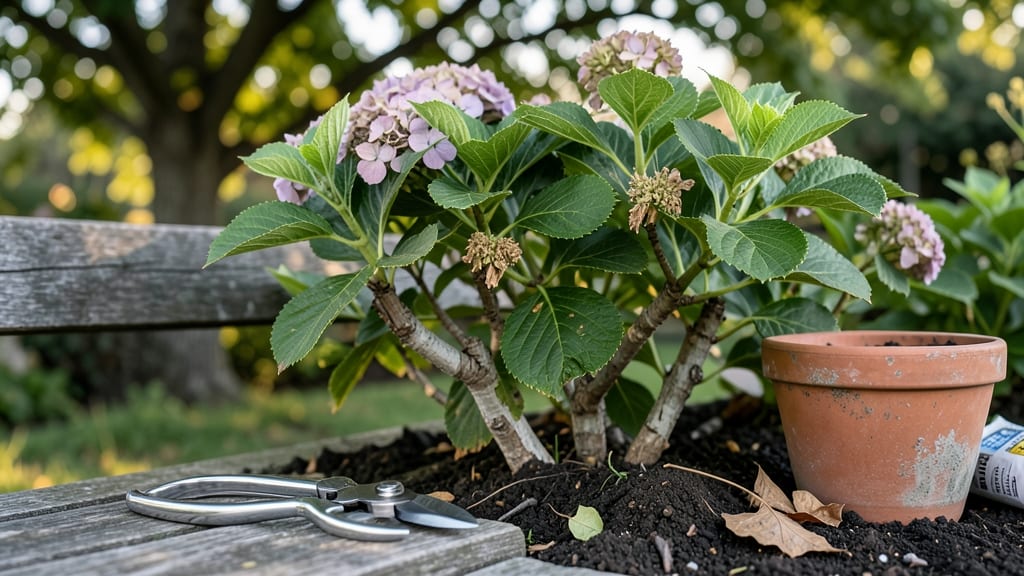
Whether you cut back hydrangeas in fall or spring depends on the variety: prune deciduous types like bigleaf and panicle hydrangeas in late winter or early spring, while evergreen varieties (like oakleaf) should be trimmed in late winter or early spring after frost. Avoid fall pruning for most types to prevent winter dieback or frost damage.
Timing matters because hydrangeas form buds differently. Deciduous types set next year's blooms on new wood, so pruning in late winter or early spring encourages robust growth. Evergreens like oakleaf, however, bloom on old wood, so trimming after frost ensures you don't remove potential flowers.
Fall pruning risks exposing fresh cuts to harsh winter conditions, which can lead to dieback or fungal issues. 🌿 I always recommend waiting until the coldest part of winter has passed—typically February or March—for the safest results.
For gardeners in colder zones (3-6), pruning in late winter gives plants a head start before spring growth begins. In warmer zones (7-10), you can extend the window slightly into early spring.
The key is to never prune after new growth appears—this disrupts the plant's natural cycle and can reduce flowering. Always use clean, sharp tools to make precise cuts just above a bud or leaf node.
💡 In This Article
- When and Why to Prune Hydrangeas by Type
- Step-by-Step Hydrangea Pruning Guide by USDA Zone
When and why to prune hydrangeas by type
The science behind hydrangea pruning revolves around how each variety forms buds. Deciduous types like bigleaf and panicle hydrangeas produce next year's blooms on new wood, meaning they can handle late winter or early spring cuts without sacrificing flowers.
Their buds form at the tips of current season's growth, so pruning in late winter (after the worst frost) removes dead wood while stimulating fresh shoots. This is why you'll often see gardeners cutting back these types by 1/3 to 1/2 in February or March.
Evergreen varieties like oakleaf hydrangeas tell a different story—they bloom on old wood, meaning last year's growth holds next season's flowers. Pruning too early risks cutting off potential blooms before they form.
The key is to wait until after the last frost when new growth begins, typically late winter to early spring. This timing ensures you don't remove flower buds while still cleaning up winter damage.
The buds on old wood are more vulnerable to frost damage, so delaying pruning until after the coldest period is crucial.
Fall pruning is generally discouraged because fresh cuts are exposed to winter's harsh conditions. When you prune in fall, the open wounds become entry points for pathogens like Botrytis blight, which thrives in cold, damp conditions.
The plant's natural defenses are weakened during dormancy, making it more susceptible to disease. Additionally, fall cuts can't heal properly before winter, leading to dieback when temperatures drop below 20°F.
This is why you'll see many experts recommend waiting until late winter when the plant is still dormant but the risk of extreme cold has passed.
Consider this comparison: Bigleaf hydrangeas (like 'Endless Summer') can handle aggressive pruning in late winter because their blooms come from new growth. Oakleaf varieties (like 'Pincushion') need a gentler approach—only removing dead or crossing branches in late winter to preserve old wood blooms.
The difference lies in their growth habits: new wood bloomers focus energy on current season's growth, while old wood bloomers rely on last year's structure. Understanding this distinction is the foundation of successful hydrangea care.
Here's a practical example: In Zone 5, where winters can drop to -10°F, I've seen bigleaf hydrangeas pruned in early March recover beautifully, producing lush blooms by summer. The same plants pruned in October often showed signs of winter dieback at the cut sites.
This demonstrates how timing directly impacts plant health and flowering potential. The goal is to give the plant the best possible start to the growing season while minimizing stress from cold exposure.
What most gardeners don't realize is how temperature fluctuations affect bud formation. Studies show that hydrangea buds require a period of cold exposure (called chilling hours) to properly develop. Pruning too early can disrupt this process, leading to weaker growth.
In warmer zones (7-10), where winters are milder, you have slightly more flexibility, but the principle remains: wait until after the last frost when new growth is just beginning to appear. This timing ensures you're working with the plant's natural growth cycle rather than against it.
For those with panicle hydrangeas (like 'Limelight'), the window is even wider because they're more forgiving with pruning timing. Their blooms come from both old and new wood, giving you more flexibility. However, even these varieties benefit from late winter pruning to remove dead wood and encourage vigorous new growth.
The key takeaway is that hydrangeas are not one-size-fits-all plants—their pruning needs vary dramatically based on their growth habits and your local climate conditions. 🌸