
Pruning
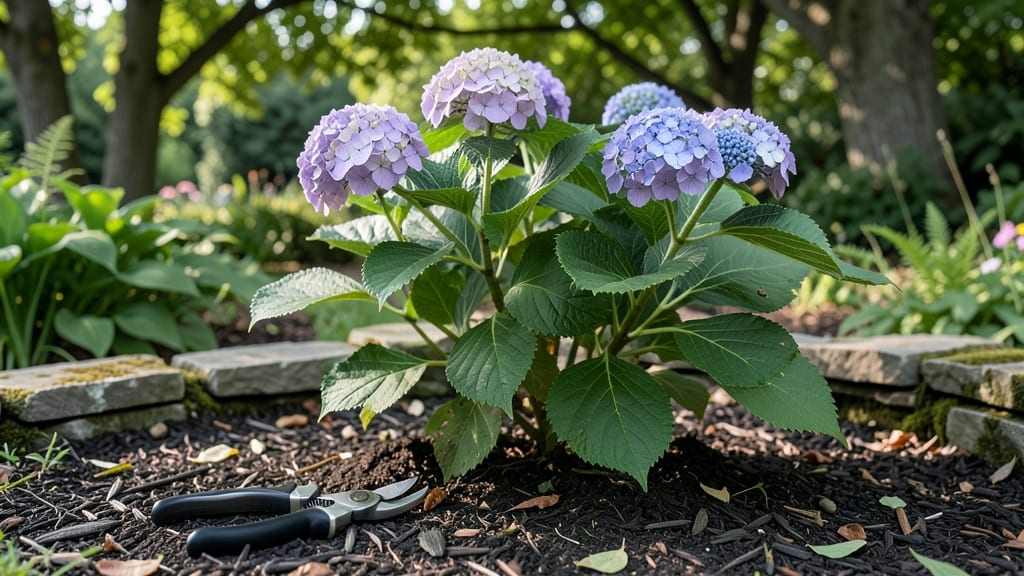
You absolutely need to prune hydrangeas to encourage strong growth and vibrant blooms, but the timing varies by type—reblooming varieties like Endless Summer should be trimmed in early spring, while bigleaf types thrive with dormant-season cuts. Cutting at the wrong time can actually reduce next year's flowers.
Hydrangeas respond dramatically to proper pruning, but the key lies in understanding their unique bloom cycles. 🌸 Bigleaf hydrangeas, for example, set buds on old wood, so late-season cuts can eliminate next year's flowers entirely.
Meanwhile, reblooming varieties produce flowers on both old and new growth, giving you more flexibility. I always recommend marking your calendar with the last frost date—this helps you time your cuts precisely for maximum impact.
Beyond timing, the way you prune matters just as much. Always use clean, sharp shears to make cuts at a 45-degree angle just above a leaf node or outward-facing bud. This encourages new growth in the right direction.
For heavy pruning jobs, I suggest breaking it into stages over a few weeks to reduce stress on the plant. Remember, the goal isn't just to shape your hydrangea—it's to create the perfect conditions for next season's spectacular display.
💡 In This Article
- Hydrangea Pruning by Variety: When and Why It Matters
- Step-by-Step Pruning Guide for Hydrangea Blooms
Hydrangea pruning by variety: when and why it matters
The reason pruning approaches differ so dramatically between hydrangea varieties comes down to their unique bud formation science. Bigleaf hydrangeas (Hydrangea macrophylla) set their flower buds on old wood—the stems that grew the previous season.
When you prune these stems after their blooms fade, you're essentially removing next year's flower potential. These buds form in late summer and early fall, so any cuts made after September 1st risk eliminating the following year's blooms entirely.
Reblooming varieties like Endless Summer or Limelight are different—they produce flowers on both old and new wood. This means you can prune more aggressively in early spring (March-April) without sacrificing next year's blooms.
The key difference is in their genetic makeup: rebloomers have evolved to form flower buds on current season's growth as well, giving gardeners more flexibility.
Panicle hydrangeas (Hydrangea paniculata) like 'Little Lime' follow a similar pattern to rebloomers, while oakleaf varieties (Hydrangea quercifolia) typically bloom on old wood but can produce some new growth flowers.
What most gardeners don't realize is how temperature triggers bud formation. Bigleaf hydrangeas need 6-8 weeks of cool temperatures (below 50°F) after their initial bloom to properly set next year's buds. If you prune too late in the season, you're not just removing leaves—you're interrupting this crucial temperature-dependent process.
The plant's hormonal response to these temperature shifts is what determines whether it will produce flowers or focus on vegetative growth instead.
Here's a visual comparison of the growth habits:
- Bigleaf: Buds form on previous season's stems (old wood), must be pruned in late winter/early spring
- Rebloomers: Buds form on both old and new wood, can be pruned in early spring or after first bloom
- Panicle/Oakleaf: Primarily new wood bloomers, aggressive pruning works in late winter
The consequences of improper timing are dramatic. I've seen bigleaf hydrangeas completely fail to bloom after summer pruning because all the old wood stems were removed. The plant then diverts all its energy into leaf production rather than flower formation.
This is why I always recommend checking your local hardiness zone and matching your pruning schedule to your specific variety's needs.
For example, in Zone 5, bigleaf hydrangeas should be pruned between February 15 and March 15 to ensure they've had enough time to set buds before spring growth begins. In warmer Zone 8, you might extend this window slightly, but never beyond April 1st for these varieties.
The exact timing creates that perfect balance between removing dead growth and preserving next year's potential.