
Aphids
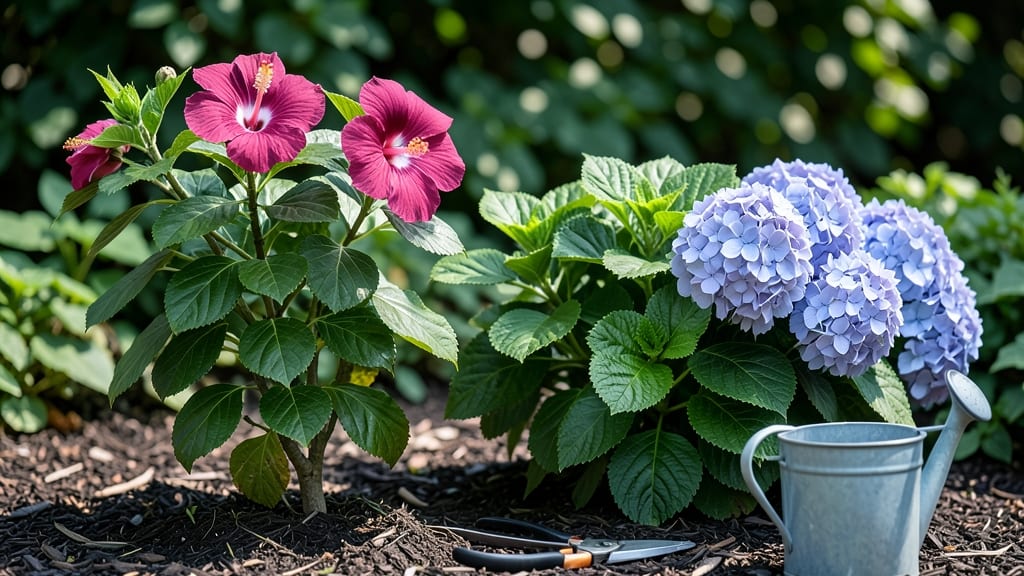
Growing hibiscus and hydrangeas side by side turns your small garden into a showstopping vertical display. 🌿 These two tropical stunners thrive when trained up poles, saving space while delivering bold blooms that last all summer. The secret?
Matching their sunlight, soil, and water needs—both love moisture but hate soggy roots. Hibiscus demands full sun (6+ hours daily) and blooms from summer through frost, while hydrangeas tolerate morning sun and afternoon shade, perfect for hot climates.
Both need well-draining, acidic soil (pH 5.5–6.5), but hibiscus tolerates slightly alkaline conditions better. Prune hibiscus after blooming; hydrangeas need their cuts in late winter to set next year’s flowers. You’ll end up with vibrant blooms that attract hummingbirds and butterflies—hibiscus in fiery reds/oranges, hydrangeas in lush blues/pinks.
The pole training keeps them compact, ideal for patios or small yards. Just watch for aphids (spray with soapy water) and powdery mildew (space plants for airflow). Works in zones 7–11 with winter protection for hibiscus.
Whether you choose one or both, these pole-trained beauties deliver maximum impact with minimal space. Let’s get growing!
The first product explained
Meet your new garden superstar! 🌸✨ The Hibiscus & Hydrangea Pole-Trained Trellis Kit is the perfect solution for compact gardens, balconies, or small yards where space is precious—but style isn’t. This all-in-one system lets you grow two stunning flowering plants vertically, transforming even the tiniest corner into a lush, eye-catching display. Whether you're a seasoned gardener or a beginner eager to try pole training, this kit makes it easy to cultivate hibiscus and hydrangea with minimal fuss.
📏 Specs & Features
- Height: 6 feet (adjustable with extendable poles)
- Width: 18 inches (compact footprint)
- Material: Weather-resistant galvanized steel poles + UV-stabilized trellis netting
- Plant Capacity: 2 plants (1 hibiscus + 1 hydrangea) per trellis
- Ease of Use: Pre-drilled holes for secure pole insertion, no tools required
- Bonus: Includes 2 starter plants (hibiscus and hydrangea) + organic potting mix
🎯 Who’s It For?
This kit is designed for:
- 🏡 Urban gardeners with limited space but big dreams
- 🌿 Small-space enthusiasts (balconies, patios, or tiny yards)
- 👩🌾 Beginner gardeners looking for a foolproof, guided approach
- 💐 Flower lovers who adore vibrant blooms and vertical gardening
$ Price Point & Value
At just $89.99, this kit offers unbeatable value—it’s essentially a premium gardening experience at an accessible price. Here’s what you’re getting for your money:
- ✅ Ready-to-plant system (no assembly headaches)
- ✅ Two stunning plants (hibiscus for bold tropical vibes, hydrangea for lush, voluminous blooms)
- ✅ Durable materials that last for years
- ✅ Space-saving design that maximizes beauty in minimal square footage
Pro Tip: 💡 Pair this kit with a drip irrigation system (sold separately) to make maintenance even easier—just set it and forget it!
The second product explained
Looking to add a splash of vibrant color to your compact garden without sacrificing space? Meet Hydrangea macrophylla 'Endless Summer'—your perfect pole-trained companion! 🌸 This stunning variety is designed to thrive in smaller gardens while delivering months of breathtaking blooms in shades of pink, blue, and purple.
Let’s dive into why this hydrangea is a must-have for gardeners with limited space but big dreams.
🌿 Key Specs & Features
Here’s what makes this hydrangea a standout choice:
- Height: 3–5 feet (ideal for pole training or small trellises)
- Spread: 2–3 feet (compact yet lush)
- Bloom Time: June through first frost—yes, you read that right!
- Color Range: Pink, blue, or purple (depending on soil pH—more on that below!)
- Light Needs: Partial shade to full sun (morning sun + afternoon shade works best)
- Soil Preference: Well-draining, acidic soil (pH 5.2–6.2 for blue blooms; 6.0+ for pink)
- Hardiness: Zones 4–9 (survives winter with proper mulching!)
- Pole-Training Friendly: Lightweight stems adapt beautifully to vertical support.
🎯 Who’s It For?
This hydrangea is a dream for:
- 🏡 Small-space gardeners: Perfect for balconies, patios, or narrow garden beds.
- 🌿 Beginner-friendly bloomers: Low-maintenance once established (just prune in late winter!).
- 🎨 Color enthusiasts: Change bloom hues by adjusting soil pH—science and art in one!
- 🐝 Pollinator lovers: Attracts bees and butterflies with its abundant flowers.
- 💐 Cut-flower fans: Long-lasting blooms stay fresh in vases for weeks.
💰 Price Point & Value
Priced competitively for its low-maintenance elegance and long bloom season, you can typically find Endless Summer hydrangeas at:
- Nursery Purchase: $25–$40 per plant (1-gallon size, ready to pole-train).
- Online Retailers: $30–$50 (often with shipping discounts for multiple plants).
- Pro Tip: 💡 Buy in early spring for the best selection and lower prices!
With its versatility, durability, and jaw-dropping beauty, this hydrangea pays for itself in curb appeal—and joy—every season. Pair it with your hibiscus for a showstopping vertical garden duo!
Head-to-head comparison
When it comes to adding vibrant, pole-trained beauty to compact gardens, hibiscus and hydrangea are two stunning contenders—but they each bring something unique to the table. 🌸 Whether you're dreaming of bold tropical blooms or lush, cascading clusters, understanding their differences will help you pick the perfect fit for your space.
Below, we break down a detailed side-by-side comparison across key dimensions to help you decide which plant will thrive best in your garden.
The way these plants grow can drastically influence how they fit into your garden layout, especially when pole-trained.
- Hibiscus:
- Fast-growing and upright, making it ideal for trellises, poles, or small arbors.
- Can reach 6–10 feet tall with proper support, but pruning keeps it manageable.
- Vines are semi-woody and flexible, perfect for training along a pole.
- Hydrangea:
- More bushy and rounded, with a slower, steadier growth rate.
- Typically 3–6 feet tall (depending on variety), making it better suited for smaller poles or as a standalone shrub.
- Stems are woody and sturdy, but less pliable than hibiscus, so training requires more patience.
Winner for pole training? Hibiscus takes the crown here—its natural climbing tendency and flexibility make it easier to guide along a pole. Hydrangeas are better left as shrubs unless you're working with dwarf varieties.
If you're growing for show-stopping flowers, this is where hibiscus and hydrangea really shine—but in different ways.
| Feature | Hibiscus | Hydrangea |
|---|---|---|
| Flower Shape | Large, single or double blooms (3–6 inches wide) with a dramatic, cup-like or ruffled appearance. | Clustered round or cone-shaped blooms (2–4 inches across), with sterile (showy) and fertile (seed-bearing) flowers in one head. |
| Color Range | Vibrant reds, pinks, oranges, yellows, and whites—often deep, saturated hues. | Soft pinks, blues, purples, whites, and greens—colors can shift based on soil pH (e.g., blue in acidic soil, pink in alkaline). |
| Bloom Season | Primarily summer to early fall, with some tropical varieties blooming year-round in warm climates. | Late spring to summer, with some varieties (like Oakleaf hydrangea) offering fall foliage interest. |
| Fragrance | Many varieties are heavily fragrant, especially in the evening. | Most are mildly fragrant or scentless—though some, like Vanille Fraise, have a sweet aroma. |
Pro Tip: 💡 If you love bold, tropical drama, hibiscus is your plant. For romantic, lush clusters that change with the seasons, hydrangea wins.
How much time and effort you're willing to invest will determine which plant thrives in your garden.
| Care Factor | Hibiscus | Hydrangea |
|---|---|---|
| Sunlight | Full sun (6+ hours/day). Less sun = fewer blooms. | Partial shade (morning sun, afternoon shade) for most varieties. Some tolerate full sun. |
| Watering | Needs consistent moisture, especially during bloom season. Drought-sensitive. | Moderate watering—keep soil evenly moist but not soggy. More drought-tolerant once established. |
| Soil Preferences | Well-draining, fertile soil with a pH of 6.0–7.0. Amend with compost for best results. | Adaptable but prefers rich, slightly acidic soil (pH 5.0–6.0). Hydrangeas love organic matter! |
| Pruning Needs | Prune late winter/early spring to shape and encourage new growth. Deadhead spent blooms. | Prune right after blooming (or in late winter for some varieties). Avoid cutting back old wood unless necessary. |
| Cold Hardiness | Most varieties are tender perennials (USDA zones 9–11). Can be grown in colder zones as annuals or in containers. | More cold-hardy (USDA zones 3–9, depending on variety). Some, like Oakleaf hydrangea, survive winters beautifully. |
Winner for low-maintenance? Hydrangeas edge out hibiscus if you're in a cooler climate or prefer a hands-off approach. Hibiscus demands more attention but rewards you with stunning, long-lasting blooms.
Budget and accessibility play a role in your decision, especially if you're starting from scratch.
- Hibiscus:
- Seedlings or young plants typically cost $15–$30 each.
- Tropical hibiscus varieties (like Hibiscus rosa-sinensis) are widely available at nurseries and online.
- Hardy hibiscus (e.g., Hibiscus moscheutos) may be pricier but are worth it for cold climates.
- Hydrangea:
- Plants range from $10–$40, depending on variety and size.
- Popular types (like Endless Summer) are easy to find at big-box stores and garden centers.
- Rare or specialty varieties (e.g., Hydrangea paniculata 'Limelight') may cost more.
Pro Tip: 🎯 If you're on a budget, hydrangeas often
Which one should you choose?
So, which floral beauty should you bring home to your compact garden? The choice between hibiscus and hydrangea depends on your priorities—whether it’s bold drama, low-maintenance charm, or adaptability to your space. Here’s your tailored verdict to help you decide:
🌸 Pick Hibiscus If...
- You crave show-stopping blooms: Hibiscus delivers huge, tropical flowers that scream "wow" and attract pollinators like bees and hummingbirds. Perfect for adding a dramatic focal point in small gardens.
- You love heat and humidity: These plants thrive in warm climates (USDA Zones 5–11) and can even tolerate coastal conditions. Ideal for sun-drenched patios or containers.
- You’re okay with a little extra care: Hibiscus needs regular watering, pruning, and winter protection in cooler zones. If you’re up for the effort, the payoff is stunning, long-lasting blooms.
- You want edible or medicinal benefits: Some varieties (like Hibiscus sabdariffa) produce tea, jams, or even medicinal extracts—a bonus for functional gardens!
💧 Pick Hydrangea If...
- You prefer versatility and adaptability: Hydrangeas thrive in partial shade and adapt to cooler climates (USDA Zones 3–9), making them low-maintenance stars for shadier spots or northern gardens.
- You love color-changing magic: Their blooms shift from pink to blue based on soil pH—great for DIY floral experiments and seasonal variety.
- You want a lush, bushy look: Hydrangeas grow densely and quickly, providing year-round greenery (even when not in bloom) and privacy-friendly hedges.
- You’re dealing with pests: While both plants face aphids, hydrangeas are less attractive to them and often recover faster with proper care.
🌿 The Ultimate Compromise?
Why not both? If your garden has sunny AND shady spots, consider planting them side by side for a layered, ever-changing display. For example:
| Location | Best Choice | Why? |
|---|---|---|
| South-facing patio (full sun) | Hibiscus | Thrives in heat and produces larger, showier blooms. |
| North-facing wall (partial shade) | Hydrangea | Grows lushly without wilting and adds texture. |
| Container on a balcony | Dwarf hibiscus OR mophead hydrangea | Both work in pots—hibiscus for height, hydrangea for spillover. |
Pro Tip: 💡 If you’re new to gardening, start with hydrangeas—they’re forgiving and easy to shape. If you’re ready for a high-reward challenge, hibiscus will deliver unforgettable blooms with a little extra love.
No matter which you choose, both plants will transform your compact garden into a vibrant, pollinator-friendly paradise. Happy planting! 🌺✨