
Aphids
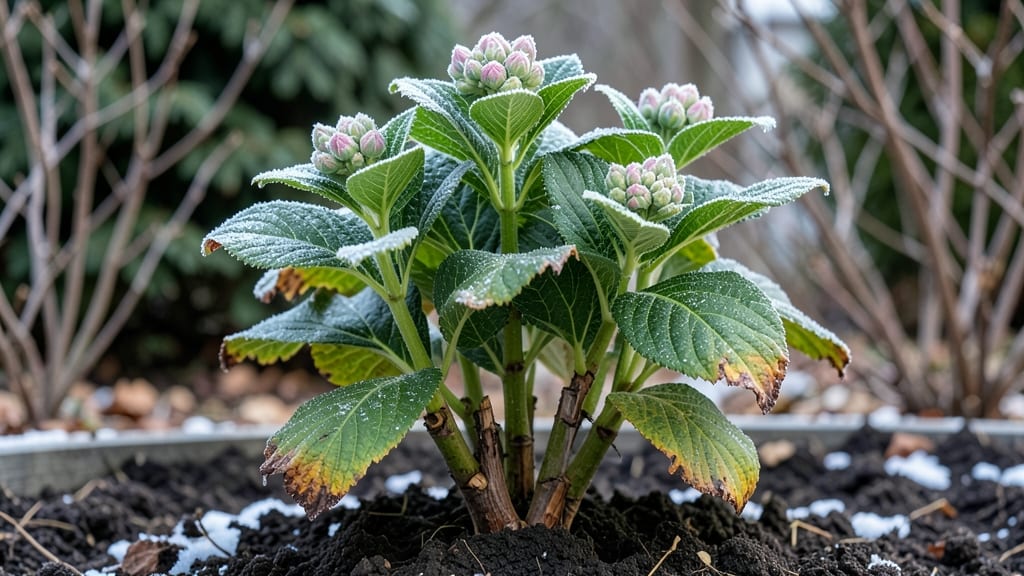
Frost affects hydrangeas by freezing tender growth and buds, but established plants typically bounce back with proper care. Shield young plants using frost cloth, apply thick mulch around the base, and stop watering before temperatures drop. Trim any blackened stems in spring to promote fresh growth.
Frost attacks hydrangeas by rupturing delicate cells in new growth, which can turn stems black and kill flower buds before they open. 🌸 Younger plants are especially vulnerable because their root systems aren't deep enough to draw up moisture for protection.
Oakleaf varieties tend to handle cold better than bigleaf types, but even hardy varieties need support during sudden freezes. The key to recovery lies in protecting roots—mulch acts like a thermal blanket, while frost cloth creates a microclimate that keeps temperatures just above freezing.
Once spring arrives, focus on removing only the most damaged stems. Healthy buds will appear as plump, green swellings along the branches, while dead wood stays brown and brittle.
A light application of balanced fertilizer in early spring gives plants the energy they need to regrow, while avoiding heavy pruning prevents stress. Monitor soil moisture too—hydrangeas need consistent watering during their first growing season after frost damage to establish strong roots for next winter.
💡 In This Article
- How Frost Damages Hydrangea Plants and Buds
- Step-by-Step Frost Recovery Guide for Hydrangeas
How frost damages hydrangea plants and buds
Frost attacks hydrangeas by causing ice crystal formation inside plant cells, which physically ruptures their delicate membranes. When temperatures drop below 28°F, water inside cells expands as it freezes, creating sharp ice shards that puncture cell walls—especially in new growth and flower buds.
This damage appears as blackened, mushy stems and shriveled buds that fail to bloom. 🌱 Young plants suffer most because their shallow root systems can't draw up enough moisture to protect against freezing, while mature plants with deeper roots fare better.
Different hydrangea varieties react uniquely due to their natural cold hardiness. Oakleaf hydrangeas (USDA zones 4-9) can tolerate down to -20°F thanks to their thicker stems, while bigleaf varieties (zones 6-9) often suffer damage above 25°F because their leaves contain more water. Panicle hydrangeas (zones 3-9) strike a balance, handling 15°F but needing protection in prolonged freezes.
The key difference lies in their bud placement—oakleaf buds form on older wood, making them more resilient than bigleaf buds that develop on current season's growth.
Root insulation plays a critical role in survival. When soil freezes, hydrangeas lose their ability to absorb moisture, which compounds cell damage. A 4-inch layer of mulch (straw or shredded leaves) acts as insulation, maintaining soil temperatures 5-10°F warmer than ambient air.
This thermal buffer is why established plants recover better—their extensive root networks create a natural insulating network deep in the soil. 🌿 Without this protection, even hardy varieties may struggle to regrow after severe frost.
Another critical factor is bud dormancy timing. Hydrangeas enter dormancy in fall, but sudden cold snaps can catch them off-guard. Buds that haven't fully hardened off (typically after 3-4 weeks of temperatures below 50°F) are most vulnerable.
This explains why late-season frosts in spring are particularly damaging—they target buds that have already begun swelling but aren't yet fully hardened. The contrast between warm days and freezing nights creates ideal conditions for cell rupture.
Watering habits also influence frost damage. Wet foliage freezes more easily than dry, creating ice encasements that insulate heat away from stems. Avoid watering 48 hours before a frost warning—hydrangeas store enough moisture in their roots to last through short freezes.
For young plants, a 1-inch layer of mulch combined with frost cloth can raise temperatures by 5-10°F, making the difference between survival and total loss.
What most gardeners don't realize is that partial frost damage can still produce flowers. Even if buds blacken, some may survive if only the outer layers freeze.
Look for green buds beneath blackened tips in spring—they're your plant's secret recovery signal. 🌸 This resilience explains why hydrangeas often bounce back after frost, provided roots remain undamaged and care is taken to protect them during subsequent cold snaps.