
Diseases
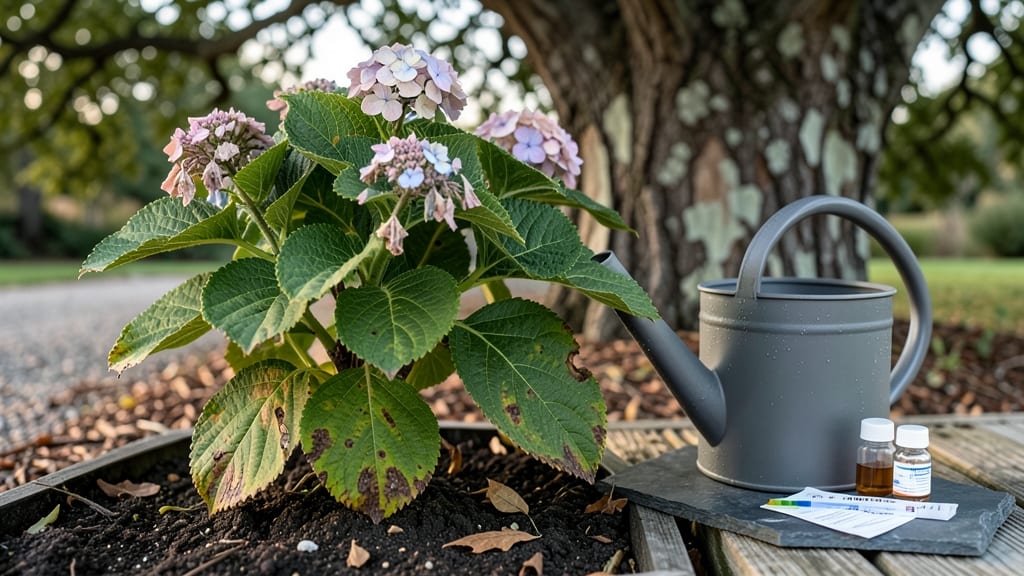
Hydrangea brown leaves don’t have to mean your plant is dying—it’s often a fixable nutrient problem. 🌿 I’ve nursed back more than a few chlorotic hydrangeas using iron chelate, and the key is figuring out whether it’s underwatering, overwatering, or a pH issue first.
The good news? Most causes are easy to diagnose with a quick soil check and leaf inspection.
Yellowing between veins (chlorosis) usually means iron deficiency, while crispy brown edges point to underwatering or salt buildup. Fungal spots look like coffee stains, and spider mites leave fine webbing. Start by testing your soil’s pH—hydrangeas thrive in 5.5-6.2—and adjust with sulfur or lime if needed.
Iron chelate sprays or granules work fast for nutrient fixes, but don’t overdo it.
Once you identify the problem, solutions are straightforward: water deeply but less often, prune dead growth, or apply a balanced fertilizer. I’ve revived plants in as little as 2-3 weeks with the right care. The secret is acting early—brown leaves left unchecked can spread to the whole plant.
Prevention is easier than cleanup: mulch to retain moisture, avoid harsh chemicals, and monitor your hydrangea’s sunlight. If brown patches persist after trying these fixes, it might be time to consult a local extension office—they can test for hidden issues like root rot or soil toxicity.
Root Causes Behind Browning Hydrangeas
When your hydrangeas start showing brown leaves, it’s rarely a random act of nature—it’s usually a cry for help from the plant. Understanding the specific triggers behind the discoloration is the first step to reviving your blooms.
Below, we break down the most common culprits, backed by science, so you can diagnose the issue like a pro. 🌱🔍
Hydrangeas are sensitive to extreme temperatures, and both heatwaves and sudden cold snaps can cause leaf browning. Here’s how it happens:
- Heat Stress: When temperatures soar above 90°F (32°C), hydrangeas struggle to regulate water loss. Their leaves wilting and browning at the edges as cells dehydrate—a condition called scorch. This is especially common in full-sun exposures without adequate shade.
- Cold Damage: Frost or late-season freezes can cause brown, crispy patches on leaves. Hydrangeas are tender perennials in many climates, meaning they can’t tolerate prolonged exposure below 20°F (-6°C). Windburn (dry, brown edges from wind + cold) is another culprit.
- Temperature Fluctuations: Rapid swings (e.g., 80°F (27°C) days to 40°F (4°C) nights) stress the plant, disrupting nutrient uptake and leading to interveinal browning.
Actionable Fix: Provide afternoon shade in hot climates and use mulch (3–4 inches) to insulate roots. For cold snaps, cover plants with frost cloth or burlap.
Hydrangeas thrive in consistently moist (not soggy) soil, and water-related issues are the #1 cause of browning leaves. Here’s the science:
- Overwatering: Hydrangeas hate waterlogged roots, which cut off oxygen and lead to root rot (caused by fungi like Phytophthora). Symptoms include yellowing leaves that turn brown and mushy, often starting at the bottom of the plant.
- Underwatering: Dry soil causes wilting, then crispy brown edges as leaves lose turgor pressure. Hydrangeas in containers or sandy soil are most vulnerable.
- Improper Drainage: If your soil is clay-heavy or lacks organic matter, water pools around roots, suffocating them. Brown leaves with yellowing underneath are a red flag.
Actionable Fix:
- Test soil moisture by sticking your finger 2 inches deep—water if it’s dry.
- Amend soil with compost or perlite to improve drainage.
- Ensure pots have drainage holes and use a well-draining potting mix.
Brown leaves can signal a lack of essential nutrients, particularly when paired with other symptoms like stunted growth or pale foliage. Here’s what’s likely missing:
| Nutrient | Deficiency Signs | Why It Happens |
|---|---|---|
| Iron (Fe) | Yellowing between veins (interveinal chlorosis) that progresses to brown | Common in alkaline soil (pH >7.0), where iron becomes unavailable to roots. Hydrangeas love acidic soil (pH 5.0–6.0). |
| Magnesium (Mg) | Brown patches between veins, often starting on older leaves | Leaches out in overwatered or sandy soil. Critical for chlorophyll production. |
| Potassium (K) | Brown edges or tips of leaves (like a "scorched" look) | Plants starved of K struggle with osmotic regulation, leading to cell death in extreme conditions. |
Actionable Fix:
- Test soil pH—aim for 5.0–6.0 for hydrangeas. Use sulfur or peat moss to lower pH if needed.
- Apply an iron chelate (like Fe-EDDHA) for chlorosis. For magnesium, use Epsom salt (1 tbsp/gallon of water).
- Use a balanced fertilizer (10-10-10) in spring to replenish potassium.
Brown leaves aren’t always environmental—pests and diseases can wreak havoc silently. Watch for these culprits:
- Spider Mites: Tiny pests that suck plant sap, causing speckled brown leaves and webbing. They thrive in dry, hot conditions.
- Scale Insects: Leave sticky residue (honeydew) that attracts sooty mold, turning leaves black/brown.
- Fungal Leaf Spot: Dark brown spots with yellow halos (often from Botrytis or Septoria) spread in humid, poorly ventilated areas.
- Root Rot (Phytophthora): Brown, wilting leaves with mushy stems—a sign roots are rotting from overwatering.
Actionable Fix:
- Spray leaves with neem oil or insecticidal soap for pests.
- Remove infected leaves and apply copper fungicide for leaf spot.
- Improve airflow by pruning dense foliage and avoid overhead watering.
Now that you’ve identified the likely cause, the next step is targeted treatment. Stay tuned for our step-by-step repair guide to bring your hydrangeas back to vibrant life! 🌿✨
Revive your hydrangeas now
Brown leaves on your hydrangeas don’t have to be a death sentence—with the right approach, you can nurse them back to health and prevent future issues.
Below, we’ve mapped out practical, step-by-step fixes tailored to the most common causes of brown leaves, along with prevention tips to keep your hydrangeas lush and vibrant.
If your hydrangea leaves are yellowing with brown edges or veins, iron deficiency (chlorosis) is likely the culprit. Hydrangeas thrive in acidic soil, and alkaline conditions lock out iron, causing this telltale browning.
✅ Step-by-Step Iron Chelate Treatment
- 🔥 Test Your Soil Grab a soil test kit (available at garden centers) to confirm pH levels. Aim for 5.0–6.0—anything above 7.0 means your soil is too alkaline.
- 🍳 Apply Iron Chelate - For quick results: Use a liquid iron chelate (like Iron Soluble EDTA) and spray it directly on the leaves and soil.
Follow label instructions for concentration. - For long-term fix: Work iron sulfate or chelated iron granules into the top 2–3 inches of soil around the plant. Water thoroughly after application.
- 🌡️ Adjust Soil pH (If Needed) If your soil is alkaline, add elemental sulfur (1–2 lbs per 100 sq ft) or peat moss to lower pH. Re-test in 2–3 months and reapply if necessary.
- 💡 Pro Tip:
- Avoid over-fertilizing with nitrogen—it can worsen iron uptake issues.
- Mulch with pine needles or oak leaves to naturally acidify the soil over time.
Brown, crispy leaves (especially on older growth) often signal root rot or waterlogged soil. Hydrangeas hate soggy feet—too much moisture cuts off oxygen, leading to stress and browning.
✅ Drainage & Watering Rescue Plan
- 👨🍳 Check the Roots Gently dig around the base of the plant. If roots smell foul or look mushy, root rot is active. Trim away affected roots with sterilized pruners and replant in fresh soil.
- 🥘 Improve Soil Drainage
- Mix perlite, coarse sand, or compost into the soil to break up clay or compacted areas.
- If planting in containers, ensure pots have drainage holes and use a well-draining potting mix.
- ⏰ Adjust Your Watering Routine
- Water deeply but infrequently—hydrangeas prefer 1–1.5 inches of water per week (including rain).
- Avoid wetting the leaves (especially in humid climates) to prevent fungal issues.
- Use a moisture meter to check soil dampness before watering.
- 🎯 Prevention Tip:
- Raise garden beds slightly if your yard has poor drainage.
- Mulch with 2–3 inches of organic mulch (like wood chips) to regulate moisture and temperature.
If brown patches appear suddenly on young leaves (especially in hot weather), your hydrangea may be sunburned or suffering from heat stress. Most hydrangeas prefer partial shade, and intense afternoon sun can scorch tender foliage.
✅ Shade & Heat Relief Guide
- 🔪 Prune for Better Airflow Thin out crowded branches to improve air circulation, reducing heat buildup.
- 🌿 Provide Temporary Shade
- Use shade cloth (30–50%) over the plant during peak sun hours (11 AM–3 PM).
- Reflective mulch (like white gravel) can deflect heat away from roots.
- 💧 Increase Hydration
- Water in the early morning to allow foliage to dry before evening.
- Mist leaves lightly on extremely hot days to cool them down (avoid doing this if humidity is high).
- ✨ Long-Term Solution:
- Choose heat-tolerant varieties like ‘Endless Summer’ or ‘Limelight’ if you’re in a hot climate.
- Plant in a location with dappled shade (under trees or near a north-facing wall).
If brown spots appear with yellow halos, blackening veins, or slimy stems, a fungal or bacterial infection (like leaf spot or bacterial wilt) may be to blame. These spread quickly in humid, wet conditions.
✅ Disease Control Protocol
- 🔪 Prune Infected Areas Immediately
- Cut off brown or spotted leaves with sterilized pruners (wipe with rubbing alcohol between cuts).
- Dispose of debris in the trash (not compost)—don’t let it reinfect your garden.
- 🍳 Apply Fungicide or Bacterial Spray
- For fungal issues: Use a copper-based fungicide (like Copper Soap) or neem oil spray (1 tbsp neem oil + 1 tsp mild soap per quart of water).
- For bacterial infections: Try a fixed copper fungicide (more effective against bacteria).
- 🌡️ Improve Garden Hygiene
- Space plants properly (hydrangeas need 3–5 feet between them for airflow).
- Water at the base (avoid overhead sprinkling).
- Clean tools after pruning to prevent cross-contamination.
- 💡 Pro Tip:
- Rotate fungicides if infections persist to avoid resistance.
- Plant disease-resistant varieties like ‘Annabelle’ or ‘Nikko Blue’ for better resilience.
Regardless of the cause, these basics will help your hydrangea bounce back:
- Fertilize lightly in spring with a balanced, acidic fertilizer (10-10-10 or 8-3-9).
- Mulch annually to retain moisture and regulate soil temp.
- Monitor regularly—catch issues early before they spread!
With these fixes, your hydrangea should regain its glossy green leaves in 2–4 weeks. If problems persist, consult a local cooperative extension service for a soil/plant diagnosis. Happy gardening! 🌸
Frequently asked questions
Why do my hydrangea leaves turn brown in the middle of summer?
Summer browning is often caused by heat stress or underwatering. When temperatures exceed 90°F (32°C), hydrangeas lose moisture quickly through their leaves, causing crispy brown edges. Check soil moisture by sticking your finger 2 inches deep—if it's dry, water deeply in the morning. Provide afternoon shade with shade cloth (30-50%) to protect tender leaves.
How can I tell if my hydrangea has iron deficiency or root rot?
Iron deficiency (chlorosis) shows as yellowing between veins that turns brown, while root rot causes mushy stems and brown leaves with yellow undersides. Dig near the base—if roots smell foul or look black/mushy, you've got root rot. For iron issues, test your soil pH (aim for 5.0-6.0) and apply iron chelate. Root rot requires improving drainage immediately.
Will pruning brown leaves help my hydrangea recover?
Yes! Prune only the brown, crispy leaves—never healthy green ones. Use sterilized pruners to cut 1/4 inch above the leaf node. This prevents disease spread and lets the plant focus energy on new growth. For severe cases, remove up to 30% of the plant to improve airflow. Always dispose of pruned leaves in the trash, not compost.
Can I save my hydrangea if all the leaves are brown?
It depends! If the stems are still firm and roots look healthy (white, not mushy), your plant may recover with proper care. Focus on fixing watering habits, improving soil drainage, and applying iron chelate if needed. In 2-4 weeks, you should see new growth. If stems are soft or smell rotten, the plant may be beyond saving.
How often should I fertilize hydrangeas with brown leaves?
Start with a light feeding in spring using a balanced acidic fertilizer (10-10-10). Avoid heavy nitrogen—it can worsen iron uptake issues. For chlorotic plants, use iron chelate instead of general fertilizer. After initial treatment, fertilize every 6-8 weeks during growing season, but reduce frequency if you see new brown spots.