
Shrubs
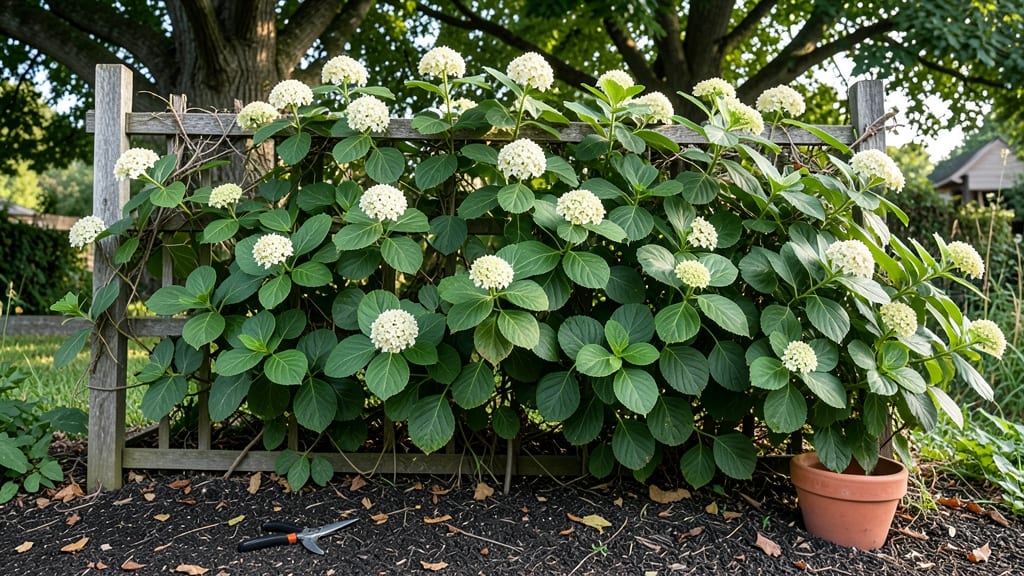
An evergreen hydrangea climber transforms shady walls into lush vertical gardens. 💚 I remember the first time I saw one clinging to my neighbor's brick wall—dense, glossy leaves year-round, even when other plants had gone dormant.
This isn't just another vine; it's a bold statement in shade gardens where most plants struggle. The secret to success starts with variety selection—look for Petiole Hydrangea (Hydrangea petiolaris), the true evergreen climber that clings without support (though a trellis helps).
Planting in well-draining soil with morning sun and afternoon shade ensures those signature leaves stay vibrant. Pruning isn't about shaping but thinning old growth to encourage new, vigorous shoots.
By late summer, you'll see clusters of white flowers that mature into papery seed heads—each one adding texture to your winter landscape. The plant grows 8-15 feet over time, making it perfect for fences, arbors, or even old trees needing a green disguise.
Works beautifully in zones 5-9, though colder climates may need winter protection. Here's how to get started without the common pitfalls!"
📚 In This Guide
- What you need
- Instructions
- Tips and common mistakes
- Wrapping up and next steps
What you need
- ● Hydrangea evergreen climber plant: Choose a healthy Hydrangea petiolaris or Hydrangea anomala subsp. petiolaris from a nursery (1-3 plants, depending on space).
- ● Well-draining potting mix: 5-10 gallons of peat-free, acidic soil mix (pH 4.5–5.5) for containers or amended garden soil for in-ground planting.
- ● Organic mulch: 2–3 inches of pine bark, wood chips, or shredded leaves to retain moisture and regulate soil temperature.
- ● Slow-release fertilizer: 1–2 cups of acid-loving plant fertilizer (e.g., 16-4-8 or 10-10-10) or osmocote for long-term nutrition.
- ○ Trellis or sturdy support: A metal, wooden, or PVC trellis (6–10 ft tall) with horizontal wires or mesh for climbing (optional but highly recommended!).
- ● Garden trowel or spade: For digging holes (12–18 inches deep/wide).
- ● Pruning shears: Bypass pruners (sharp, sterilized) for shaping and deadheading.
- ● Watering can or hose with nozzle: For deep, consistent watering (1–2 gallons per plant weekly).
- ● Gloves: Heavy-duty gardening gloves to protect from thorns.
- ○ Optional but helpful: Soil pH test kit (to confirm acidity).
- ● Epsom salt (1 tbsp/month in water for magnesium boost).
- ● Drip irrigation system (for automated care).
Step-by-step guide to planting and caring for Hydrangea evergreen climbers
Here's my foolproof method for establishing lush, evergreen hydrangeas that stay vibrant year-round.
🪴 Step 1: Choose the Perfect Planting Site
Select a location with partial shade—at least 4-6 hours of filtered sunlight daily. Direct sun scorches the delicate foliage, while too little light causes sparse growth. I always test the spot by placing a white board where the plant will go; if it shows sunburn marks after a week, move to a shadier area.
Evergreen climbers need well-draining soil with a slightly acidic pH (5.5-6.5). Amend heavy clay by mixing in 2-3 inches of compost and a handful of sulfur to lower pH naturally. Dig a hole twice as wide as the root ball but only as deep—planting too deep suffocates roots and causes rot.
🌱 Step 2: Plant with Proper Spacing and Support
Space plants 6-8 feet apart since these climbers spread aggressively. The 4 plants you're installing will create a dense, 12-foot-wide living wall over time. Install a trellis or sturdy arbor at planting—hydrangeas hate being retrofitted with support later.
Remove the plant from its container and loosen roots gently if they're circling. Place it in the hole so the top of the root ball sits level with the surrounding soil—never deeper. Backfill with native soil mixed with 1 cup of slow-release fertilizer (10-10-10), tamping lightly to eliminate air pockets. Water deeply to settle everything.
💧 Step 3: Establish a Consistent Watering Routine
Water deeply 2-3 times per week during the first growing season, ensuring moisture reaches 12 inches down. You'll know it's enough when water drips from the bottom of the hole—this encourages deep root growth. Evergreens hate soggy roots but also can't tolerate drought, so check soil 2 inches down before watering again.
Mulch with 3 inches of shredded bark (not wood chips) to retain moisture and protect roots from winter freeze-thaw cycles. Keep mulch 6 inches away from the stem to prevent rot. In Zones 5-7, add a 4-inch layer of straw over the mulch in winter for extra insulation.
✂️ Step 4: Prune for Shape and Health
Prune late winter or early spring before new growth appears. Remove dead or crossing branches first, then cut back overly long stems by one-third to encourage bushier growth. Never prune into old wood—evergreen hydrangeas bloom on current season's growth, so aggressive cuts reduce flowers.
Watch for aphids on new growth—they love tender hydrangea leaves. Spray with neem oil solution (1 tbsp per gallon of water) at the first sign of sticky residue. I also fertilize monthly during growing season with fish emulsion (diluted to 1 tbsp per gallon) to maintain vibrant foliage color.
☀️ Step 5: Adjust Care for Seasonal Changes
In summer, increase watering to once weekly if temperatures exceed 85°F, checking for wilting leaves. Evergreens transpire heavily in heat. In fall, reduce watering gradually—soaked roots before winter dormancy invite fungal diseases.
By year three, your climbers should establish a 10-foot-wide living wall. At this point, you can lightly prune annual growth in spring to maintain shape. The key to evergreen hydrangeas is consistent moisture and gradual training—never rush their development.
Tips & tricks for thriving evergreen Hydrangea climbers
These pro insights will help you avoid common pitfalls and create a stunning, low-maintenance living wall that stays vibrant all year.
Site Selection Secret: That 4-6 hours of filtered sunlight is non-negotiable—think dappled shade from trees or a north-facing wall. I've seen evergreens struggle in spots with less than 4 hours, even if they look fine at first. Test your location by placing a white board where the plant will go; if it shows sunburn marks after a week, move to a shadier spot. This simple test prevents years of disappointment.
Root Ball Placement: The top of the root ball must sit exactly level with the surrounding soil—never deeper, never higher. I learned this the hard way after planting too deep and watching roots suffocate. Use a level tool to double-check before backfilling. This small detail makes all the difference in establishing strong root systems that support your living wall.
Watering Wisdom: Those 2-3 deep waterings per week during the first season are crucial for encouraging deep root growth. I recommend using a moisture meter to verify when soil is properly hydrated 12 inches down—this prevents both overwatering and underwatering. Evergreens are particularly sensitive to soggy roots, so always check soil moisture 2 inches down before watering again.
Seasonal Adjustments: The 85°F summer threshold is your cue to increase watering frequency. Evergreens transpire heavily in heat, and wilting leaves are your first warning sign. In fall, reduce watering gradually—soaked roots before winter dormancy can lead to fungal diseases. I also recommend adding that extra 4-inch layer of straw in Zones 5-7 for winter insulation, which protects roots during freeze-thaw cycles.
Pro Tips for Hydrangea Evergreen Climber
- These pro insights will help you avoid common pitfalls and create a stunning, low-maintenance living wall that stays vibrant all year.
- Site Selection Secret: That 4-6 hours of filtered sunlight is non-negotiable—think dappled shade from trees or a north-facing wall.
- Root Ball Placement: The top of the root ball must sit exactly level with the surrounding soil—never deeper, never higher.
Frequently asked questions
How do I choose the best spot for my evergreen hydrangea climber?
Plant in partial to full shade (morning sun is ideal) with well-draining, acidic soil (pH 4.5–5.5). Avoid soggy spots—root rot is a risk! If your soil is alkaline, amend with peat moss or sulfur to mimic its natural woodland habitat. A trellis, fence, or arbor works great for support.
When is the best time to plant or transplant an evergreen hydrangea climber?
For container-grown plants, you can plant year-round (except in freezing temps). Bare-root varieties thrive in early spring or fall when soil is workable but not frozen. Water deeply after planting, and mulch to retain moisture. Pro tip: If transplanting mature plants, prune 1/3 of the foliage to reduce stress!
Do evergreen hydrangeas need pruning? If so, when and how?
Prune in late winter or early spring (before new growth starts) to shape the plant and remove dead/weak stems. Avoid heavy pruning—these climbers flower on old wood, so trim sparingly. Use clean, sharp shears and sterilize with rubbing alcohol to prevent disease. Never prune in fall—it can encourage tender new growth that won’t survive winter.
What pests or diseases should I watch for, and how do I treat them?
Common issues include:
- Scale insects: Scrape off with a brush or use neem oil.
- Spider mites: Spray with water to dislodge; repeat weekly if needed.
- Powdery mildew: Improve airflow, avoid overhead watering, and apply fungicide if severe.
- Root rot: Ensure proper drainage and avoid overwatering.
Inspect leaves monthly—early action keeps your climber healthy!
Are there any non-climbing evergreen hydrangea alternatives?
If you love evergreen hydrangeas but lack a trellis, try:
- Oakleaf Hydrangea (H. quercifolia): Stunning fall color, compact habit.
- Mountain Hydrangea (H. macrophylla): Bushy, shade-tolerant, and great for borders.
- Dwarf Annabelle (H. arborescens ‘Annabelle’): Compact, rounded, and drought-tolerant.
All three offer year-round interest without needing vertical support!
Wrapping up and next steps
Transforming your shady garden into a lush, evergreen oasis is easier than you think with a hydrangea evergreen climber! These stunning plants bring year-round color and texture while thriving in low-light spots—perfect for adding drama without the fuss.
Whether you’re a seasoned gardener or just starting out, their resilience and beauty make them a must-have for any shade-loving space.
Ready to get growing? Start by selecting the right variety for your climate and space, then give your climber the love it deserves with proper soil, support, and care.
Before you know it, you’ll have a vibrant, evergreen masterpiece that turns heads—and maybe even inspires your neighbors to green up their own shady corners! 🌿✨