
Aphids
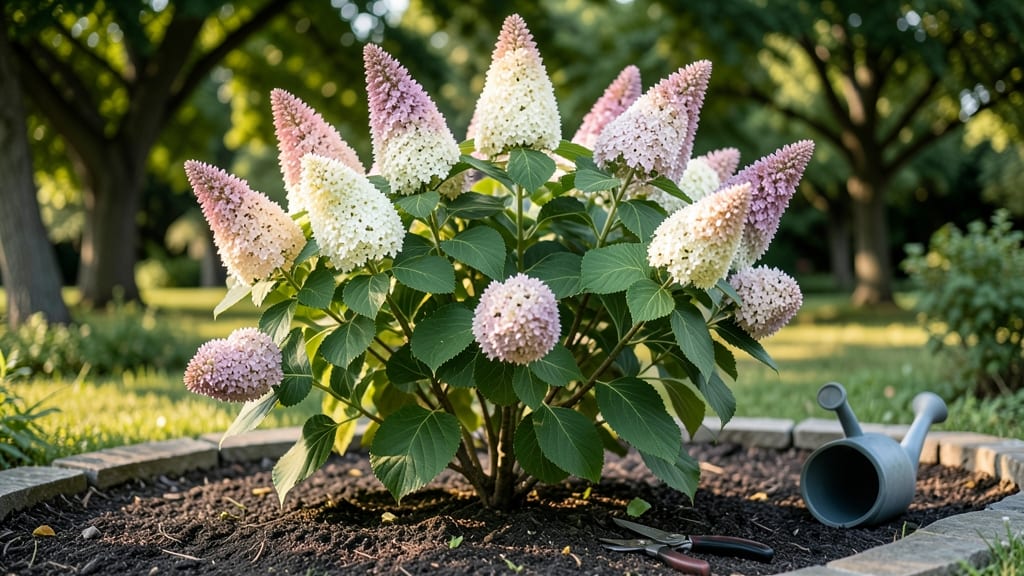
The Hydrangea paniculata 'Grandiflora' (PeeGee) grows into a vertical masterpiece that steals the show from summer through frost. 🌿 I fell for this variety after seeing its towering blooms—each cone-shaped flower reaching 6-8 inches—and the way it holds color longer than most hydrangeas.
Unlike its cousins, PeeGee thrives in full sun, blooms late, and even turns a stunning burgundy in fall, making it the backbone of my garden’s seasonal display. Planting it in well-draining soil with a slightly acidic pH (6.0-6.5) sets the stage for its best performance.
Water deeply once a week during dry spells, but avoid soggy roots—this variety is surprisingly drought-tolerant once established. The real secret? Pruning in late winter or early spring before new growth appears.
Cut back old stems to 3-5 buds from the base, and watch it reward you with 8-foot-tall spikes of blooms by midsummer. What sets PeeGee apart is its pest resistance and late-season show.
While other hydrangeas fade by August, this one peaks in September and October, when its foliage deepens into rich greens and burgundies. The blooms also dry beautifully, perfect for winter arrangements.
Just be patient—it takes 2-3 years to reach its full potential, but the wait is worth every inch of vertical drama. For trouble-free growth, watch for aphids (spray with soapy water) and powdery mildew (improve air circulation).
If your flowers turn pink instead of white, your soil might be too alkaline—add sulfur or peat moss to adjust the pH. Once you’ve mastered PeeGee, you’ll never look at hydrangeas the same way again.
📚 In This Guide
- What you need
- Instructions
- Tips and common mistakes
- Wrapping up and next steps
What you need
- ● PeeGee Hydrangea Plant: 1 healthy nursery-grown specimen (3–5 gallons in container or bare-root for transplanting). Pro tip: 🌡️ Choose one with firm stems and vibrant buds!
- ● Well-draining Potting Mix or Garden Soil: For containers: 5–10 gallons of peat-free potting mix (e.g., Miracle-Gro Moisture Control or FoxFarm Ocean Forest) blended with 20% perlite/pumice for aeration.
- ● For in-ground planting: Amend native soil with 3–4 inches of compost and 1 part perlite/sand to prevent root rot.
- ● Organic Mulch: 2–3 inches of shredded bark, pine straw, or cocoa hulls (avoid dyed mulch—it can harm roots!).
- ● Slow-Release Fertilizer: 1 lb of balanced 10-10-10 or acid-loving plant fertilizer (e.g., Espoma Holly-Tone). Pro tip: ✨ Skip high-phosphorus fertilizers—they promote foliage over flowers!
- ● Garden Gloves: 1 pair nitrile-coated gloves (for prickly stems and soil protection).
- ● Trowel or Spade: Medium-sized (8–12 inches) for digging.
- ● Watering Can or Hose: With a soft spray nozzle (avoid high pressure near stems).
- ● Pruning Shears: Bypass pruners (sterilized with rubbing alcohol).
- ○ Support Stake (Optional):strong> 1 6–8 ft bamboo or metal stake (for young plants in windy areas).
- ● OR garden twine (for training vines to a trellis).
- ○ pH Test Kit (Optional): To monitor soil acidity (ideal range: 5.5–6.2).
- ● Sunlight: Full sun (6+ hours/day) or partial shade (4–6 hours) in hot climates.
- ● Hardiness Zone: USDA Zones 4–9 (check your zone here).
- ● Water Access: Drip irrigation or a self-watering system (PeeGee hates soggy roots!).
- ● Patience: 2–3 years for full bloom potential (but enjoy the foliage sooner!).
How to plant and care for hydrangea paniculata 'Grandiflora' PeeGee
This stunning vertical shrub thrives with the right placement and seasonal attention. Here’s how to cultivate its bold autumn foliage and long-lasting blooms.
🪴 Step 1: Choose the Perfect Planting Location
Select a spot with full sun to partial shade—at least 6 hours of direct sunlight daily—but protect it from harsh afternoon sun in hot climates. The PeeGee’s upright growth habit makes it ideal for narrow spaces, so plant it where it can grow 8-12 feet tall without crowding other plants.
Test the soil pH before planting. Hydrangeas prefer acidic soil (pH 5.5-6.2) for vibrant blooms. If your soil is alkaline, amend it with peat moss or sulfur 2-3 months before planting. Dig a hole twice as wide as the root ball but no deeper—this encourages outward root growth, which stabilizes the tall stems.
🌱 Step 2: Plant with Proper Spacing and Support
Dig the hole and place the PeeGee in it so the top of the root ball sits 1 inch above ground level. This prevents rot and allows for settling. Backfill with native soil mixed with compost or aged manure to improve drainage and fertility. Water deeply to remove air pockets, then tap the soil gently to settle it around the roots.
Space plants 6-8 feet apart to allow for mature width and airflow. Since PeeGee can reach 12 feet tall, install a sturdy trellis or support stake at planting time. This prevents flopping stems later. Tie the main stems loosely to the support with soft garden twine, leaving room for growth.
☀️ Step 3: Water and Fertilize for Strong Growth
Water deeply 1-2 times per week during the first growing season, keeping the soil consistently moist but not soggy. The PeeGee’s deep roots need consistent moisture, especially during flowering. Mulch with 3 inches of organic mulch (like shredded bark) to retain moisture and regulate soil temperature.
Fertilize in early spring with a balanced, slow-release fertilizer (10-10-10). Avoid high-nitrogen fertilizers—they promote leafy growth at the expense of flowers. In late summer, switch to a low-phosphorus, high-potassium fertilizer (5-10-10) to boost bloom production for next year. Always water after fertilizing to prevent root burn.
✂️ Step 4: Prune for Shape and Seasonal Interest
Prune PeeGee hydrangeas in late winter or early spring, before new growth begins. Remove 1/3 of the oldest stems at ground level to encourage new, vigorous growth. This also prevents the shrub from becoming top-heavy. Cut back any dead or weak stems to just above a bud or joint.
For year-round interest, avoid heavy summer pruning. Instead, trim back spent blooms in late fall or early winter to maintain shape. The PeeGee’s foliage turns stunning shades of burgundy and gold in autumn, so resist the urge to cut it back too early. Leave the stems until they’re fully dormant to preserve that seasonal color.
⏰ Step 5: Winterize for Cold Hardiness
The PeeGee is hardy to USDA Zone 3, but young plants or harsh winters may need protection. In Zones 4-5, wrap the stems loosely with burlap or a frost blanket after the first hard frost. This shields the buds from cold winds without trapping moisture, which could cause rot.
Remove winter protection in early spring once new growth appears. Avoid fertilizing until you see fresh leaves—this ensures the plant isn’t stressed by cold. The PeeGee’s ability to rebloom on new wood makes it forgiving, but consistent care in winter sets the stage for its summer-to-fall flowering display.
Tips & tricks for perfect hydrangea paniculata 'Grandiflora' PeeGee care
These insights will help you coax the most dramatic blooms and vibrant foliage from your PeeGee hydrangea—without the common pitfalls that frustrate gardeners.
Sunlight Strategy: The 6 hours of daily sunlight is non-negotiable for those signature cone-shaped blooms, but here's the trick: In hot climates, provide afternoon shade to prevent leaf scorch. I've seen PeeGee's in full sun wither when afternoon temps hit 95°F—moving them to partial shade after 2 PM makes all the difference. For containers, choose a spot that gets morning sun and afternoon shade.
Soil Science: That pH 5.5-6.2 range isn't just a suggestion—it's critical for blue blooms. If your soil tests alkaline, don't just add sulfur. Mix in 2-3 inches of peat moss or pine bark fines into the planting hole and top with a 1-inch layer of sulfur. Re-test soil in 3 months—you might need to repeat the amendment for vibrant color. I've had clients swear their hydrangeas changed color overnight after proper acidification!
Support System: The sturdy trellis or support stake isn't just decorative—it's structural. Install it at planting time before the roots establish, as transplant shock makes stems more vulnerable to flopping. Use soft garden twine (not wire) to tie stems, leaving room for growth. I've seen PeeGee's reach 10 feet tall in a season—without support, those stems will snap under their own weight.
Pruning Precision: That late winter/early spring pruning isn't optional—it's what creates next year's blooms. When you remove 1/3 of the oldest stems, you're not just shaping the plant; you're forcing new growth that will produce flowers. Mark the stems you're cutting with paint in late fall so you can identify them easily. And never prune into old wood—always cut just above a bud or joint where new growth will emerge.
Pro Tips for Hydrangea Paniculata Grandiflora Peegee
- These insights will help you coax the most dramatic blooms and vibrant foliage from your PeeGee hydrangea—without the common pitfalls that frustrate gardeners.
- Sunlight Strategy: The 6 hours of daily sunlight is non-negotiable for those signature cone-shaped blooms, but here's the trick: In hot climates, provide afternoon shade to prevent leaf scorch.
- Soil Science: That pH 5.5-6.2 range isn't just a suggestion—it's critical for blue blooms.
Frequently asked questions
How do I prune PeeGee hydrangeas for maximum blooms?
Prune PeeGee hydrangeas in late winter or early spring (before new growth appears). Cut back old stems to 12–18 inches from the ground—this encourages bold, cone-shaped blooms. Avoid heavy pruning in fall, as it removes next year’s flower buds!
Why are the leaves on my PeeGee turning brown or yellow?
Brown/yellow leaves often signal aphids, fungal issues, or underwatering. Check for pests (tiny green/black bugs) on undersides of leaves. If soil is dry, water deeply. For fungal spots, prune affected areas and apply neem oil. Overwatering can also cause root rot—ensure well-draining soil!
Can PeeGee hydrangeas survive winter in cold climates?
PeeGee is hardy to USDA Zones 4–9. In colder areas (Zone 4–5), mulch the base with 3–4 inches of organic mulch (like shredded bark) after the ground freezes. Wrap young plants with burlap for extra protection. Their woody stems—just focus on roots!
When and how should I fertilize PeeGee hydrangeas?
Fertilize in early spring (March–April) with a balanced, slow-release fertilizer (10-10-10 or 20-20-20). Avoid high-nitrogen feeds—it promotes leafy growth over blooms. For blue flowers, add aluminum sulfate (per package instructions) in early summer. Stop fertilizing by mid-summer to prevent late-season growth.
Are there any alternatives to PeeGee with similar autumn color?
If you love PeeGee’s firey foliage, try these paniculata cousins:
- 'Limelight' – Lime-green blooms turning pink, with deep red fall leaves.
- 'Little Lime' – Compact version (3–4 ft tall) with chartreuse blooms.
- 'Quick Fire' – Faster-growing, bright red stems and burgundy foliage.
How do I get rid of aphids on my PeeGee hydrangeas?
Aphids love PeeGee’s tender new growth! Blast them off with a hose (strong stream) or spray with soapy water (1 tsp mild dish soap + 1 quart water). For severe infestations, use neem oil or introduce ladybugs. Prune heavily infested stems and compost them (don’t add to yard waste). Repeat every 3–5 days until gone.
Wrapping up and next steps
Incorporating Hydrangea paniculata 'Grandiflora PeeGee' into your garden isn’t just about adding beauty—it’s about creating a year-round masterpiece that thrives with minimal fuss. From its stunning autumn foliage to its resilient nature, this hydrangea is a low-maintenance powerhouse that rewards patience and care.
Whether you're battling aphids or simply admiring its grandeur, this plant proves that elegance and ease can go hand in hand.
Ready to elevate your garden? Start by planting your PeeGee in the right spot, then watch it flourish with confidence! 🌿✨