
Pruning
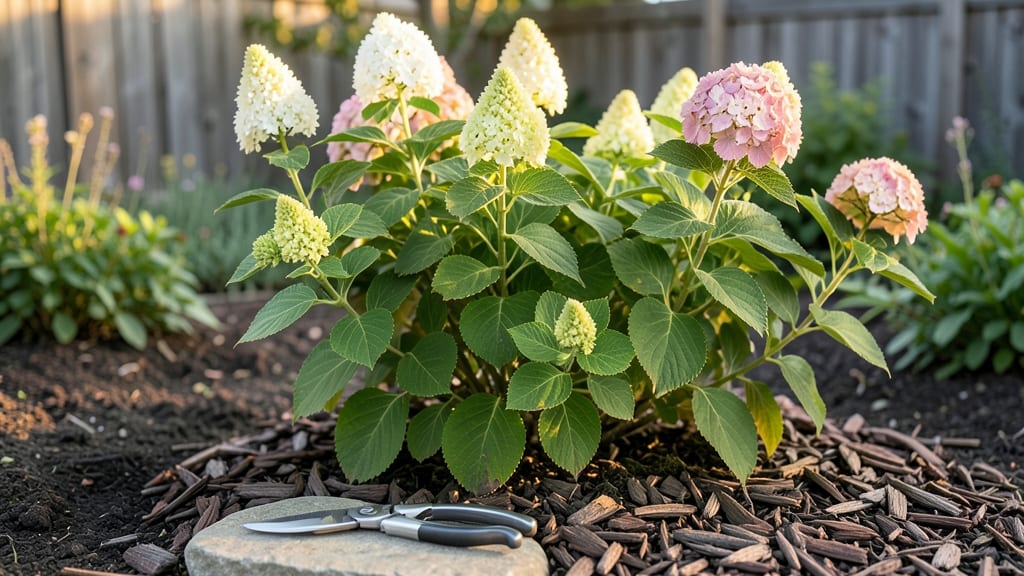
Your hydrangea tree maintenance starts with knowing when to prune—and it’s not what you think. ✂️ I’ve watched my oakleaf hydrangea go from a tangled mess to a showstopper by following a simple year-round schedule that keeps blooms lush and growth healthy.
The key is timing: prune at the right season for your variety, and you’ll avoid cutting off next year’s flowers entirely.
Panicle hydrangeas and oakleaf types need different approaches—some bloom on old wood, others on new. I learned this the hard way after shearing back my first tree in late winter and ending up with bare branches.
Now I prune panicle types in late winter while oakleaf varieties get their shape in late spring, right after blooming. It’s all about matching the cut to the plant’s natural rhythm.
With the right schedule, you’ll see fuller blooms by summer and stronger stems that support those heavy flower heads. The secret’s in the details: sharp pruners, clean cuts, and removing only what’s necessary.
Even a black thumb can master this—once you know the rules. Here’s exactly how to do it without stress.
This method works for both small patio trees and large landscape specimens. Whether you’re dealing with leggy growth or just want to encourage more flowers, the same principles apply. Let’s get your hydrangea tree looking its best all year long.
📚 In This Guide
- What you need
- Instructions
- Tips and common mistakes
- Wrapping up and next steps
What you need
- ● Pruning shears: Bypass pruners (sharp, clean, and disinfected with rubbing alcohol or bleach between cuts).
- ● Loppers: For thicker branches (1.5"–2" diameter), with a 6–8" reach.
- ● Hand pruners: For smaller stems (¼"–¾" diameter), ergonomic grip for comfort.
- ● Garden gloves: Heavy-duty, cut-resistant (e.g., Mechanix or Wolverine).
- ○ Pruning saw: Curved blade for stubborn, thick branches (optional but handy).
- ● Disinfectant: 1 part bleach to 9 parts water (for sterilizing tools between cuts).
- ● Rake or broom: For clearing debris after pruning.
- ● Mulch: 2–4 inches of organic mulch (e.g., shredded bark or pine straw).
- ● Watering can or hose: With a gentle spray nozzle for post-pruning hydration.
- ● Tree tie or zip ties: For securing supports if your hydrangea tree is young or top-heavy.
- ● Fertilizer: Slow-release, balanced (10-10-10) or acid-loving plant fertilizer (e.g., Miracle-Gro Azalea/Camellia).
- ● Plant food spray: For a quick nutrient boost after major pruning.
- ● Label markers: To track pruning dates or notes on specific branches.
Instructions for year-round hydrangea tree pruning
Here's the simple schedule I follow to keep my hydrangea trees blooming like crazy every season.
✂️ Step 1: Late Winter Pruning for Shape and Airflow
Wait until after the last frost but before buds swell—usually mid-to-late February in most climates. I grab my bypass pruners and remove any dead, crossing, or inward-growing branches first. These are the branches that never get sunlight and only take energy from your plant.
Cut back to an outward-facing bud or branch junction, making the cut at a 45-degree angle just above it. This ensures water runs off cleanly and new growth heads outward. I never cut more than 1/3 of the plant's total volume in one session—hydrangeas are tough but not invincible.
🌿 Step 2: Spring Growth Monitoring and Light Trimming
Once new growth appears in early spring, I do a quick inspection every 2-3 weeks. Look for branches that grew too close together—they'll compete for sunlight and nutrients. When you see two stems growing parallel within 6 inches of each other, remove the weaker one at the base.
This is also when I remove any suckers—those aggressive shoots growing from the base or along the trunk. They drain energy from your main tree. Use clean pruners and cut them off at the ground level immediately. You'll know you're doing it right when you see fresh, green growth emerging from the main branches instead of the base.
☀️ Step 3: Summer Deadheading for Extended Blooms
When your hydrangea blooms start to fade in mid-to-late summer, it's time for deadheading. I wait until after the flowers have opened fully but before they turn brown. Grab a pair of sharp pruners and snip off the spent flower heads just above the first set of strong leaves below them.
This encourages new blooms to form on the current season's growth. I never cut back into old wood—those stems won't produce new flowers. You'll see fresh flower buds forming within 4-6 weeks after deadheading if you've done it at the right time. The key is consistency—do this every 2-3 weeks throughout summer.
⏰ Step 4: Fall Cleanup and Winter Preparation
As temperatures drop below 50°F at night in late fall, it's time for final pruning. Remove any remaining dead or diseased branches—these can harbor pests over winter. Cut them back to healthy wood, sterilizing your pruners with rubbing alcohol between cuts to prevent spreading any potential infections.
I also give my hydrangea trees a final trim to remove any branches that grew too long during summer. Cut them back to maintain your desired shape, but never remove more than 10-15% of the plant's total volume. This prepares the tree for winter dormancy while keeping it looking tidy. You'll notice new growth emerging vigorously in spring if you've done this correctly.
Tips & tricks for perfect hydrangea tree care
Keeping your hydrangea trees blooming beautifully takes just a few smart tricks you can apply all year long.
Timing is Everything: In Step 1, when you're pruning after the last frost but before buds swell, check your local frost dates—some years can be unpredictable. I always set a reminder for mid-February as a safe starting point, but if you see buds starting to swell, wait a few more days. The goal is to avoid cutting off next year's blooms, which form on old wood for most hydrangea varieties.
Tool Prep Makes All the Difference: Before you start any pruning, sterilize your bypass pruners with rubbing alcohol between cuts, especially in Step 4 when dealing with diseased branches. I keep a small bottle of 70% isopropyl alcohol in my gardening toolkit—it's the secret to preventing infections from spreading. Also, make sure your blades are sharp; dull pruners crush stems instead of making clean cuts, which stresses the plant.
Visual Growth Cues: During Step 2's spring inspections, look for these telltale signs: healthy new growth should be vibrant green and firm to the touch, while suckers often appear pale and leggy. Another trick is to gently scratch the bark on any questionable stems—if you see green underneath, it's a sucker and should be removed immediately. This simple test saves me from accidentally pruning away healthy branches.
Deadheading Strategy: In Step 3, when you're deadheading, focus on cutting just above the first strong set of leaves below the flower head. This is where new growth will emerge. I like to do this on a dry morning when the flowers are fully open but haven't yet started to brown—this timing gives you the best chance for new blooms to form within those 4-6 weeks. Think of it as giving your hydrangea a fresh start for each new flush of flowers.
Pro Tips for Hydrangea Tree Maintenance
- Keeping your hydrangea trees blooming beautifully takes just a few smart tricks you can apply all year long.
- Timing is Everything: In Step 1, when you're pruning after the last frost but before buds swell, check your local frost dates—some years can be unpredictable.
- Tool Prep Makes All the Difference: Before you start any pruning, sterilize your bypass pruners with rubbing alcohol between cuts, especially in Step 4 when dealing with diseased branches.
Frequently asked questions
Got questions about keeping your hydrangea tree thriving?
Here are answers to the most common concerns—from pruning timing to troubleshooting—so you can enjoy those stunning blooms all season long!
When is the best time to prune a hydrangea tree?
The ideal time depends on your tree’s type. For bigleaf and oakleaf hydrangeas, prune in late winter or early spring (February–March) before new growth starts. Panicle and smooth hydrangeas can handle pruning in late winter or early spring or even summer after blooming. Avoid pruning in fall—it removes next year’s flower buds!
How often should I prune my hydrangea tree?
Light maintenance pruning (removing dead/diseased branches) can happen year-round. However, structural pruning (shaping, thinning) should occur once a year—ideally in late winter/early spring. Over-pruning weakens the tree, so aim for 10–20% of the foliage max per session.
Why aren’t my hydrangea tree flowers as big or vibrant?
Several factors could be at play! Check for:
- Underwatering (hydrangeas love consistent moisture)
- Poor soil pH (blue blooms need acidic soil (pH 5.2–5.5); pink prefers neutral)
- Over-fertilizing (too much nitrogen = leafy growth, fewer flowers)
- Late pruning (cutting back after buds form)
Can I prune a hydrangea tree in winter?
Yes, but only in mild climates (Zones 7–10). In colder areas, wait until late winter after the last frost (typically February–March). Pruning too early in freezing temps can shock the tree. If you must prune in winter, do so on a warm, dry day and avoid heavy cuts.
What’s a good alternative if my hydrangea tree isn’t thriving?
If your hydrangea struggles with pests, disease, or poor growth, consider these low-maintenance alternatives:
- Butterfly Bush (Buddleia) – Drought-tolerant, attracts pollinators
- Crapemyrtle – Heat-resistant, long bloom season
- Weigela – Fast-growing, vibrant flowers
- Abelia – Thrives in partial shade, disease-resistant
Wrapping up and next steps
With a well-planned hydrangea tree maintenance routine, you’ll enjoy vibrant blooms and a thriving plant year after year! 🌸 Remember to prune at the right times, use the proper tools, and keep an eye out for pests or diseases.
Your efforts will pay off with stunning, healthy foliage and abundant flowers.
Ready to take the next step? Grab your pruners, mark your calendar, and start your hydrangea tree’s pruning journey today—your garden will thank you!