
Succulent
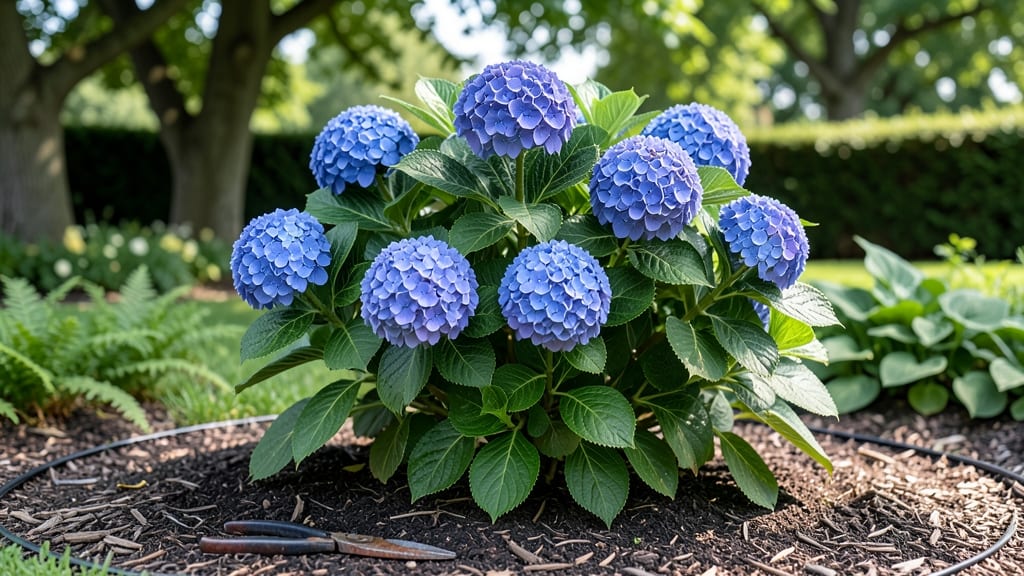
The Monrovia Blue Enchantress hydrangea transforms small spaces with vibrant blue blooms that seem to glow from within. 🌿 I fell in love with this variety after struggling with floppy hydrangeas in my tight backyard—this one stays compact and thrives when trained on a simple support pole.
The secret lies in its disease-resistant nature and ability to handle partial shade, making it perfect for urban gardens or shaded patios. Start with well-draining soil mixed with compost, and plant in a spot with morning sun and afternoon shade—too much direct sun fades those stunning blue blooms.
Water consistently but avoid soggy roots, and you’ll see those showstopping clusters by midsummer. Pruning in late winter keeps the plant tidy and encourages next year’s flowers. What makes this hydrangea truly special is how low-maintenance it is once established. No need for weekly attention—just occasional pruning and consistent watering.
The blooms stay vibrant longer than most varieties, and the plant rarely suffers from pests or diseases. Even in my busy gardening schedule, this one holds its own.
For compact spaces, train it on a 5-6 foot tall pole—it won’t outgrow its boundaries, and the vertical display creates drama without sprawling. Whether you’re a balcony gardener or working with a small yard, this hydrangea delivers big impact with minimal effort. Let’s get yours growing!
📚 In This Guide
- What you need
- Instructions
- Tips and common mistakes
- Wrapping up and next steps
What you need
- ● Monrovia Blue Enchantress Hydrangea: 1 healthy plant (check for vibrant green leaves and no signs of pests).
- ● Growing Container or Garden Spot: For containers: A 5-gallon pot or larger (minimum 12–14 inches deep) with drainage holes.
- ● For in-ground planting: A well-draining spot with partial shade (4–6 hours of sunlight daily).
- ● High-Quality Potting Mix: 1 bag (1–2 cubic feet) of moisture-retentive, acidic soil mix (pH 5.5–6.2). Look for blends labeled for hydrangeas or azaleas.
- ● Organic Mulch: 2–3 inches of pine bark fines, shredded leaves, or compost to retain moisture and regulate soil temperature.
- ● Garden Gloves: 1 pair (to protect your hands from thorns and soil).
- ● Trowel or Spade: 1 medium-sized tool for digging and transplanting.
- ● Watering Can or Hose: With a gentle spray nozzle to avoid disturbing the soil.
- ○ Trellis or Pole System (Optional but Recommended): For pole training: A 5–6 foot bamboo stake or metal trellis (diameter: 1–2 inches).
- ● For container growing: A lightweight, sturdy obelisk (e.g., spiral or diamond-shaped).
- ● Fertilizer: Slow-release granules: 1–2 cups of balanced, acidic fertilizer (10-10-10 or 8-3-9).
- ○ Liquid feed (optional): 1 bottle of hydrangea-specific fertilizer (e.g., Miracle-Gro for Hydrangeas).
- ● Pruning Shears: 1 pair of sterilized, sharp shears for shaping and maintenance.
- ● Location Scouting: Choose a spot with morning sun and afternoon shade (or dappled sunlight).
- ● Water Source Accessibility: Ensure you can water the plant 2–3 times per week (more in hot climates).
- ● Patience: Hydrangeas thrive with consistent care—pole training may take 2–3 months to see significant growth!
How to train Monrovia Blue Enchantress hydrangea on a trellis
This compact, cascading beauty thrives when given vertical support—here's how to coax those stunning blue blooms upward elegantly.
🪴 Step 1: Select the Right Trellis and Planting Site
Choose a 5-6 foot tall trellis with 1-inch diameter horizontal supports spaced 12 inches apart—this gives stems enough purchase to climb without snapping. The Monrovia Blue Enchantress needs partial shade (morning sun, afternoon shade) to prevent leaf scorch, so position your trellis where it receives 4-6 hours of filtered light daily. I always test the spot first by placing a white board where the plant will go—if it shows sunburn marks after a week, the location's too harsh.
Dig a hole twice as wide as the root ball but only as deep—hydrangeas hate being buried too deep, which can suffocate roots. Amend the native soil with 2 inches of compost mixed into the bottom of the hole. The trellis should stand 12 inches behind the planting spot so stems can reach it naturally without stretching.
🌱 Step 2: Plant and Secure Initial Growth
Remove the plant from its container and gently loosen the roots if they're circling. Position it so the top of the root ball sits 1 inch below soil level—this prevents stem rot while allowing roots to access moisture. Backfill with native soil mixed with 1 cup of slow-release fertilizer (10-10-10 ratio), pressing lightly to eliminate air pockets. Water immediately with 1 gallon of water to settle the soil.
Here's the thing—you won't tie stems to the trellis right away. Instead, let the plant establish for 4-6 weeks while growing 4-6 inches tall. This gives roots time to anchor before supporting weight. Once new growth appears, select the strongest 2-3 stems and gently weave them through the trellis supports. Use soft plant ties (not wire)—hydrangea stems bruise easily.
☀️ Step 3: Train and Prune for Vertical Growth
Prune in early spring (before buds swell) to shape the plant. Cut back last year's stems by ⅓ to encourage bushier growth, but leave 2-3 strong stems to climb. The key is selective pruning—remove any stems growing toward the trellis at sharp angles, as they'll struggle to support their own weight. You'll see new shoots emerge from the base and along stems—these are your climbing candidates.
As stems reach the trellis, weave them through the horizontal supports and secure with ties every 12 inches. Never wrap ties tightly—they should allow for ¼-inch of stem movement. By mid-summer, you'll have 3-4 main stems climbing elegantly, with side branches forming a lush, cascading effect. Water at the base 2-3 times weekly during dry spells, keeping soil 2 inches deep consistently moist but never soggy.
✂️ Step 4: Maintain and Harvest Blooms
Deadhead spent blooms in late summer by cutting stems back to the first set of 5 leaves below the flower cluster. This encourages a second flush of blooms while keeping the plant's energy focused on vertical growth. I always use clean, sharp pruners and disinfect them with rubbing alcohol between cuts—hydrangeas are prone to bacterial infections if tools carry pathogens.
Fertilize twice annually: once in early spring with ¼ cup of 10-10-10 fertilizer, and again in mid-summer with ½ cup of organic compost. The Blue Enchantress thrives on slightly acidic soil (pH 5.5-6.2)—test your soil annually and amend with sulfur or peat moss if needed. You'll know you're doing it right when blooms shift from pink to deep blue as the season progresses.
⏰ Step 5: Prepare for Winter and Next Year
In late fall, cut back all stems to 6 inches tall—this prevents snow or ice from breaking them. Wrap the trellis (not the plant) with burlap to protect stems from cold winds, and mulch the base with 3 inches of shredded bark. The trellis itself should be removed and stored if it's not permanent, as freezing temperatures can crack metal or warp wood.
Here's where it gets fun—prune in early spring to shape the plant for next year's growth. Look for new growth emerging from the base and last year's stems with buds. The Blue Enchantress blooms on both old and new wood, so you'll have flowers even if you prune late. Water deeply in early spring to rehydrate roots after winter dormancy, and watch as those first blue blooms appear by late May or June.
Tips & tricks for pole-trained hydrangea success
Transforming your Blue Enchantress into a vertical masterpiece takes patience—and these insider tricks will help you avoid common pitfalls while maximizing those stunning blue blooms.
Trellis Placement Precision: Position your 5-6 foot trellis 12 inches behind the planting spot to create an optimal angle for upward growth. I've found that stems naturally gravitate toward vertical supports when given this slight distance—any closer and they'll stretch awkwardly. For urban spaces, consider a freestanding trellis instead of attaching to walls, which gives you more flexibility to move the plant as needed. The horizontal supports should face the prevailing wind direction to prevent flopping during storms.
Root Establishment Watch: Those critical 4-6 weeks of initial growth before tying stems are non-negotiable. I learned this the hard way when I rushed the process and ended up with brittle stems that snapped under the weight of blooms. During this period, focus on keeping the soil 2 inches deep consistently moist—not soggy, but never bone-dry. A moisture meter is worth its weight in gold here, as hydrangeas are particularly sensitive to drought stress during their early establishment phase.
Pruning with Purpose: When cutting back last year's stems by ⅓ in early spring, always leave at least 2-3 strong stems—these will become your main vertical supports. The secret lies in the angles: remove any stems growing toward the trellis at sharp angles (think 45 degrees or less), as these will struggle to support their own weight. I mark these stems with a soft ribbon before pruning to ensure I don't accidentally remove them. This selective approach creates a natural, balanced structure that can support the weight of blooms without sagging.
Winter Protection Strategy: The 6-inch pruning in late fall isn't just about aesthetics—it's about survival. I've seen hydrangeas with overgrown stems snap completely under heavy snow loads. When wrapping the trellis with burlap, leave the top open to allow some airflow while still protecting stems from harsh winds. For particularly harsh winters, consider adding a layer of straw around the base for extra insulation. The trellis itself should be removed and stored if it's not permanent, as freezing temperatures can cause metal to crack or wood to warp.
Pro Tips for Monrovia Blue Enchantress Hydrangea
- Transforming your Blue Enchantress into a vertical masterpiece takes patience—and these insider tricks will help you ...
- Trellis Placement Precision: Position your 5-6 foot trellis 12 inches behind the planting spot to create an optimal a...
- Root Establishment Watch: Those critical 4-6 weeks of initial growth before tying stems are non-negotiable. I learned...
Frequently asked questions
How do I train the Blue Enchantress Hydrangea on a trellis or pole?
Use soft plant ties or twistable garden tape to gently secure the main stems to your pole or trellis. Start at the base and work upward, spacing ties every 6–12 inches. Avoid wrapping too tightly—aim for a loose hug that guides growth without restricting it. Prune lightly in late winter to encourage bushier, upward growth.
When is the best time to plant or transplant this hydrangea?
The ideal window is early spring (after the last frost) or fall (4–6 weeks before the first frost). Avoid transplanting in extreme heat or cold, as roots need time to establish. If you must plant in summer, water deeply and mulch to retain moisture—this hydrangea hates stress!
How often should I water the Blue Enchantress Hydrangea?
Keep the soil consistently moist but not soggy. Water when the top 1–2 inches of soil feel dry (usually 1–2 times per week, depending on your climate). Pole-trained varieties may need slightly more attention during blooming season—aim for 1–1.5 inches of water per week, including rainfall. Drip irrigation or soaker hoses work best to avoid wetting the foliage.
Why aren’t my hydrangea blooms turning blue?
Blue blooms depend on acidic soil (pH 5.5–6.0). Test your soil and amend with sulfur, peat moss, or pine needles if needed. Avoid lime or wood ash, which raise pH. Also, ensure you’re using blue hydrangea fertilizer (high in aluminum) and watering regularly—stress can dull colors. Patience pays off; full blue may take 1–2 seasons!
What pests or diseases should I watch for with this hydrangea?
Common issues include:
- Spider mites: Look for webbing on undersides of leaves. Treat with a strong spray of water or neem oil.
- Aphids: Clustered on new growth? Blast them off with water or use insecticidal soap.
- Powdery mildew: White dust on leaves? Improve airflow and apply fungicide if severe.
- Leaf spot: Remove infected leaves and avoid overhead watering.
Prevention is key—mulch, water at the base, and prune for airflow!
Are there compact alternatives if my space is extra small?
If the Blue Enchantress feels too bold, try these space-saving hydrangea varieties:
- Endless Summer (reblooms, 3–5 ft tall)
- Little Lime (lime-green blooms, 2–3 ft tall)
- Vanille Fraise (strawberry-scented, 4–5 ft tall)
- Dwarf Annabelle (classic white, 2–3 ft tall)
All thrive in containers—just ensure they get 6+ hours of light and consistent moisture!
Wrapping up and next steps
The Monrovia Blue Enchantress Hydrangea isn’t just a plant—it’s a statement of effortless elegance for small spaces! With its compact growth, stunning blue blooms, and adaptability to pole training, it’s the perfect choice for adding color and charm without sacrificing space.
Whether you’re a seasoned gardener or a beginner, this beauty rewards patience and care with breathtaking results.
Ready to transform your garden or patio? Start small—plant your Blue Enchantress today and watch it grow into a showstopper! 🌸 For extra inspiration, explore Monrovia’s care tips or share your progress with fellow plant lovers online. Happy gardening! 🌿