
Landscaping
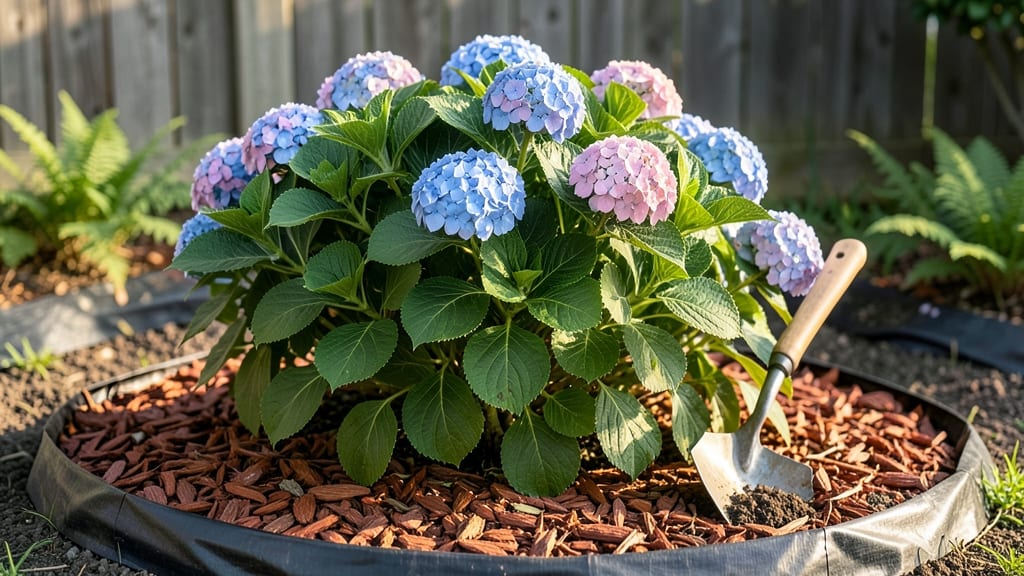
Pine bark mulch for hydrangeas improves soil moisture retention and root health by slowing evaporation while gradually breaking down to add organic matter, though it may slightly acidify the soil over time if not balanced with lime.
Pine bark mulch works wonders for hydrangeas because its coarse texture creates tiny air pockets that hold moisture near the roots while allowing excess water to drain. 🌿 This keeps the soil consistently damp—critical for hydrangeas that thrive in evenly moist conditions.
Over time, the bark decomposes slowly, enriching the soil with nutrients without smothering roots like heavier mulches might. The only catch? Pine bark can lower soil pH slightly, so I always recommend testing your soil first and adding crushed limestone if needed to keep those blooms vibrant.
For best results, spread 2-4 inches of mulch around your hydrangeas in early spring or fall, keeping it 3-4 inches away from the plant stem to prevent rot. This thickness balances moisture retention with airflow, while the timing avoids competing with new growth or winter dormancy.
If your area gets heavy rainfall, consider pairing pine bark with a more neutral mulch like cedar to moderate the acidity effect.
💡 In This Article
- How Pine Bark Mulch Benefits Hydrangea Roots and Soil
- Best Practices for Applying Pine Bark Mulch to Hydrangeas
How pine bark mulch benefits hydrangea roots and soil
The magic of pine bark mulch starts with its unique structure.
When you spread it around hydrangeas, those coarse, bark fragments create a porous layer that acts like a natural sponge. 🌿 This structure traps moisture near the soil surface while allowing excess water to drain away—perfect for hydrangeas that hate soggy roots but need consistent dampness.
Studies show that pine bark mulch can reduce soil moisture loss by up to 50% compared to bare soil, keeping those delicate roots hydrated during dry spells.
Beyond moisture, pine bark works as a thermal insulator. During hot summer days, it protects hydrangea roots from temperature swings that can stress plants. The bark's dark color absorbs heat during the day, then slowly releases it at night, maintaining a stable 60-70°F soil temperature range—ideal for root activity.
In winter, it provides a protective blanket against freezing temperatures, which is especially valuable for tender hydrangea varieties like Hydrangea macrophylla that can suffer in harsh climates.
What makes pine bark truly special is how it enriches the soil over time. Unlike fast-decomposing mulches that smother roots, pine bark breaks down gradually—adding organic matter that improves soil structure and microbial activity.
Each year, about 10-20% of the mulch decomposes, releasing nutrients like nitrogen, phosphorus, and potassium that hydrangeas crave for vibrant blooms. The decomposition process also creates beneficial mycorrhizal fungi that help roots absorb water and nutrients more efficiently.
However, there's a catch: pine bark is naturally acidic.
As it decomposes, it can lower soil pH by 0.5-1.5 points over time, which may be problematic for hydrangeas that prefer slightly acidic to neutral soil (pH 5.2-6.5). 🌱 This is why gardeners in areas with naturally alkaline soil should monitor pH levels and add crushed limestone (calcium carbonate) every 2-3 years to maintain optimal growing conditions.
The key is balance—pine bark's benefits far outweigh the risks when managed properly.
Let's talk about the sensory experience. Fresh pine bark mulch has that distinctive piney aroma that signals freshness, while established mulch develops an earthy, woody scent as it decomposes. Visually, it creates a beautiful contrast with hydrangea foliage—dark brown bark against lush green leaves.
The texture is coarse yet soft underfoot, making garden maintenance more pleasant than working with sharp gravel or dense organic mulches.
For comparison, consider how pine bark stacks up against other mulch types. While cedar mulch offers similar moisture retention with less acidity, it's more expensive and decomposes faster. Shredded hardwood provides neutral pH but lacks pine bark's excellent drainage properties.
The sweet spot? Pine bark's combination of moisture control, insulation, and gradual nutrient release makes it the gold standard for hydrangeas—when used correctly.